
The importance of the limit deviation of the transmission center distance of the reducer
Release Time :
2024-09-07
Source :
network
Author:
YONGKUN motor
The transmission center distance refers to the distance between the input and output shafts of the gearbox, which ideally ensures perfect meshing between the gears. However, in the actual production and assembly process, the actual value often deviates from the theoretical value due to various factors, and this deviation is called the limit deviation.
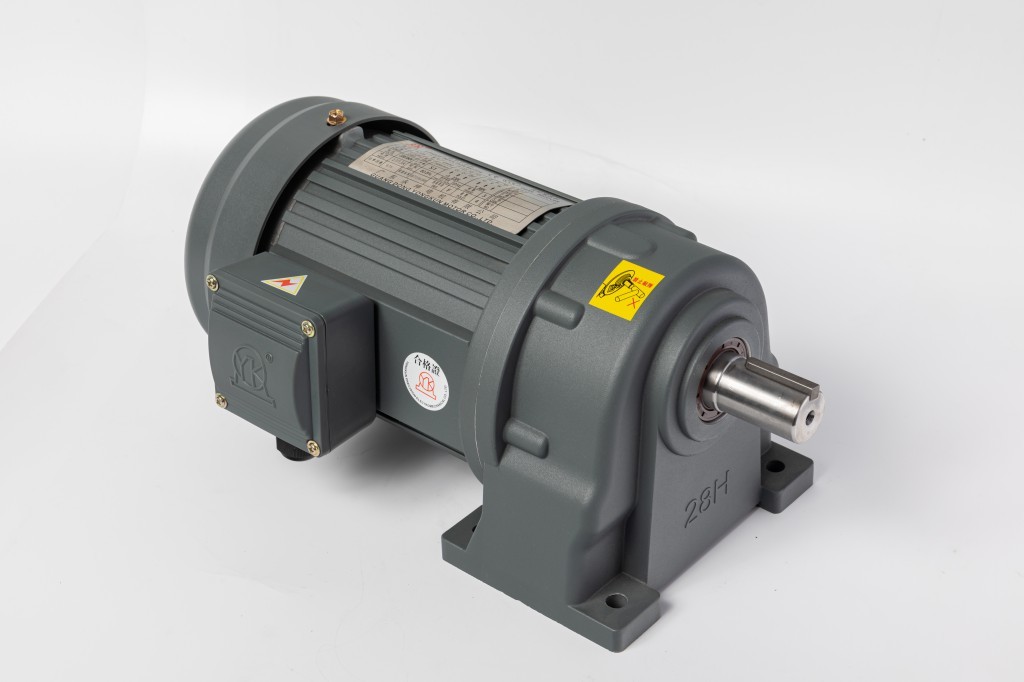
For reducers of different precision levels, the maximum deviation of fa values varies. Taking the reducer of precision level 4 as an example, the variation of fa values within different center distance ranges is specifically explained. When the center distance is small, such as 30mm and below, the fa value is only 11 μ m, reflecting the high requirement for accuracy in the extremely small center distance range to ensure high-precision transmission effect. As the center distance increases, the fa value gradually increases, such as 13 μ m between 30-50mm and 32 μ m between 400-500mm.
This trend of change is reasonable because as the center distance increases, the manufacturing difficulty and cost will also increase accordingly. If minimal deviation is still required within a large range of center to center distances, it may lead to excessive manufacturing difficulty, high costs, and even difficulty in practical production. Therefore, appropriately increasing the allowable deviation range can balance the feasibility and cost of manufacturing while ensuring a certain transmission accuracy.
Looking at the reducers with precision levels 5 and 6, there is a difference in fa value compared to the reducer with precision level 4 within the same center distance range. For example, when it is 30mm or less, the fa value is 17 μ m.
This difference fully reflects the varying tolerance of different precision levels for transmission center distance deviation, in order to adapt to various application scenarios and performance requirements.
In an ideal state, gear meshing is uniform and complete, enabling efficient power transmission while minimizing wear. However, once the transmission center distance exceeds the limit deviation, it will destroy this ideal state. Gears may experience misalignment, where the meshing area of the gear deviates from its normal position, resulting in uneven local stress. In addition, the edge load will also increase, causing excessive pressure on the edge of the gear, which further exacerbates the wear of the gear. Long term exposure to such poor conditions will inevitably shorten the service life of the gearbox.
The extreme deviation has a crucial impact on the performance of the gearbox. Therefore, in the design, manufacturing, and installation process of the reducer, it is necessary to strictly control the limit deviation of the transmission center distance to ensure good gear meshing, improve the performance and service life of the reducer.
On the one hand, the maximum deviation of the transmission center distance will have a significant impact on the smooth operation of the gearbox. A large deviation can disrupt the parallelism and symmetry of the input and output shafts, making it difficult for the gearbox to maintain a stable state during operation. Extra vibration and noise not only reduce operational efficiency, but also have adverse effects on the surrounding environment and may cause damage to other components of the equipment.
On the other hand, although the maximum deviation of the transmission center distance may seem small, it can have a profound impact on the overall performance of the gearbox. Strictly controlling this parameter is a key link for gearbox manufacturers to ensure product quality. Only by controlling the maximum deviation within a reasonable range can the gearbox have excellent characteristics such as high efficiency, low noise, long life, and high reliability, meeting various customer requirements for gearbox performance.
In actual production, gearbox manufacturers should attach great importance to the control of the maximum deviation of the transmission center distance, adopt advanced processing technology and precision measuring equipment, and ensure that each gearbox can meet high-quality standards. At the same time, it is also necessary to strengthen the training of employees, improve their technical level and quality awareness, and ensure the performance and quality of reducers from all aspects.
motor,electrical machinery
Address: No.66 bis, Hetong Road, Dongfeng Town, Zhongshan City, Guangdong Province
Tel:0760-22189558
Mobile:13923325827

©2023 GUANGDONG YONGKUN MOTOR CO.,LTD All rights reserved


