
The reason for the smoking phenomenon of the deceleration motor
Release Time :
2025-07-31
Source :
network
Author:
Yongkun
The reason for the smoking phenomenon of the deceleration motor
The smoking phenomenon of the deceleration motor is a very serious fault signal, indicating that a very high temperature has been generated inside the motor, causing insulation materials or other components to start burning or decomposing. This is usually the result of a combination of multiple factors, and it is necessary to immediately shut down and cut off the power for thorough inspection and maintenance, otherwise it may cause the motor to be completely scrapped or even cause a fire.
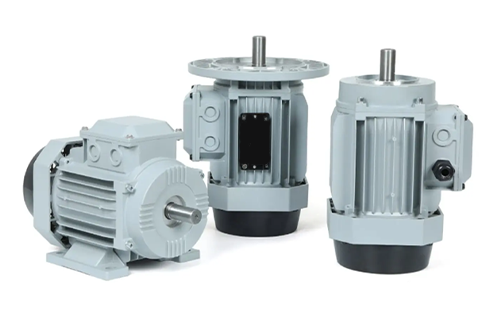
The following are common reasons that can cause smoke from the deceleration motor:
Electrical reasons:
Winding short circuit: This is one of the most common reasons. The insulation between motor windings (coils) is damaged, resulting in turn to turn short circuits, phase to phase short circuits, or ground short circuits. The short-circuit point will generate a huge short-circuit current, instantly generating extremely high heat to burn the insulation and smoke. The reasons for insulation damage include:
Insulation aging (long-term high-temperature operation or exceeding service life).
Voltage too high or too low.
Frequent startup or overload operation leads to overheating.
Manufacturing defects or insulation damage (such as handling bumps, foreign objects entering).
Damp and corrosive gases erode insulation.
Overload operation: The load borne by the motor far exceeds its rated power.
Excessive mechanical load or jamming (stalling).
Selection error, motor power is lower than actual requirement.
Voltage too low: When the voltage is too low, the motor will experience a significant increase in current (current ≈ torque/voltage) in order to output the same torque, resulting in overheating of the winding.
Phase loss operation (three-phase motor): One phase is missing from the three-phase power supply.
The motor operates in a phase loss state, and the remaining two-phase windings need to bear all the load. The current increases sharply (up to √ 3 times or even higher than the rated current), and it quickly overheats and burns out. Circuit breaker or thermal relay protection failure is a common cause.
Voltage abnormality:
High voltage: It can deepen the magnetic saturation of the motor core, leading to a sharp increase in iron loss (eddy current loss and hysteresis loss), overheating of the core, and an increase in excitation current, which may also cause winding overheating.
Low voltage: As mentioned earlier, it can cause an increase in current and overheating.
Voltage imbalance (three-phase): The amplitude difference of the three-phase voltage is too large, causing an increase in negative sequence current, resulting in additional losses and heat generation.
Frequent starting or braking: When starting and braking, the current is very high (locked rotor current), and frequent operation will accumulate heat, exceeding the motor's heat dissipation capacity.
Wiring errors: such as incorrect wiring during star delta startup, reversed phase sequence, etc., leading to abnormal operation and overheating.
Mechanical reasons:
Serious damage to bearings: bearings lack oil, deteriorated lubricating grease, impurities enter, improper installation or fatigue damage, resulting in a sharp increase in rotational resistance (even locking), a sharp increase in motor load, equivalent to overload or even stalling.
Deceleration mechanism malfunction:
Internal jamming: gear teeth breakage, foreign objects entering, bearing damage, output shaft jamming, etc., causing the motor to be unable to rotate (stall), and the current instantly reaches its maximum value.
Lubrication failure: Severe shortage, deterioration, or incorrect selection of lubricating oil/grease can cause dry friction in friction pairs such as gears and bearings, resulting in significant heat generation. Heat may be transferred to the motor part or the gearbox itself may emit smoke (such as high-temperature carbonization of poor quality lubricating oil).
Excessive mechanical resistance: The driven equipment (such as pumps, fan impellers, conveyor loads, stirring blades) gets stuck or experiences abnormal increase in resistance.
Installation issues: Poor alignment between the motor and gearbox, or driven equipment (misalignment of couplings), excessive belt tension, etc., generate additional stress, increase load and friction losses.
Reason for heat dissipation:
Poor heat dissipation:
The cooling fan is damaged (broken blades, loose and detached fan, stuck by foreign objects).
The air inlet, air outlet, or motor casing cooling ribs are severely blocked by dust, oil, and debris, hindering air circulation.
The surface of the motor is covered with insulation material or wrapped in debris.
High ambient temperature: The motor's heat dissipation capacity decreases when it operates beyond its allowed ambient temperature.
High protection level but insufficient heat dissipation design: Motors with high protection levels (such as IP55, IP65) have poorer heat dissipation capabilities than open type motors. If heat dissipation is not fully considered during design or actual working conditions are more severe, they are prone to overheating.
Material degradation and aging:
Long term high-temperature operation: Even if the smoke level is not reached, long-term operation at higher temperatures will accelerate the aging of insulation materials and bearing lubricating grease, reduce their performance, and ultimately lead to failure.
Poor quality materials: using unqualified insulation materials, winding enameled wires or lubricating grease, insufficient heat resistance level or unstable performance.
How to handle and investigate
Take immediate action:
Cut off the power! This is the primary and most crucial step. Prevent the expansion of faults and fire hazards.
Allow the motor and gearbox to cool naturally. Do not attempt to manually rotate or disassemble while smoking or in high temperatures!
Preliminary inspection (after power-off cooling):
Observation: Check for obvious burn marks, melted insulation paint, exposed wires, bearing grease leakage and carbonization, gearbox oil leakage, mechanical damage, etc.
Smell: A strong burning smell usually comes from burnt insulation materials.
Manual rotation: Try rotating the motor shaft and gearbox output shaft by hand (ensure safe power-off), and feel if they are smooth. Is there any jamming or abnormal noise? Is the resistance abnormally high?
Check the power supply: Use a multimeter to check if the input voltage is normal (if the three-phase voltage is balanced and if there is a phase loss).
Check load: Check whether the driven equipment is stuck or has excessive resistance. Disconnect the motor from the load and test the motor separately (with caution).
Professional diagnosis and maintenance:
Measurement of windings: Use a megohmmeter to measure the insulation resistance between windings and ground, which should usually be much greater than 1M Ω (depending on the motor specifications). Use a multimeter to measure the DC resistance of the winding and check if the three-phase resistance is balanced (three-phase motor).
Check protective devices: Check if circuit breakers, fuses, thermal relays, motor protectors, etc. are working properly? Why didn't it take timely action during the malfunction?
Disassembly and inspection: It is usually necessary to disassemble the motor and reducer and check the internal condition:
Motor: winding burnout status, bearing condition, presence or absence of sweeping (rotor friction stator), internal foreign objects, cooling fan.
Gearbox: Gear wear/tooth breakage, bearing condition, lubricating oil quantity/quality, presence of metal debris/foreign objects inside, and damage to seals.
Analyze the root cause: Based on operation records, working conditions, and inspection results, comprehensively determine the fundamental cause.
Important suggestions
Safety first: Smoking faults pose a high risk, non professionals should not handle them on their own. Be sure to contact professional motor maintenance personnel or equipment suppliers.
Prevention oriented: Regular equipment maintenance (lubrication, cleaning, fastening, inspection), monitoring of operating current and temperature, ensuring effective protection devices, and avoiding overload and improper operation.
Fundamental solution: During maintenance, it is not only necessary to repair damaged parts, but also to identify and eliminate the root cause of the malfunction, otherwise the problem may occur again.
Summary: Smoke from the deceleration motor is the ultimate manifestation of serious faults, and the root cause is usually overload (electrical or mechanical), short circuit, phase loss, heat dissipation failure, or mechanical jamming. Immediate power outage, investigation of the cause, and professional repair are the only correct ways to handle it. Do not operate with illness!
electrical machinery,Reducer,gear motor
Address: No.66 bis, Hetong Road, Dongfeng Town, Zhongshan City, Guangdong Province
Tel:0760-22189558
Mobile:13923325827

©2023 GUANGDONG YONGKUN MOTOR CO.,LTD All rights reserved


