
Steps for correctly installing and maintaining planetary gear reduction motors
Release Time :
2025-08-01
Source :
network
Author:
YONGKUN
Steps for correctly installing and maintaining planetary gear reduction motors
The correct installation and maintenance of planetary gear reduction motors are key to their normal operation. Therefore, when installing the planetary gear reduction motor, please be sure to carefully install it in the following order.
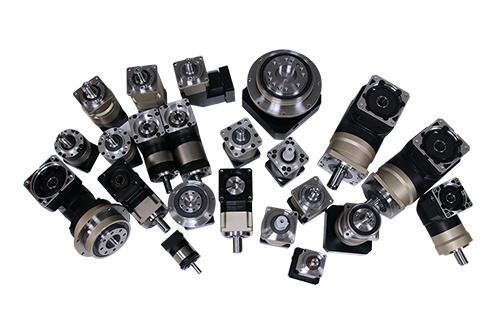
Installation steps (key: accuracy and rigidity)
1. Preparation before installation
Verify parameters:
Confirm that the reducer model, speed ratio, rated torque, flange type (B5/B14, etc.) match the motor, and check if the shaft diameter, keyway, and flange hole position are consistent with the load end.
Cleaning components:
Clean the output shaft, flange end face, and equipment installation surface with non-woven fabric to remove oil stains and burrs (0.03mm burrs may cause installation tilt).
Environmental inspection:
Avoid installation in dusty and humid environments, with a recommended ambient temperature range of 0-40 ℃.
2. Install the base/flange
Rigid reinforcement of the base (for high-frequency start stop):
Installation plate thickness ≥ reducer flange thickness × 1.5 (e.g. if flange thickness is 20mm, installation plate thickness ≥ 30mm).
Weld a "cross" shaped reinforcement plate on the back (thickness ≥ 70% of the installation plate) to prevent vibration deformation.
Flatness calibration:
Adjust the installation surface with a precision level to ensure a flatness of ≤ 0.05mm/m ². If it exceeds the tolerance, use thin copper shims for compensation (elastic shims are prohibited).
3. Connection between reducer and equipment
Flange installation (recommended B14 type):
Align the flange holes of the reducer with the equipment end bolts, and first manually tighten all bolts.
Tighten in diagonal order three times (50% → 80% → 100% rated torque), using a torque wrench (e.g. M10 bolts require 45~60Nm).
Apply thread locking adhesive (medium strength) to prevent loosening.
Hollow shaft installation (requires expansion sleeve):
Polish the surface of the drive shaft to Ra1.6 and apply a thin layer of lubricating oil.
The clearance between the inner hole of the expansion sleeve and the shaft is uniform, and the bolts are tightened in a cross order to the manufacturer's specified torque (over tightening may cause the inner ring to rupture).
After locking, manually rotate the load shaft to confirm that there is no jamming.
4. Connection between motor and reducer
Coaxiality adjustment:
Calibrate the motor and gearbox input shaft with a laser centering device, with a deviation of ≤ 0.05mm and an angle deviation of ≤ 0.1 °.
When there is no laser instrument: use a dial gauge to measure radial/end face runout (≤ 0.1mm).
Tighten the motor flange:
The tightening sequence of bolts is the same as before, and impact wrenches are prohibited!
5. Load connection
Coupling selection:
Diaphragm type coupling (compensating for deviation, resistant to high-frequency impact), with corrugated tube coupling as the secondary choice.
Do not use slider couplings (due to large backlash and damage to planetary gears caused by impact loads).
Installation points:
Reserve 0.5-1mm axial clearance at both ends of the coupling.
The locking screw should be lower than the shaft surface and glued to prevent loosening.
First run debugging
No load trial operation:
Remove the load and run at 10% rated speed for 30 minutes at low speed.
Monitor abnormal noise (normal rustling sound of planetary gear, poor installation of "click" sound gauge).
Infrared thermometer monitors the temperature rise of the casing (should be ≤ 40 ℃).
Load trial operation:
Gradually load to 50% → 80% → 100% rated torque, run for 1 hour at each level.
Monitor vibration velocity (using a vibration meter, RMS value ≤ 2.8mm/s).
Recheck fasteners:
Immediately tighten all installation bolts after shutdown (torque may decrease by 20% after initial operation).
planetary reducer,Precision reducer,gear reducer
Address: No.66 bis, Hetong Road, Dongfeng Town, Zhongshan City, Guangdong Province
Tel:0760-22189558
Mobile:13923325827

©2023 GUANGDONG YONGKUN MOTOR CO.,LTD All rights reserved


