
What other factors affect the efficiency of gear reduction motors?
Release Time :
2024-11-12
Source :
network
Author:
Made by Guangdong Yongkun Motor Co., Ltd
The efficiency of a motor is affected by various factors, and the following are some of the main influencing factors:
Design factors:
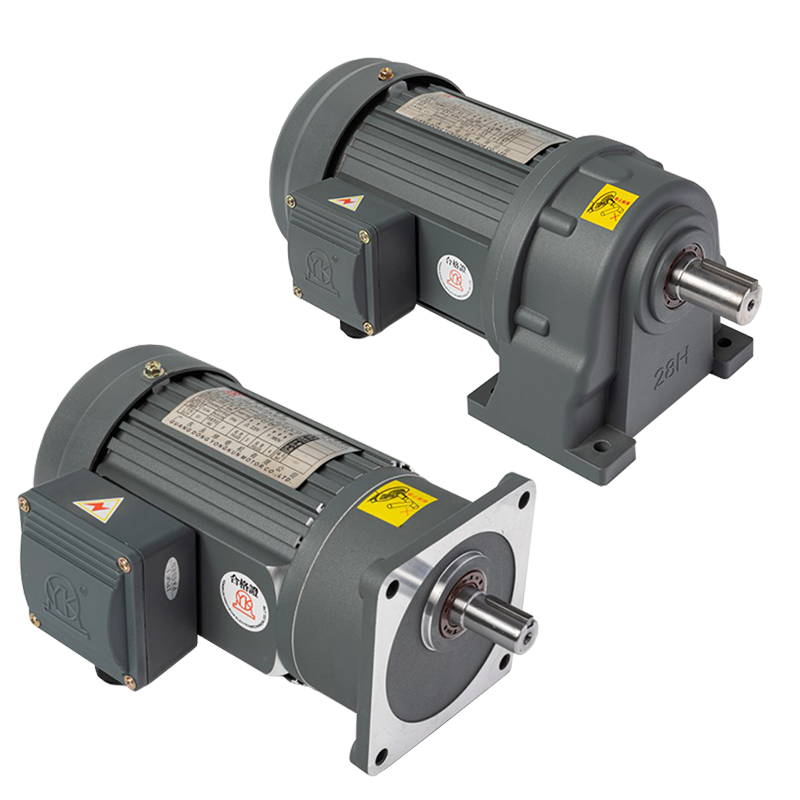
Electromagnetic design: including magnetic circuit design, winding design, slot matching, etc., all of which can affect the copper, iron, and mechanical losses of the motor.
Mechanical design: factors such as bearing type, concentricity between rotor and stator, cooling system design, etc., can affect the friction loss and cooling efficiency of the motor.
2. Material selection:
Conductive materials: The conductivity of winding materials affects resistance losses.
Magnetic materials: The magnetic properties of magnetic steel and yoke materials affect magnetic losses.
Insulation material: The heat resistance and electrical performance of insulation materials affect the reliability and loss of motors.
3. Manufacturing process:
Winding manufacturing: The manufacturing accuracy of windings affects resistance and inductance, which in turn affects efficiency.
Assembly accuracy: The assembly accuracy of motor components affects the vibration and noise of the motor, which may in turn affect efficiency.
4. Operating conditions:
Load rate: The efficiency of the motor will vary at different load rates. Usually, motors have the highest efficiency near full load.
Power quality: The voltage and frequency stability of the power supply have a direct impact on the efficiency of the motor.
Environmental conditions, such as temperature, humidity, and other environmental factors, can also affect the operational efficiency and lifespan of the motor.
5. Maintenance and condition:
Lubrication: The lubrication condition of bearings and other moving parts affects friction losses.
Wear and tear: Wear and tear caused by long-term operation can affect the mechanical efficiency of the motor.
Cleanliness: The cleanliness inside and outside the motor affects the heat dissipation efficiency and overall performance of the motor.
6. Cooling method:
Self cooling: The motor is cooled by its own fan or rotor ventilation.
External cooling: such as water cooling, oil cooling, etc., the cooling efficiency directly affects the thermal management of the motor.
7. Control mode:
Drive mode: Variable frequency drive can optimize the operating point of the motor and improve efficiency.
Adjustment method: such as using speed regulating devices or load regulating devices to optimize the working state of the motor.
The efficiency of a gear reduction motor is a complex parameter that is influenced by the interaction of multiple factors. In practical applications, it is necessary to comprehensively consider these factors and improve the efficiency of gear reduction motors through reasonable design, selection, installation, and maintenance, in order to achieve efficient and stable power transmission.
Gear reducer,Three phase asynchronous motor,Gear motor
Address: No.66 bis, Hetong Road, Dongfeng Town, Zhongshan City, Guangdong Province
Tel:0760-22189558
Mobile:13923325827

©2023 GUANGDONG YONGKUN MOTOR CO.,LTD All rights reserved


