
What is the working principle of the brake motor and its application in the braking system?
Release Time :
2024-11-15
Source :
network
Author:
Made by Guangdong Yongkun Motor Co., Ltd
A brake motor is a device that converts electrical energy into mechanical energy, and its main components include the motor body, control system, braking device, etc. In the braking system, the brake motor plays a crucial role as it can quickly reduce the rotational speed of the motor to zero or even stop it, ensuring the safe operation of the equipment. This article will provide a detailed introduction to the working principle of brake motors and their application in braking systems.
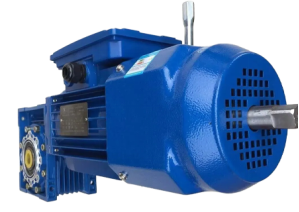
1、 Working principle of brake motor
The working principle of brake motors is mainly based on electromagnetic induction and electromagnetic torque. When the power is turned on, current flows through the motor coil, generating a magnetic field. This magnetic field interacts with the permanent magnets on the motor rotor, generating electromagnetic torque that causes the motor to start rotating. When the motor reaches the set speed, the control system will adjust the current size according to the actual situation to keep the motor running at a constant speed.
When braking is required, the control system will send a braking signal to the brake motor, adjust the direction of the current, and make the permanent magnet on the motor rotor and the magnetic field generated by the motor coil in the opposite direction. In this way, the electromagnetic torque will decrease and the motor speed will gradually decrease. When the speed drops below the set value, the control system will completely cut off the current, causing the motor to stop rotating.
2、 Application of Brake Motor in Braking System
1. Improve braking effectiveness
The application of brake motors in braking systems can improve braking effectiveness, enabling the motor to quickly decelerate or even stop in a short period of time. This is crucial for some equipment that requires high speed, such as elevators, cranes, etc. The braking effect of the brake motor can effectively prevent safety accidents caused by equipment being too fast.
2. Achieve precise control
The brake motor has good speed regulation performance and can achieve precise speed control during operation. When braking is required, the control system can adjust the current size according to the actual situation to stop the motor at the predetermined position or speed. This helps to improve the operational accuracy of the equipment and meet some application scenarios with high requirements for position and speed.
3. Extend the service life of equipment
The brake motor can reduce the heat generated by friction and reduce the wear of the braking device during the braking process. Compared to traditional friction braking methods, brake motors have a longer service life, which is beneficial for reducing equipment maintenance costs.
4. Improve energy utilization efficiency
During the braking process, the brake motor can convert some electrical energy into heat energy, which is dissipated through a heat dissipation device. Compared to other braking methods, the energy utilization rate of brake motors is higher, which is beneficial for energy conservation and reducing operating costs.
The working principle of brake motors and their application in braking systems are of great significance. By understanding the working principle of brake motors, we can better apply them to various types of equipment, improving the safety, stability, and economy of the equipment. In the future development, brake motors will continue to leverage their advantages and provide better braking solutions for various fields.
Brake motor,Gear reducer,Reducer
Address: No.66 bis, Hetong Road, Dongfeng Town, Zhongshan City, Guangdong Province
Tel:0760-22189558
Mobile:13923325827

©2023 GUANGDONG YONGKUN MOTOR CO.,LTD All rights reserved


