
How to reduce the noise of planetary gear reducer?
Release Time :
2024-11-22
Source :
network
Author:
Made by Guangdong Yongkun Motor Co., Ltd
Planetary gear reducer is a widely used reduction device with good product performance, wide reduction range, high torque, high precision, and low noise. However, excessive noise not only affects the environment, but also damages technical indicators such as driving efficiency and accuracy; The planetary gear reducer has too much noise.
The influence of parameters and structural design of planetary gear reducers on noise: when a pair of gears are driven. The greater their overlap, the lower the noise generated, and of course, the lower the overlap, the higher the noise. At the same time, it means an increase in the number of teeth involved in meshing, which is of great significance for improving the stability of gear transmission, reducing noise, and enhancing load-bearing capacity.
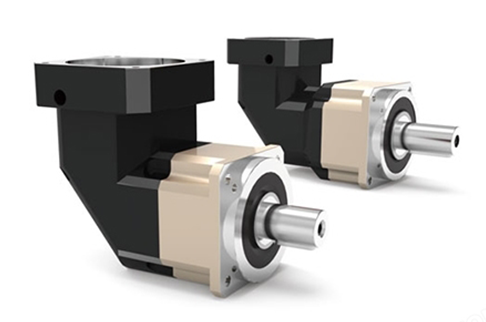
The accuracy level of gears is an important indicator of noise level; For standard series planetary gear reducers, the manufacturing accuracy of the gears determines their noise level. The higher the precision of the gear, the denser the contact points between the meshing teeth and the lower the noise. On the contrary, the lower the precision of the gear, the smaller the contact marks on the meshing tooth surface, and the gear cannot fully mesh on its contact width, which will result in unstable operation and even impact, leading to an increase in noise levels.
3. Impact and noise caused by tooth pitting corrosion; After the driving gear is operated under load for a period of time, small pieces of metal often fall off near the tooth pitch line, forming pitting corrosion. Due to its advantages such as high load-bearing capacity, small size, light weight, and good driving quality, hard toothed gears have good performance. Widely used, although hard faced gears are less prone to pitting corrosion. But once pitting occurs, it is not easy to run in. As working hours increase, the pitting corrosion on the tooth surface will rapidly expand and become a continuously expanding pitting corrosion. The mutual destruction of tooth profiles leads to increased working noise and impact. But the metal debris falling from the impact accelerates the wear of the tooth surface, making the gear transmission unstable and generating noise.
4. Gear machining errors can easily lead to noise; The noise caused by errors during gear processing is mainly due to accumulated errors in tooth pitch and tooth profile. Accumulated errors in tooth pitch are caused by the misalignment of the rotation axis of the gear blank and the rotation axis of the gear during operation, resulting in uneven tooth thickness of the gear. Tooth profile errors are mainly caused by errors in the manufacturing, grinding, and installation processes of rolling cutters, resulting in tooth surface grinding, tooth profile asymmetry, insufficient root cutting, and subsequent machining corrections, making gear transmission unstable. Pulsation, root cutting, and tooth biting occur, resulting in noise.
5. Noise caused by machining errors of the inner ring gear and planetary carrier; The radial runout error of the internal gear ring has a significant impact on the floating amount of the floating component. Therefore, the radial runout of the inner gear ring should be strictly controlled. Due to improper selection of processing and heat treatment processes for the inner gear ring, changes in tooth profile, tooth direction, and tooth pitch after heat treatment are also important causes of noise generation. During the machining process of the planetary carrier, the positional deviation of the planetary shaft directly affects the backlash of the gear pair. The necessary side clearance is crucial for the normal operation, lubrication, thermal expansion and contraction, and non jamming of the reducer. However, if the side clearance is too large, it can cause impact and noise during forward and reverse rotation.
6. The elastic deformation of the tooth surface driven by heavy-duty gears leads to noise; Heavy duty gears, especially hard toothed gears, have large elastic deformation and poor running in performance. The meshing and meshing impact caused by the deformation of gears under load produces noise.
7. Assembly errors lead to noise; During assembly, the geometric accuracy did not meet the design requirements. Causing vibration and noise in the drive system, or loosening of parts during assembly. Causing inaccurate system positioning. Axis movement generates vibration and noise.
8. Improper maintenance of the entire machine leads to noise; Gear surface wear occurs during meshing. During long-term use, if the lubrication and cooling of planetary gear reducers are not sufficient and the cleanliness of the lubricating oil is poor, it will accelerate wear. When the wear is severe, the accuracy of the gears is compromised, and the noise of the planetary reducer will increase.
Planetary reducer,Precision reducer,Reducer
Address: No.66 bis, Hetong Road, Dongfeng Town, Zhongshan City, Guangdong Province
Tel:0760-22189558
Mobile:13923325827

©2023 GUANGDONG YONGKUN MOTOR CO.,LTD All rights reserved


