
You have a training material on the types and characteristics of reducers to learn!
Release Time :
2024-11-26
Source :
network
Author:
Made by Guangdong Yongkun Motor Co., Ltd
In the power transmission industry, a reducer is a type of deceleration transmission device that matches the speed and transmits torque between the prime mover and the working machine or actuator. It is widely used in various industries, including construction machinery, marine auxiliary machinery, mining machinery, textile printing and dyeing machinery, metallurgical industry, shipbuilding industry, petrochemical machinery, light industry machinery, engineering machinery, agricultural machinery, construction machinery, etc.
Gear reducer is the most common type of reducer. Inside the gearbox of the gear reducer, the gears at all levels are driven to achieve the purpose of reducing speed. A gear reducer is composed of various levels of gear pairs. For example, using a small gear to drive a large gear can achieve mechanical deceleration. If a multi-stage structure is adopted, it can greatly increase the mechanical deceleration effect and torque effect.
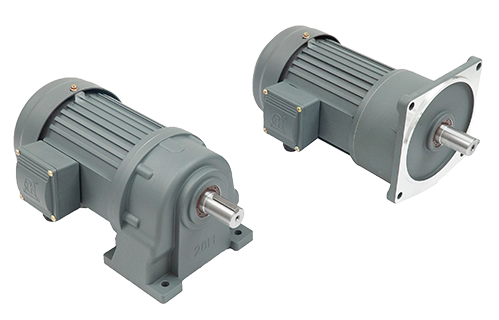
According to the different transmission stages, reducers can be divided into single-stage and multi-stage reducers; According to the shape of gears, they can be divided into cylindrical gear reducers, bevel gear reducers, and cone and cylindrical gear reducers; According to the arrangement of transmission, it can be divided into expansion type, diversion type, and coaxial type reducers.
Single-stage cylindrical gear reducer
The structure of a single-stage cylindrical gear reducer is relatively simple, consisting of a pair of cylindrical gears that are easy to manufacture and maintain. The gear teeth can be straight teeth, helical teeth, or herringbone teeth, with a suitable reduction ratio range of 3-10 and average transmission accuracy.
Double stage cylindrical gear reducer
A two-stage cylindrical gear reducer is a gear reducer that achieves a larger reduction ratio through the meshing of two-stage cylindrical gears. Compared with single-stage cylindrical gear reducers, two-stage cylindrical gear reducers can provide larger reduction ratios and higher torque outputs, making them suitable for applications that require larger reduction ratios and high torque outputs. There are three types of two-stage cylindrical gear reducers: expansion type, split type, and coaxial type. They are suitable for a reduction ratio range of 8-60 and have average transmission accuracy.
Single-stage bevel gear reducer
A single-stage bevel gear reducer is a mechanical device that reduces speed and increases torque by meshing a pair of bevel gears. Compared with cylindrical gear reducers, bevel gear reducers are mainly used to change the transmission direction and achieve deceleration scenarios. The single-stage bevel gear reducer is suitable for a reduction ratio range of 8-10. The transmission ratio should not be too large to reduce the size of bevel gears, which is conducive to processing. Single stage bevel gear reducers are used for transmission where two axes intersect.
Cone and cylindrical gear reducers
The applicable reduction ratio range is 8-40. The bevel gear is arranged on the high-speed stage to reduce the size of the bevel gear. Cone gears can have straight or curved teeth. Cylindrical gears are mostly helical teeth, which allow them to partially counteract the axial force of bevel gears. The volume is relatively large, and the transmission accuracy is average.
Worm gear reducer
Worm gear reducer is a common transmission device that reduces speed and increases torque through the meshing of worm gear and worm wheel. The single-stage worm gear reducer is suitable for a reduction ratio of 10-80, and its main feature is the reverse self-locking function, which can have a larger reduction ratio. The input shaft and output shaft are not on the same axis or plane. However, it generally has a large volume and average transmission efficiency, making it suitable for situations with low precision and intermittent work.
Planetary gear reducer
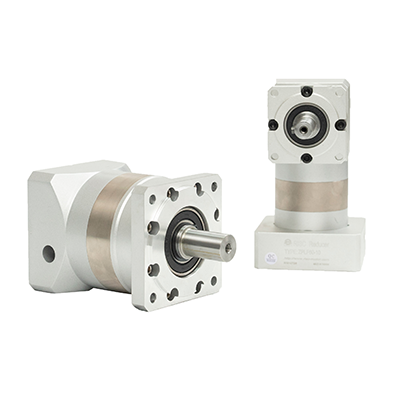
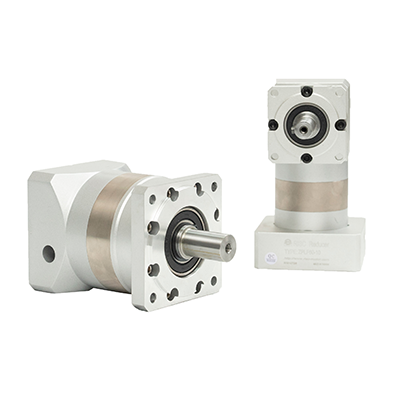
Planetary gear reducer is an efficient transmission device that reduces speed and increases torque through a planetary gear system. It has the advantages of high efficiency, high torque output, low noise, and compact design. The single-stage reduction ratio is generally not less than 3, and the maximum is generally not more than 10. Compared with other reducers, planetary gear reducers have the characteristics of high rigidity, high precision, high transmission efficiency, high torque, and small size. Most of them are installed on stepper motors and servo motors to reduce speed, increase torque, and match inertia.
Reducer,Gear reducer,Gear motor
Address: No.66 bis, Hetong Road, Dongfeng Town, Zhongshan City, Guangdong Province
Tel:0760-22189558
Mobile:13923325827

©2023 GUANGDONG YONGKUN MOTOR CO.,LTD All rights reserved


