One time learning about motors - understanding motors, using motors, surpassing motors
Release Time :
2024-12-13
Source :
network
Author:
Made by Guangdong Yongkun Motor Co., Ltd
1、 An electric motor, commonly known as a motor, is a device that converts electrical energy into mechanical energy. Its main function is to generate driving torque and serve as a power source for electrical appliances or various equipment. Electric motors are ubiquitous in household appliances, industrial equipment, agricultural equipment, military equipment, and transportation vehicles. There are many types of motors, and when the same motor is classified in different ways, its name may vary slightly. It can be distinguished by working power supply, structure and working principle, starting and running mode, or rotor structure. It can also be classified by purpose, usage scenario, and even speed.
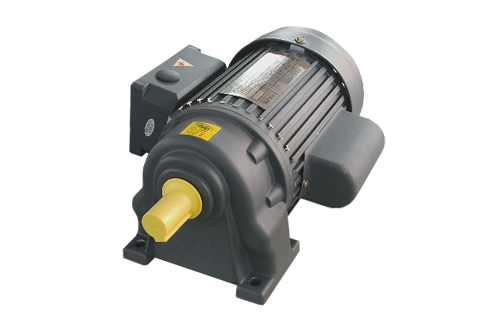
The sparks generated by the mechanical commutation of DC brushed motors cause friction between the commutator and the brushes, electromagnetic interference, high noise, short lifespan, poor reliability, and frequent faults, requiring frequent maintenance. Due to the existence of the commutator, the rotor inertia is limited, the maximum speed is restricted, and the dynamic performance is affected. However, due to its high torque, simple structure, easy maintenance, and low price, it is widely used.
DC brushless motor, also known as DC variable frequency motor (BLDC), uses Hall sensor electronic commutation, and the coil (armature) does not move and the magnetic poles move. It can be divided into external rotor brushless motor and internal rotor brushless motor, with the same structure as permanent magnet synchronous motor. Brushless DC motor uses DC input, but uses synchronous motor frequency conversion technology.
The performance of its use is determined by the brushless electronic speed controller. The driving current of the brushless motor is divided into two types: square wave and sine wave, which are respectively DC brushless motor and AC servo motor, which are one type of AC servo motor.
Brushless motors have advantages such as high efficiency, low energy consumption, low noise, long lifespan, high reliability, servo control, and stepless variable frequency speed regulation. They are smaller in size than brushed DC motors, simpler to control than asynchronous AC motors, have high starting torque and strong overload capacity, but are expensive and difficult to maintain.
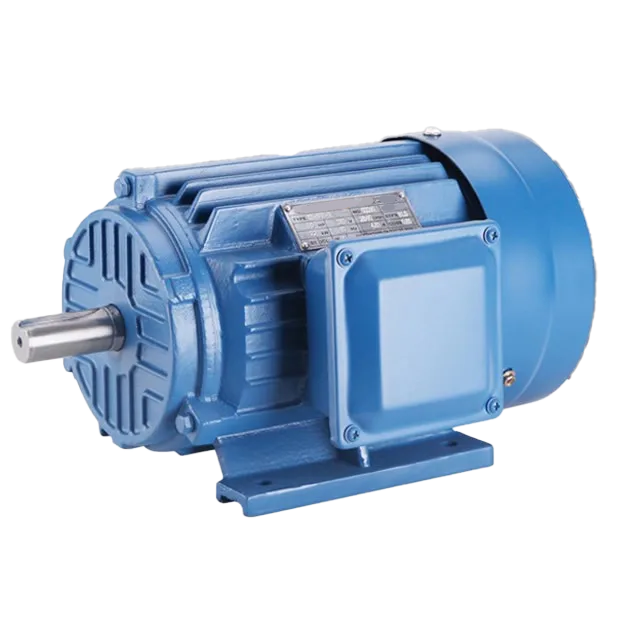
Three phase AC motors are divided into synchronous motors and asynchronous motors. Synchronous motors are mostly used for generators, while asynchronous motors are mostly used for electric motors. Asynchronous motor mechanism is simple, easy to maintain, reliable in operation, and inexpensive, and has been widely used. The rotor structure of synchronous motors is more complex and expensive than asynchronous motors. They are not as widely used in production and daily life as asynchronous motors, and are mainly used as generators. Nowadays, synchronous motors are used in thermal power plants, hydropower stations, steam turbines, and water turbines.
A stepper motor is an open-loop control motor that converts electrical pulse signals into angular displacement. It is an induction motor that uses a stepper drive to supply multi-phase timing control current when converting direct current into components.
The optimal working range for stepper motors is 150-500r/min. Stepper motors are often used in synchronous belt drives, flat belt conveyors, and other situations where positioning accuracy is not very high. The closed-loop stepper motor has an encoder added to the tail, which can achieve closed-loop control with a speed of up to 1500r/min. In situations where low-cost and high-precision positioning are required, it can replace general servo systems.
gear motor,Three phase motor,Gear reducer
Address: No.66 bis, Hetong Road, Dongfeng Town, Zhongshan City, Guangdong Province
Tel:0760-22189558
Mobile:13923325827

©2023 GUANGDONG YONGKUN MOTOR CO.,LTD All rights reserved


