
What is the difference between a torque motor and a deceleration motor?
Release Time :
2024-09-12
Source :
network
Author:
YONGKUN motor
Both torque motors and reduction motors are widely used transmission equipment, with different structures, principles, specifications, performance characteristics, uses, and technical parameters. Let's learn about these two types of equipment together.
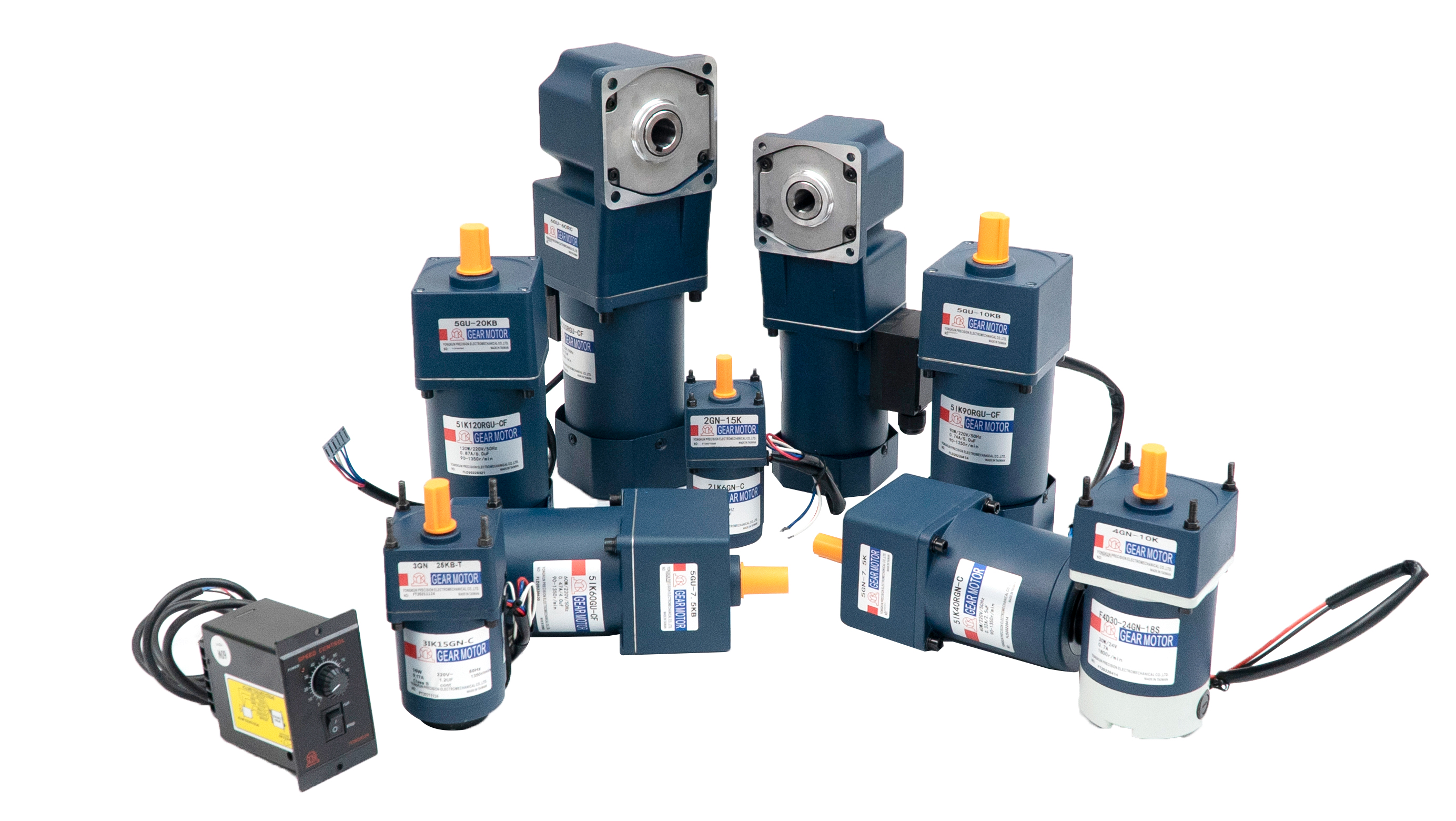
What is a torque motor?
A torque motor is a special type of motor with soft mechanical characteristics and a wide speed range.
The shaft of this type of motor does not output power with constant power but with constant torque. Torque motors include DC torque motors, AC torque motors, and brushless DC torque motors. Widely used in industrial fields such as textiles, wires and cables, metal processing, papermaking, rubber, plastics, and printing machinery.
Characteristics of torque motors:
It has soft mechanical properties and can block rotation. When the load torque increases, it can automatically reduce the speed and increase the output torque. When the load torque is a certain value, changing the motor terminal voltage can adjust the speed, but the speed adjustment rate is not good! Therefore, a speed measuring device is added to the motor shaft, equipped with a controller. By comparing the voltage output by the speed measuring device with the voltage given by the controller, the terminal voltage of the motor can be automatically adjusted to make it stable! It has the characteristics of low speed, high torque, strong overload capacity, fast response, good linearity of characteristics, and small torque fluctuations. It can directly drive the load without reducing the transmission gear, thereby improving the operating accuracy of the system. To achieve different performance indicators, the motor has three different structural forms: small air gap, air gap, and large air gap. The small air gap structure can meet the general accuracy requirements and has the advantage of lower cost; Atmospheric gap structure, due to the increase in air gap, eliminates the cogging effect, reduces torque fluctuations, and basically eliminates the nonlinear changes in magnetic resistance. The motor linearity is better, the electromagnetic air gap is increased, the armature inductance is small, and the electrical time constant is small, but the manufacturing cost is high; The performance indicators of the air gap structure are slightly lower than those of the air gap structure motor, but much higher than those of the small air gap structure motor, while the volume is smaller than that of the air gap structure motor, and the manufacturing cost is lower than that of the air gap structure motor. Direct drive DC torque motors are compact in size, making them particularly suitable for servo applications that require maximum efficiency and optimal positioning accuracy with minimal volume, weight, power, and response time output. This DC torque motor is a servo actuator that can be directly connected to the driven load. A DC torque motor has a permanent magnetic field and a wound armature, which together convert electricity into torque. In industries such as textiles, papermaking, rubber, plastics, metal wires, and wires and cables, motors require products to be wound on drums (reels). The diameter of the torque motor winding increases from the beginning to the end. In order to maintain uniform tension of the wound material (i.e. constant linear velocity), it is required that the drum speed decreases and the winding force increases as it is wound. A torque motor is a special type of motor with multiple stages, which can continue to operate at low speeds or even when the rotor cannot rotate, without causing damage to the motor. In this working mode, the electric motor can provide stable torque to the load (hence the name torque motor). Torque motors can also provide torque in the opposite direction of operation (braking torque). The shaft of a torque motor does not output power with constant power but with constant torque.
Structure of torque motor:
A torque motor can be regarded as an electric motor that has been optimized for torque. The difference between torque motors and general motors is that they allow for high torque and have good heat dissipation performance, so they can work normally even under conditions of motor stalling and high current output. Torque motors are generally designed using brushless DC motors, but sometimes switched reluctance motors and induction motors are also used. Because there is no conceptual standard for torque motors, they are sometimes referred to as low-speed motors or high torque motors. The structure of the torque motor is donut shaped, divided into an outer rotor motor with the rotor on the outer ring and the stator on the inner ring, and an inner rotor motor with the stator on the outer ring and the rotor on the inner ring. Because the outer rotor can generate a larger torque under the same size, the outer rotor motor is more commonly used. Some torque motors can only operate within a specific angle range and cannot rotate once. These torque motors are called limited angle torque motors or swing motors. Some linear motors also consider incorporating characteristics similar to torque motors into linear motors.
Classification of torque machines:
Torque motors include DC torque motors, AC torque motors, and brushless DC torque motors. It is widely used in industries such as mechanical manufacturing, textiles, papermaking, rubber, plastics, metal wires, and wires and cables.
Principle of torque motor:
A constant torque characteristic torque motor can maintain a relatively constant torque over a wide range of rotational speeds, making it suitable for transmission scenarios that require constant torque when the rotational speed changes. For example, in printing and dyeing machinery, when several rollers are used to transport fabric, the fabric is not wound around the rollers, but only attached to the surface of the rollers for transmission, and the diameter of the rollers does not change. This field is suitable for using a constant torque characteristic motor to ensure that the torque is constant and the tension of the fabric is constant at any speed.
Gear motor
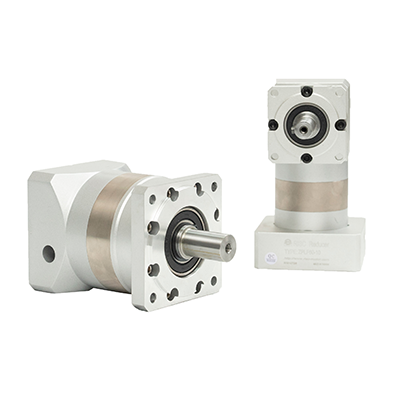
A reduction motor refers to an integrated body of a reducer and an electric motor (motor). This type of integrated body is commonly referred to as a gear motor or gear motor. Usually, it is integrated and assembled by a professional gearbox manufacturer, and then supplied as a complete set together with the motor.
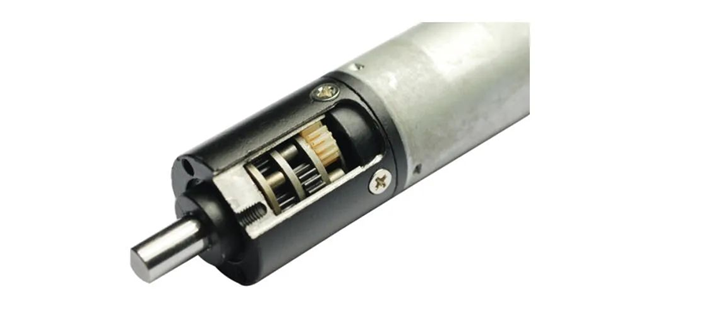
The function of the deceleration motor:
1. Reduce speed while increasing output torque. The torque output ratio should be calculated by multiplying the motor output by the reduction ratio, but be careful not to exceed the rated torque of the reducer. 2. Slowing down also reduces the inertia of the load, which is the square of the reduction ratio. You can see that most motors have an inertia value.
Principle of deceleration motor:
Gear reduction motors generally achieve a certain reduction in speed by inputting the power of an electric motor, internal combustion engine, or other high-speed operation through a small gear on the input shaft of a gear reducer (or gearbox) to drive a large gear. By adopting a multi-stage structure, the speed can be greatly reduced, thereby increasing the output torque of the reduction motor. Its core function of "increasing force and reducing speed" is to use gear transmission at all levels to achieve the purpose of reducing speed, and the reducer is composed of gear pairs at all levels.
Classification of Reduction Motors:
According to the transmission type, it can be divided into gear reduction motors, worm gear reduction motors, and planetary gear reduction motors; According to the different transmission stages, it can be divided into single-stage and multi-stage reduction motors; According to the shape of the gears, they can be divided into cylindrical gear reduction motors, bevel gear reduction motors, and cone cylindrical gear reduction motors; According to the arrangement of transmission, it can be divided into expansion type reduction motors, shunt type reduction motors, and coaxial type reduction motors. According to the driving motor, it can be divided into DC reducer, stepper reducer, hollow cup reducer, servo reducer, etc.
Variable speed motor,electric machinery,Reducer
Address: No.66 bis, Hetong Road, Dongfeng Town, Zhongshan City, Guangdong Province
Tel:0760-22189558
Mobile:13923325827

©2023 GUANGDONG YONGKUN MOTOR CO.,LTD All rights reserved


