
How to test the quality of stepper motors
Release Time :
2025-02-20
Source :
network
Author:
Yongkun Motor
How to test the quality of stepper motors
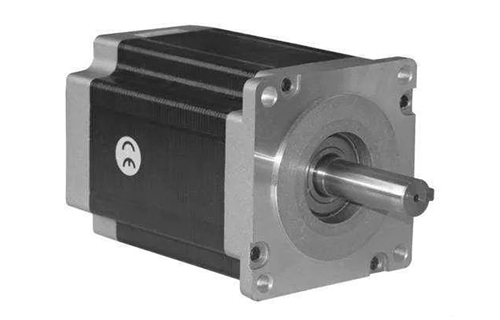
1、 How to measure the quality of a stepper motor
1. If the power is locked, the torque output is normal, and the angle is correct, then this motor is good, otherwise there will be a problem.
2. In the power-off state, rotate the motor shaft by hand, paying attention not to short circuit each lead wire. A good motor should have uniform resistance and can be rotated by hand. Twist the motor lead wires together again (short circuit), and the torque required to rotate the motor shaft is the nominal torque of the motor, which means that a torque as large as the nominal torque of the motor is needed to rotate the motor shaft, otherwise the motor is broken.
2、 Common faults and solutions of stepper motors
1. Step loss during operation of stepper motor
When a stepper motor changes its load operation, if it is loaded with a large inertia load, it will oscillate, causing the motor to start at a certain operating frequency, lose steps, or stop and slide. Causing stepping loss during the operation of the stepper motor. To eliminate step loss caused by large inertial loads, mechanical damping can be used to eliminate or absorb oscillation energy; It is also possible to improve the operating characteristics and eliminate step loss by increasing the friction torque of the load. Because the stepper motor is controlled by electrical pulses to generate stepper motion, taking the above measures can ensure that the electrical pulses are normal and undisturbed, thereby eliminating motor out of step operation.
Another possibility of stepping loss is that the original dual power supply was changed to a single power supply without taking corresponding remedial measures, resulting in a decrease in starting frequency and operating frequency, deterioration of torque frequency characteristics, and stepping loss. When this is the case, dual power supply should be restored. Some units or departments use a single power supply to simplify the circuit and cause motor operation steps, which is inappropriate. It should be noted that the use of dual power supplies is to increase the starting and operating frequencies, improve the torque frequency characteristics, and thus improve the rising and falling edges of the pulse current in the input stepper motor winding. Using a single power supply, the pulse stable current cannot be maintained, and the power of the stepper motor decreases accordingly. Therefore, in the driving process, it is equivalent to a decrease in capacity and overload, and a decrease in efficiency and loss of step. Adopting dual power supply, using two sets of high and low circuits, that is, at the moment when the pulse current of the stepper motor winding is passed, high voltage is applied to it, and the current is strongly accelerated to rise; After the pool current reaches a certain value, apply low voltage to ensure the normal operation of the motor. This measure not only greatly reduces the capacity of the driving power supply, but also improves operational efficiency, improves operational characteristics, and prevents the motor from running out of step.
2. Controlling the winding in the opposite direction affects normal operation
When the stepper motor cannot operate normally, in addition to the two reasons mentioned above that affect speed or cause step loss, it may be due to a reverse connection of the control winding. When a phase winding is reversed, it is equivalent to the opposite direction of the current, and the currents cancel each other out. The motor has no pulse current in this phase, and it runs abnormally or cannot operate at all. When powered on, detecting the three-phase current can reveal it. After detecting the reverse phase, swap the lead wires at the beginning and end of the winding of that phase, connect them correctly, and then power on for current detection.
3. Open circuit fault
The open circuit fault of the stator control winding is manifested as a breakage at the lead joint or complete desoldering at the welding point, or a wire breakage from a certain turn; Another situation is that the wire is not broken, such as false welding, virtual welding, or cracks.
This fault can be detected by using the method of detecting a common three-phase motor open circuit. It is more convenient to use a multimeter resistance range to detect it. When the pointer does not move or the resistance is high, it indicates that the detected phase winding is open circuit.
The repair method is to locate the fault, scrape off the paint on both ends of the disconnection, tighten and weld it firmly, and wrap it with insulation.
4. Short circuit fault
The stator control winding of a stepper motor is generally a multi turn winding made of a single wire, and short circuits are also inter turn short circuits. The detection method mainly consists of the following two steps:
Visual inspection method: Any winding with a short circuit that overheats due to high short-circuit current, and the insulation layer of the winding wire turns black and brittle with a burnt state, is considered a faulty phase; Used to measure the current of each phase during power on operation, the phase with the highest current is the faulty phase.
After finding the fault phase, if the short circuit is on the outer layer of the end, use a heating winding, gently pry up the short circuit turn, pad it with thin insulating paper, compact it, locally heat the coil, brush it with insulation paint No. 1032, and then dry it; If the short circuit is severe and cannot be repaired locally, only the rewinding coil can be replaced.
5. Breakdown fault
The winding with fault can be visually measured, or its insulation resistance can be measured by shaking a megohmmeter. Generally, after breakdown, the winding will be grounded. If the insulation resistance of the detection phase is zero, it indicates that the winding has both breakdown and grounding.
6. Power supply device malfunction prevents the stepper motor from running
Power amplifier failure, electronic switch damage in the gate circuit, and counter failure are common occurrences. Instruments such as multimeters and oscilloscopes can be used to test the circuit section by section. If there is no signal or weak signal detected in the logic part of the amplification program, it indicates that there is a problem with the power driver. Further testing and troubleshooting should be carried out until there is a normal signal; When the electronic switch is not in the starting position, the door circuit opens, indicating that the starting switch has been damaged, and only a qualified switch can be replaced; If there is no feedback signal, that is, there is no voltage value feedback, it indicates that there is a fault in the feedback link. The pulse selector and shaping inverting link should be checked to find the problem and adjust until there is a normal feedback voltage. When it is found that the sequence of powering on the motor is incorrect and does not conform to the set sequence, it indicates that the ring distributor is malfunctioning. Its number of stages should be equal to the number of phases of the motor. In this case, it will sequentially power on the windings of each phase of the motor according to the prescribed logic, causing them to rotate or reverse in sequence. In short, the power supply device should be regularly tested and debugged to prevent faults from occurring and affecting the normal operation of the motor.
Stepper motor,Reducer,Gera motor
Address: No.66 bis, Hetong Road, Dongfeng Town, Zhongshan City, Guangdong Province
Tel:0760-22189558
Mobile:13923325827

©2023 GUANGDONG YONGKUN MOTOR CO.,LTD All rights reserved


