
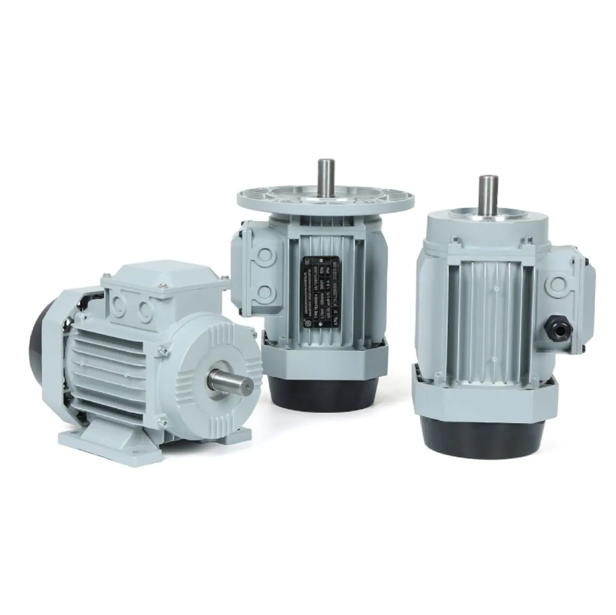
Yongkun Motor! Efficient gear reducer, precise driving for the future!
Release Time :
2025-02-26
Source :
network
Author:
Yongkun Motor
Yongkun Motor! Efficient gear reducer, precise driving for the future!
A speed regulating motor is an electric motor that can achieve speed regulation by adjusting input voltage, frequency, current, or other control methods. It is widely used in industrial automation, household appliances, transportation, mechanical equipment and other fields.
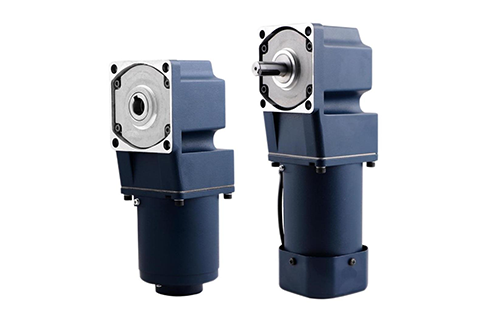
1、 Classification of speed regulating motors
DC speed regulating motor
By changing the armature voltage or magnetic field current to regulate the speed, the speed range is wide and the control is simple.
Common types: brushed DC motor, brushless DC motor (BLDC).
AC speed regulating motor
Speed regulation is achieved by changing the power frequency (variable frequency speed regulation) or voltage (voltage regulation speed regulation).
Common types:
Variable frequency motor: Used in conjunction with a variable frequency drive (VFD), it achieves efficient speed regulation by adjusting frequency and voltage.
Three phase asynchronous motor: commonly used frequency converter or variable pole speed regulation (changing the speed by switching the number of winding poles).
stepping motor
By controlling the frequency and quantity of pulse signals, precise step angle and speed adjustment can be achieved.
servo motor
Combining encoder feedback and high-precision controller to achieve fast response and precise speed regulation, suitable for high dynamic performance scenarios.
2、 Speed regulation method
Voltage regulation
Suitable for DC motors or single-phase AC motors, adjusting the speed by changing the input voltage, but with lower efficiency.
Variable frequency speed regulation (V/F control)
By using a frequency converter to change the power frequency and voltage, it is suitable for three-phase asynchronous motors, with a wide speed range and energy-saving.
PWM (Pulse Width Modulation)
Used for DC brushless motors or servo motors, by adjusting the pulse width to control the average voltage and achieve efficient speed regulation.
pole-changing control
By switching the number of poles of the motor winding to change the speed (such as 2-pole/4-pole switching), the speed range is limited but the structure is simple.
Closed loop
By combining feedback devices such as encoders and speed generators, the output can be adjusted in real-time to improve speed regulation accuracy and stability.
3、 Technical parameters
Speed range: The adjustment range from the lowest speed to the highest speed (e.g. 100-3000 RPM).
Speed control accuracy: stability error of speed control (such as ± 1 RPM).
Power range: ranging from a few watts to several hundred kilowatts, to match the load requirements.
Control methods: analog signal (0-10V), digital signal (RS485, CAN), pulse control, etc.
Efficiency: Efficient speed regulation can reduce energy consumption (such as the energy-saving advantages of variable frequency motors).
4、 Application scenarios
Industrial equipment: machine tools, conveyor belts, pumps, fans, etc.
Household appliances: Variable speed control for air conditioners, washing machines, and electric fans.
Electric vehicles: speed regulation and torque control of the drive motor.
Robot: Servo motors achieve precise joint movements.
Renewable energy: speed regulation of wind turbines.
5、 Key selection points
Load characteristics: constant torque load (such as conveyor belt) or variable torque load (such as fan).
Speed regulation range: Is it necessary to have a wide range of continuous speed regulation.
Control accuracy: whether closed-loop feedback (such as servo system) is required.
Environmental adaptability: requirements for dust prevention, waterproofing, high temperature resistance, etc.
Cost: The combination of frequency converter and motor has a high cost, and it is necessary to balance cost-effectiveness.
6、 Maintenance and troubleshooting
Regularly inspect the electric brushes (brushed motors), bearings, and cooling fans.
Avoid overloading or frequent start stop to prevent motor overheating.
The frequency converter needs to maintain good ventilation to prevent dust accumulation.
Common faults: unstable speed (check power supply or feedback device), abnormal noise (check bearings or gears).
7、 Development Trends
Intelligence: Integrating the Internet of Things (IoT) to achieve remote monitoring and adaptive speed regulation.
Efficient: Adopting permanent magnet synchronous motor (PMSM) to improve energy efficiency.
Miniaturization: High power density design, suitable for compact spaces.
speed motor,Reducer,micro-motor
Address: No.66 bis, Hetong Road, Dongfeng Town, Zhongshan City, Guangdong Province
Tel:0760-22189558
Mobile:13923325827

©2023 GUANGDONG YONGKUN MOTOR CO.,LTD All rights reserved


