
The difference between asynchronous servo motor and synchronous servo motor
Release Time :
2025-03-02
Source :
network
Author:
Yongkun Motor
The difference between asynchronous servo motor and synchronous servo motor
Asynchronous servo motors and synchronous servo motors are two different types of servo motors, which have significant differences in structure, working principle, performance characteristics, and application scenarios.
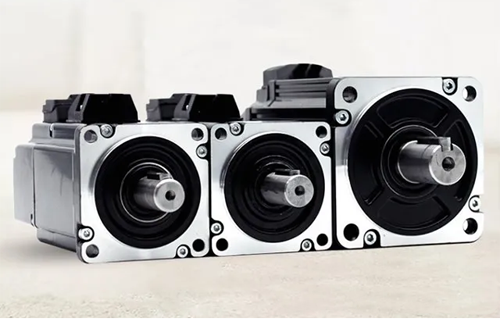
1、 Structure and Working Principle
1. Asynchronous servo motor
Structure: Asynchronous servo motors are usually based on induction motors and implement servo control in the control system. The rotor magnetic field lags behind the stator magnetic field, resulting in the so-called "slip".
Working principle: Based on the principle of electromagnetic induction, it works by adjusting the power frequency to control the speed, and can achieve good dynamic response through advanced control strategies such as vector control.
2. Synchronous servo motor
Structure: The rotor magnetic field and stator magnetic field of a synchronous servo motor rotate at the same speed (i.e. synchronous), so the rotor speed directly depends on the power frequency. They typically use permanent magnets or excitation windings to generate a constant magnetic field.
Working principle: It works using the principle of electromagnetic synchronization, without slip, and can provide accurate position control at any speed.
2、 Performance characteristics
1. Asynchronous servo motor
Strong overload capacity: Asynchronous servo motors have good overload capacity and adaptability, and can maintain good performance in a large range of speed changes.
Low cost: Compared to synchronous servo motors, asynchronous servo motors have lower costs, especially in high-power applications.
● Simple control: The control of asynchronous servo motors is relatively simple, especially after using vector control technology, which can achieve performance close to synchronous motors.
2. Synchronous servo motor
High precision: The speed and position of synchronous servo motors can be precisely controlled, suitable for situations that require high-precision positioning.
High efficiency: Due to the absence of slip loss, synchronous servo motors typically have higher efficiency and can improve energy utilization.
● High dynamic response * *: Synchronous servo motors have fast response speed and can achieve fast and accurate control in a short period of time.
3、 Application scenarios
1. Asynchronous servo motor
Asynchronous servo motors are suitable for applications that do not require high precision but are cost sensitive, such as conveyor belts, food processing machinery, etc. At the same time, it is also suitable for applications that require quick response, frequent start stop, and withstand large mechanical impacts, such as packaging machinery, textile machinery, printing machinery, etc.
2. Synchronous servo motor
Synchronous servo motors are widely used in fields that require high precision, stability, and reliability, such as CNC machine tools, robot joints, semiconductor manufacturing equipment, etc. These applications require motors to provide precise position control, stable torque output, and fast dynamic response.
In summary, asynchronous servo motors and synchronous servo motors have their own advantages in structure, working principle, performance characteristics, and application scenarios. When making a choice, a balance should be made between specific application requirements and technical and economic considerations.
Reducer,speed motor,servo motor
Address: No.66 bis, Hetong Road, Dongfeng Town, Zhongshan City, Guangdong Province
Tel:0760-22189558
Mobile:13923325827

©2023 GUANGDONG YONGKUN MOTOR CO.,LTD All rights reserved


