
Composition, classification, selection, control and use of servo motors
Release Time :
2025-03-13
Source :
network
Author:
Yongkun Motor
Composition, classification, selection, control and use of servo motors
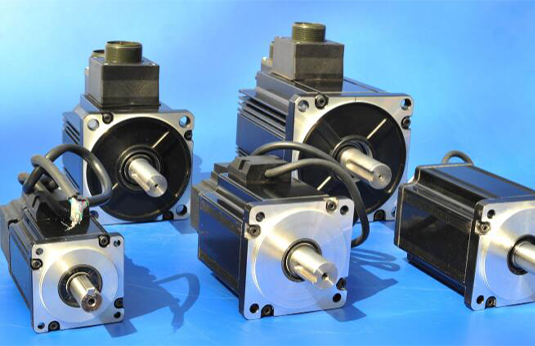
1、 Composition of servo motor
1. Motor body
The core part of a servo motor is usually a DC brushless motor or an AC synchronous motor. Its main function is to provide rotational power.
brushless dc motor
High efficiency, easy to control, commonly used in small and medium power applications.
AC synchronous motor
Suitable for high-power and high-precision applications.
2. Position/velocity sensor
Used for real-time detection of the rotor position and speed of the motor, and feedback to the control system. Common sensors include:
Encoder: divided into incremental and absolute types, used for measuring angular displacement and velocity.
Rotary transformer: Strong anti-interference ability, commonly used in industrial environments.
Hall sensor: measuring rotor position in low-cost applications.
photoelectric sensor
3. Driver
Also known as a servo controller, it is the control center of a motor used to adjust the torque, speed, and position of the motor based on control signals.
Accept external command signals (such as pulse signals sent by PLC or controller).
Internally perform closed-loop control (speed loop, position loop, torque loop).
Adjust the working status of the motor based on the feedback signal.
2、 Classification of servo motors
1. Classified by power supply type
1. Communication servo motor
Smooth operation, low noise, long lifespan; Suitable for medium to high power and high-precision applications.
Among them, permanent magnet synchronous servo motor (PMSM) has high precision and efficiency, and is widely used in industrial robots and machine tools.
2. DC servo motor
Simple control and fast dynamic response; Suitable for low-power applications.
Brushless DC servo motor: high efficiency, maintenance free, widely used in consumer electronics, household appliances, office automation equipment, small robots, etc.
2. Classify by feedback method
1. Incremental servo motor
Provide relative displacement information.
The structure is simple, the cost is low, and it needs to be reset to zero after power failure.
The incremental encoder directly utilizes the principle of photoelectric conversion to output three sets of square wave pulses A, B, and Z phases; A. B has a phase difference of 90 between the two sets of pulses, making it easy to determine the direction of rotation, while Z generates one pulse per revolution for reference point positioning.
servo motor,gear motor,Reducer
Address: No.66 bis, Hetong Road, Dongfeng Town, Zhongshan City, Guangdong Province
Tel:0760-22189558
Mobile:13923325827

©2023 GUANGDONG YONGKUN MOTOR CO.,LTD All rights reserved


