
Motor Speed Control Tips: Characteristics and Selection Guidelines of Various Speed Control Methods
Release Time :
2025-03-21
Source :
network
Author:
Yongkun Motor
Motor Speed Control Tips: Characteristics and Selection Guidelines of Various Speed Control Methods
There are various methods for motor control and speed regulation, including the following common ones:
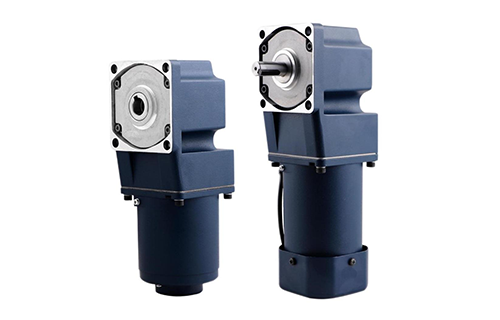
DC motor speed regulation:
Changing armature voltage speed regulation: By adjusting the voltage at both ends of the armature to change the motor speed, the higher the voltage, the faster the speed.
Changing the excitation flux speed regulation: Reducing the excitation flux can increase the motor speed, but this method has a limited speed regulation range.
AC motor speed regulation:
Variable pole number speed regulation: By changing the wiring of the stator winding, the number of poles of the motor can be changed to achieve speed regulation, which is a graded speed regulation method.
Variable frequency speed regulation: Adjusting the motor speed by changing the frequency of the power supply, with a wide speed range and high accuracy, is currently a widely used speed regulation method.
Voltage regulation and speed control: Changing the terminal voltage of the motor stator winding to regulate speed, suitable for square torque loads such as fans and pumps.
In addition, there are methods such as cascade speed regulation and electromagnetic speed regulation, which can be selected according to different application scenarios and motor types.
1. Speed regulation principle
Armature voltage regulation: By changing the voltage at both ends of the armature (such as PWM pulse width modulation), the speed is adjusted to maintain torque stability.
Excitation regulation: Weaken the excitation current to increase the speed (weak magnetic speed regulation), but it will reduce the torque.
Typical solution: thyristor phase controlled rectification, H-bridge drive (bidirectional speed regulation).
2. Core advantages
Wide speed range: stepless speed regulation, speed ratio can reach 1:1000 (if rated at 3000rpm, it can be adjusted to 3rpm).
Fast dynamic response: precise torque control, suitable for frequent start stop (such as robot joints).
Good low-speed performance: It can still run smoothly as low as 1rpm (without the need for encoder closed-loop).
Simple control: simply adjust voltage/current, low circuit cost.
3. Limitations
Brush and commutator wear: Regular maintenance is required, with a lifespan of approximately 1000-5000 hours.
Electromagnetic interference (EMI): Electric brush sparks produce high-frequency noise.
Power limitation: Volume and cost increase dramatically at high power (>100kW).
Environmental restrictions: Not applicable to dust, flammable and explosive environments.
4. Typical applications
Small precision equipment (such as medical instruments, 3D printers).
Electric vehicle drive (early models), unmanned electromechanical tuning.
Laboratory equipment (requiring wide range speed regulation scenarios).
Characteristics of AC motor speed regulation
1. Speed regulation principle
Variable frequency speed regulation (VVVF): changes the power frequency (0.1-400Hz) and voltage, suitable for asynchronous/synchronous motors.
Variable pole speed regulation: Switching the number of stator winding poles (such as 2/4/8 poles), step wise variable speed.
Vector control: Decouples torque and flux to achieve dynamic performance similar to DC motors.
Direct Torque Control (DTC): Real time adjustment of magnetic flux and torque for faster response.
2. Core advantages
Maintenance free: brushless structure (asynchronous motor), with a lifespan of over 100000 hours.
High power density: suitable for high-power scenarios such as megawatt level wind turbines and steel mills.
Strong environmental adaptability: can be designed as special models such as explosion-proof and submersible (IP68).
High energy efficiency: The efficiency of permanent magnet synchronous motor (PMSM) can reach IE5 level (>95%).
3. Limitations
Low speed control is complex: a closed-loop encoder is required to suppress vibration (open-loop V/F control is prone to step loss at<5Hz).
The cost of frequency converters is high: IGBT modules and filtering circuits account for 30% -50% of the total system cost.
Harmonic pollution: The frequency converter generates high-order harmonics and requires the installation of reactors or filters.
4. Typical applications
Industrial production lines (such as conveyor belts, pump type variable frequency control).
In the field of new energy (wind power variable pitch, electric vehicle drive).
Home appliances (variable frequency air conditioners, washing machines).
speed motor,electrical machinery,gear motor
Address: No.66 bis, Hetong Road, Dongfeng Town, Zhongshan City, Guangdong Province
Tel:0760-22189558
Mobile:13923325827

©2023 GUANGDONG YONGKUN MOTOR CO.,LTD All rights reserved


