
Professional explanation of the four series of hard tooth surface reducers
Release Time :
2024-09-19
Source :
network
Author:
YONGKUN MOTOR
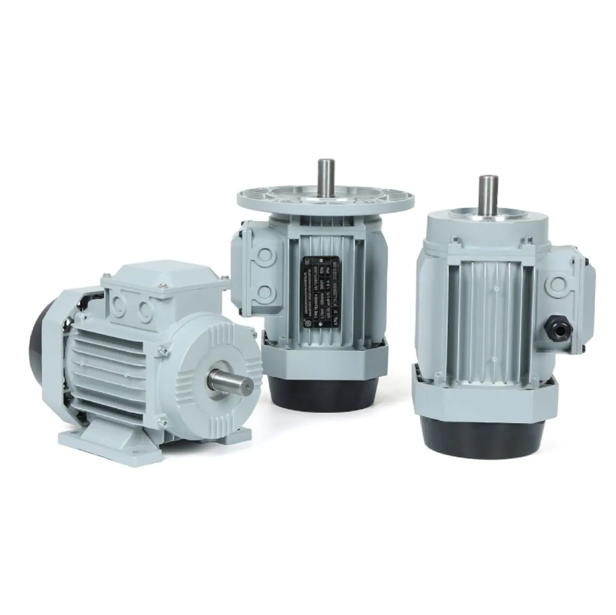
As an important power transmission device, the reduction motor is widely used in the reduction transmission mechanism of various general mechanical equipment. Today, the editor will take you closer to the four major series of hard tooth surface reduction motors and popularize the relevant knowledge of reducers.
What is a gearbox?
A reducer is a mechanism used as a reduction gear transmission device between the prime mover and the working machine, which uses the speed conversion of gears to reduce the number of revolutions of the motor and obtain a larger torque.
Precision manufacturing and intelligent manufacturing for the future
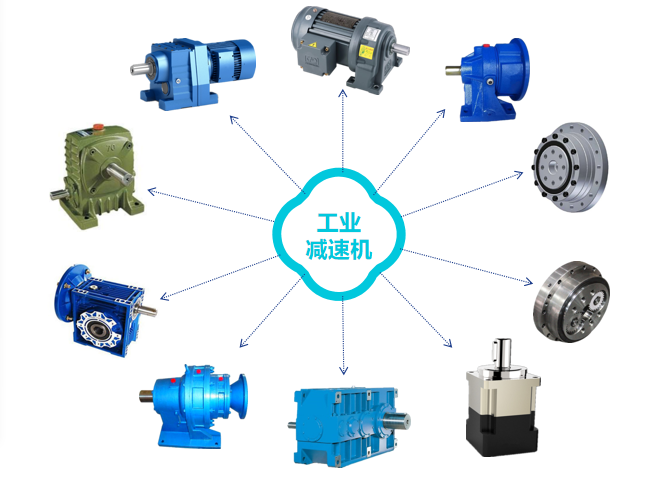
working principle
A reduction motor is a device that uses gears (or worm gears) to greatly reduce the speed of an electric motor, thereby increasing the output torque of the reduction motor to meet the needs of mechanical equipment operation. This power transmission equipment has a core function that cannot be ignored - "increasing force and reducing speed". It uses gears (or worm gears) at all levels to achieve the purpose of reducing speed, and the reducer is composed of gear pairs at all levels.
Four series of hard tooth surface reducers
What are the four major series of hardened gear reducers?
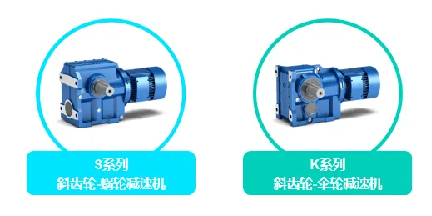
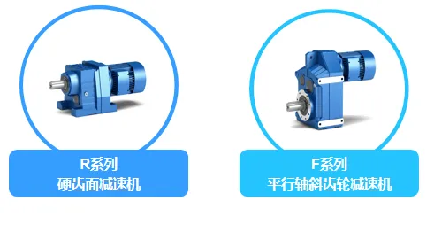
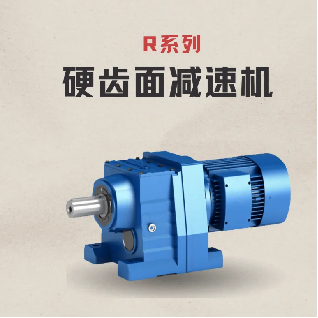
R series hard tooth helical gear reducer
The R series helical gear reducer has the characteristics of small size, light weight, high load-bearing capacity, high efficiency, long service life, easy installation, wide range of motor power, and fine gear ratio grading. It can be widely applied to equipment that requires deceleration in various industries.
S series helical gear worm gear reducer
The helical gear worm gear reducer adopts a motor direct connection form, with a structure of one stage helical gear and one stage worm gear transmission. The output is shaft mounted and has six basic installation forms. It can rotate forward and backward, and the helical gear adopts a hard tooth surface, which runs smoothly and has a large bearing capacity. The working environment temperature is -10 ℃~40 ℃. Compared with similar products, this product has the characteristics of large speed variation range, compact structure, and easy installation. It can be widely used as a reduction mechanism for various mechanical equipment such as metallurgy, mining, lifting, light industry, chemical industry, transportation, and construction.
K series bevel gear helical gear reducer
The umbrella gear helical gear reduction motor adopts a direct motor connection form, with a structure of one stage helical gear and one stage worm gear transmission. The output is shaft mounted and has six basic installation forms. It can rotate forward and backward, and the helical gear adopts a hard tooth surface, which runs smoothly and has a large bearing capacity. The working environment temperature is -10 ℃~40 ℃. Compared with similar products, this product has the characteristics of large speed variation range, compact structure, and easy installation. It can be widely used as a reduction mechanism for various mechanical equipment such as metallurgy, mining, lifting, light industry, chemical industry, transportation, and construction.
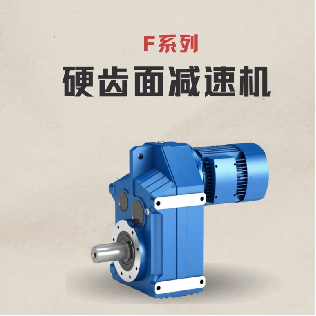
F-series parallel axis reducer
The F-series parallel axis reduction motor adopts the modular design principle of unit structure, greatly reducing the types of components and inventory, and also greatly shortening the delivery cycle. The products are widely used in light industry, food, beer and beverage, chemical industry, escalators, automated warehousing equipment, construction, machinery, steel metallurgy, papermaking, artificial board machinery, automobile manufacturing, tobacco machinery, water conservancy, printing and packaging, pharmaceuticals, textiles, building materials, logistics, feeding machinery, environmental protection and other fields.
The three main functions of a deceleration motor
1. Reduce speed: Use a reduction gearbox to achieve the desired output speed of the motor;
2. Increasing torque: Under the same power conditions, the slower the output speed of the gear reduction motor, the greater the torque, and vice versa;
3. Changing the transmission direction: For example, a bevel gear reduction motor can transmit torque vertically at 90 degrees.
MOTOR,Reducer,Gear motor,Gear reducer
Address: No.66 bis, Hetong Road, Dongfeng Town, Zhongshan City, Guangdong Province
Tel:0760-22189558
Mobile:13923325827

©2023 GUANGDONG YONGKUN MOTOR CO.,LTD All rights reserved


