
What are the differences between the second and third level energy efficiency of motors on the body?
Release Time :
2025-03-23
Source :
network
Author:
Yongkun Motor
What are the differences between the second and third level energy efficiency of motors on the body?
The mechanical efficiency is different, and Energy Efficiency 2 electric motors belong to high-efficiency motors, equivalent to meeting the EFF1 standard.
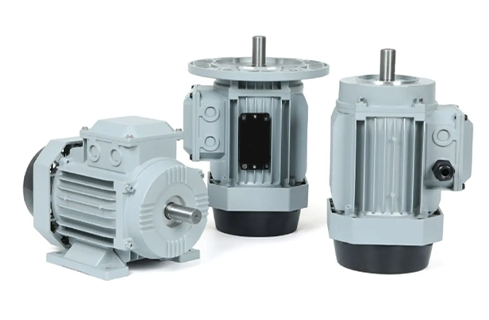
The second level energy efficiency is different from the third level coil, as there are certain differences in the size of the coil disk and the density of magnetic field lines. Energy efficiency refers to the thermal efficiency ratio between the input and output power of an electrical appliance. The higher the thermal efficiency ratio, the more energy-efficient it is, and of course, it also depends on the brand. Many miscellaneous appliances have the same input power as branded appliances, but their output usable power is much smaller. Some people say that their purchased induction cookers have too little cooking power and lack energy, while others say they are very useful. In fact, their input power is basically the same, only the thermal efficiency ratio is different.
The difference between the second level energy efficiency (such as IE3 or IE4) and the third level energy efficiency (such as IE2 or IE3, depending on the standard version) of the motor on the body is mainly reflected in design, materials, and processes, as follows:
1. Differences in materials and structures
Copper wire material and diameter: The windings of secondary energy-efficient motors usually use higher quality copper core wires, and the wire diameter may be thicker to reduce resistance losses and improve efficiency. The copper wire material or wire diameter of the third level energy-efficient motor may be relatively ordinary.
Magnetic materials: Second level energy-efficient motors may use high-performance magnetic materials such as cold-rolled silicon steel sheets to reduce iron loss, while third level energy-efficient motors may use ordinary silicon steel sheets or other traditional materials11.
2. Machining accuracy
The key components of the second level energy-efficient motor, such as the stator and rotor, have higher machining accuracy, such as stricter air gap control, to reduce mechanical friction and energy loss. The machining accuracy of third level energy-efficient motors is relatively low at 16.
3. Coil and magnetic design
The coil disk size of the second level energy-efficient motor is larger and the magnetic field density is higher, which improves efficiency by optimizing the magnetic field distribution. The coil design of a three-level energy-efficient motor may be relatively simple, with a lower magnetic field density of 611.
4. Heat dissipation and loss control
Secondary energy-efficient motors are typically designed with more efficient heat dissipation structures (such as improved cooling fans or fins) to reduce temperature rise and energy loss during operation. The heat dissipation design of a three-level energy-efficient motor may be relatively basic.
5. Energy efficiency labeling and model labeling
According to national standards such as GB 18613-2020, second level energy-efficient motors are usually labeled as IE4 (new national standard) or IE3 (old national standard), while third level energy-efficient motors are labeled as IE3 (new national standard) or IE2 (old national standard). The nameplate will clearly indicate the energy efficiency level and corresponding standard 811.
6. Cost and Market Positioning
The manufacturing cost of second level energy-efficient motors is higher (such as material upgrades and process optimization), and the price is usually more than 20% higher than that of third level energy-efficient motors, which are more affordable due to lower material and technical barriers.
7. Environmental Protection and Long term Benefits
Second level energy-efficient motors have lower energy consumption and carbon dioxide emissions during operation, and long-term use can significantly save electricity costs; Third level energy-efficient motors have lower efficiency, higher energy consumption, and carbon emissions.
summarize
The second level energy-efficient motor has significantly improved efficiency and energy saving through material upgrades, process optimization, and design improvements, but the cost has also increased accordingly; Third level energy-efficient motors place more emphasis on basic performance and economy. Users can choose the appropriate level based on their actual needs, such as long-term energy-saving benefits or initial costs. For more details, please refer to the energy efficiency label and standard version 811 on the motor nameplate or product description.
Secondary energy consuming motor,Low energy consumption motor,three phase asynchronous Motor
Address: No.66 bis, Hetong Road, Dongfeng Town, Zhongshan City, Guangdong Province
Tel:0760-22189558
Mobile:13923325827

©2023 GUANGDONG YONGKUN MOTOR CO.,LTD All rights reserved


