Key issues and diagrams of servo motors
Release Time :
2025-03-25
Source :
network
Author:
Yonkun Motor
Key issues and diagrams of servo motors
1. How to choose servo motor and stepper motor correctly?
It mainly depends on the specific application situation. Simply put, it is necessary to determine the nature of the load (such as horizontal or vertical load, etc.), torque, inertia, speed, accuracy, acceleration and deceleration requirements, upper control requirements (such as requirements for port interface and communication), and whether the main control method is position, torque or speed. Is the power supply DC or AC, or battery powered, with a voltage range. Based on this, determine the model of the motor and the accompanying driver or controller.
2. Choose stepper motor or servo motor system?
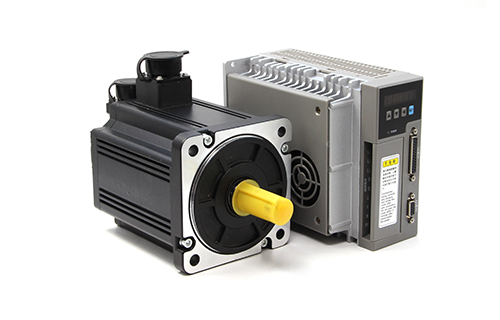
Each has its own characteristics, depending on the specific application situation.
3. How to use a stepper motor driver?
According to the current of the motor, use a driver with a current greater than or equal to this current. If low vibration or high precision is required, a segmented driver can be used. For high torque motors, use high-voltage drivers as much as possible to achieve good high-speed performance.
4. What is the difference and how to choose a 2-phase and 5-phase stepper motor?
The cost of a 2-phase motor is low, but there is significant vibration at low speeds and a rapid decrease in torque at high speeds. A 5-phase motor has lower vibration and better high-speed performance, with a speed 30-50% higher than a 2-phase motor, and can replace servo motors in some situations.
5. When to choose a DC servo system and what is the difference between it and an AC servo system?
DC servo motors are divided into brushed and brushless motors. Brushed motors have low cost, simple structure, large starting torque, wide speed range, easy control, and require maintenance. However, they are easy to maintain (such as replacing carbon brushes), generate electromagnetic interference, and have environmental requirements. Therefore, it can be used in cost sensitive general industrial and civilian applications.
Brushless motors have small size, light weight, high output, fast response, high speed, low inertia, smooth rotation, and stable torque. The control is complex and easy to achieve intelligence. Its electronic commutation method is flexible and can be square wave commutation or sine wave commutation. The motor is maintenance free, highly efficient, operates at low temperatures, emits minimal electromagnetic radiation, has a long lifespan, and can be used in various environments.
AC servo motors are also brushless motors, divided into synchronous and asynchronous motors. Currently, synchronous motors are generally used in motion control, which have a large power range and can achieve high power. High inertia, low maximum rotational speed, and rapidly decreases with increasing power. Therefore, it is suitable for applications that operate smoothly at low speeds.
6. What should be noted when using motors?
Before powering on and running, the following checks should be performed:
1) Is the power supply voltage appropriate (overvoltage may cause damage to the drive module); The+/- polarity of the DC input must not be connected incorrectly, and the motor model or current setting value on the drive controller should be appropriate (not too large at the beginning);
2) The control signal line should be securely connected, and it is best to consider shielding issues in industrial sites (such as using twisted pair cables);
3) Do not connect all the wires that need to be connected at the beginning, only connect the most basic system, and gradually connect them after running well.
4) Be sure to clarify the grounding method or use floating without grounding.
5) Within half an hour of starting operation, closely observe the status of the motor, such as whether the movement is normal, the sound and temperature rise, and immediately stop and adjust if any problems are found.
Precision motor,servo motor,gear motor
Address: No.66 bis, Hetong Road, Dongfeng Town, Zhongshan City, Guangdong Province
Tel:0760-22189558
Mobile:13923325827

©2023 GUANGDONG YONGKUN MOTOR CO.,LTD All rights reserved


