
Exploring Three Phase Asynchronous Motors: A Comprehensive Analysis of Structure, Principle, and Application
Release Time :
2025-03-31
Source :
network
Author:
Yongkun Motor
Exploring Three Phase Asynchronous Motors: A Comprehensive Analysis of Structure, Principle, and Application
Three phase asynchronous motors are widely used in various industries due to their simple structure, reliable operation, low price, strong overload capacity, and easy installation, use, and maintenance process. In industrial production, it can be used for various machines and equipment such as compressors, pumps, fans, conveyors, grinders, cutting machines, etc; In the field of transportation, it can be used for electric vehicles, electric trains, electric boats, etc; In agricultural production, it can be used for irrigation equipment, harvesters, threshing machines, mixers, etc; Three phase asynchronous motors are also used in household and commercial appliances such as air conditioners, refrigerators, washing machines, vacuum cleaners, and electric fans.
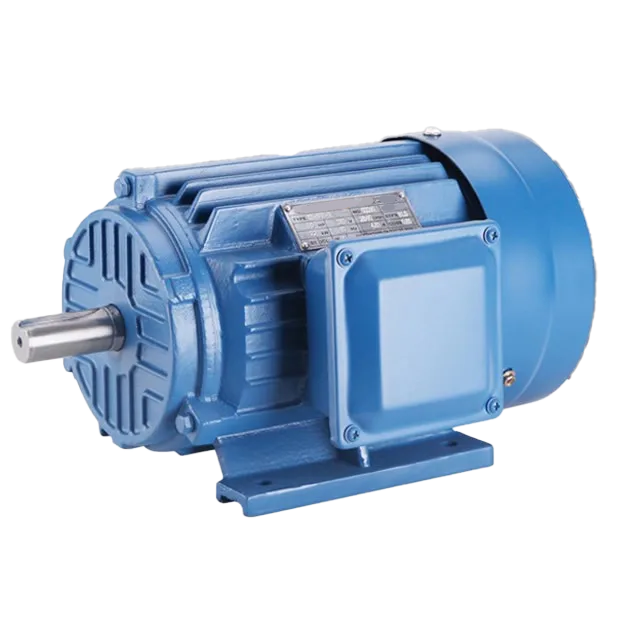
A motor comes with a nameplate when it leaves the factory, which describes important information such as the motor model, power, voltage, current, power factor, motor connection, and motor speed. Whether it is purchasing, using, or repairing, the support of nameplate parameters is necessary to provide users with a basis for use.
1、 Core structure: Collaborative design of stator and rotor
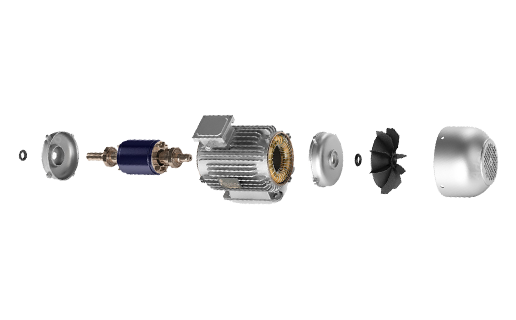
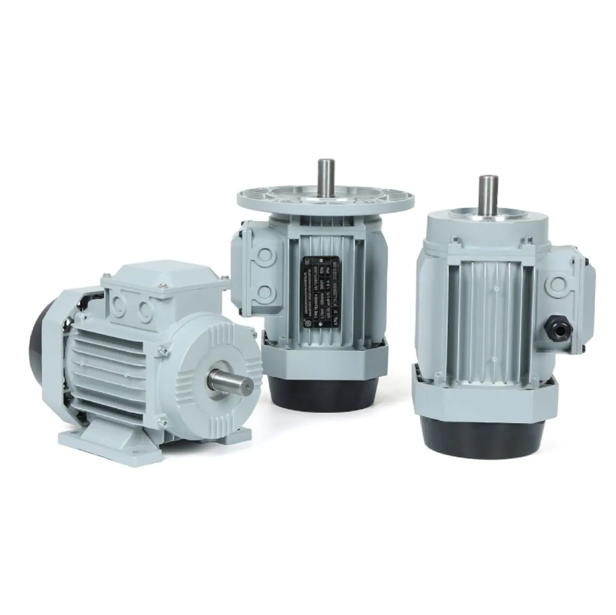
Three phase asynchronous motor is one of the most commonly used electric motors in the industrial field. Its structure can be divided into stator (stationary part) and rotor (rotating part), and the specific composition is as follows:
1. Stator structure
Stator core: made of stacked silicon steel sheets, with slots on the inner circle to embed the three-phase stator winding. Its function is to conduct magnetism and reduce eddy current losses.
Three phase stator winding: made of insulated wires, symmetrically distributed at a 120 ° electrical angle, and generates a rotating magnetic field when connected to three-phase AC power.
Machine base and end cover: The machine base supports the iron core, and the end cover fixes the bearings and protects the internal structure. It is usually made of cast iron or aluminum alloy material.
2. Rotor structure
According to the form of rotor winding, it can be divided into two types:
Cage rotor (most widely used):
The outer circle of the rotor core is slotted, and copper or cast aluminum guide bars are embedded in the slots. The two ends are connected by short-circuit rings to form a closed "cage" structure, which does not require external power supply. The structure is simple and durable, suitable for high-speed operation and mass production (such as fans and water pumps).
Wind wound rotor:
The rotor winding is similar to the stator and is a three-phase winding. It can adjust the rotor current and torque through slip rings and brushes, external resistors or frequency converters, and is suitable for scenarios that require speed regulation or high starting torque (such as cranes and elevators).
3. Other components
Bearings: support the rotor shaft, reduce friction, divided into rolling bearings (commonly used) and sliding bearings.
Fan and heat dissipation structure: used for motor cooling to prevent overheating.
2、 Working principle: Rotating magnetic field drives asynchronous rotation of rotor
The core principle of three-phase asynchronous motor is based on electromagnetic induction and rotating magnetic field theory, and the specific process is as follows:
1. Generation of rotating magnetic field
When symmetrical three-phase AC power is applied to the stator winding of a three-phase system, according to Ampere's law, the three-phase currents generate a synthetic magnetic field in space, which rotates at a synchronous speed n0=p60f (where f is the power frequency and p is the number of magnetic poles).
2. Rotor induced current and electromagnetic torque
The rotor conductor cuts the rotating magnetic field, generating induced electromotive force (Faraday's law of electromagnetic induction), which forms induced current due to the closure of the rotor winding.
Induced current is subjected to Ampere force in a magnetic field, generating electromagnetic torque and driving the rotor to rotate.
3. The essence of "asynchrony": slip rate s
The rotor speed n is always lower than the synchronous speed n0, otherwise there is no relative motion between the rotor and the magnetic field, the induced current disappears, and the torque is zero. The difference between the two is called the slip rate: s=n0 n0 − n (0<s<1)
The slip rate is a key parameter for the operation of asynchronous motors, which determines the power, torque, and efficiency of the motor.
4. Simplification of electromagnetic relationships
The stator winding is equivalent to an "excitation circuit" that generates a rotating magnetic field; The rotor winding is equivalent to an "induction circuit", which obtains energy through electromagnetic coupling without direct electrical connection, which is also the core reason for the simple structure of asynchronous motors.
3、 Typical application: a wide range of scenarios from industry to people's livelihoods
Three phase asynchronous motors have become the preferred choice for drive systems due to their simple structure, low cost, and high reliability. Their application scenarios include:
1. Industrial drive
Pumps and fans: centrifugal pumps, axial fans (such as factory ventilation, sewage treatment), rely on the stable operation of cage motors.
Conveyor belts and compressors: Wire wound motors are used in scenarios that require high starting torque or speed regulation, such as mining conveyors and large air compressors.
Machine tools and printing equipment: high-precision frequency conversion speed control system (with frequency converter to achieve speed control of cage motor).
2. Household appliances and consumer electronics
Air conditioner and washing machine: The cage motor in the variable frequency air conditioner achieves energy saving and noise reduction through variable frequency technology.
Refrigerator compressor: small and efficient cage type motor, suitable for frequent start stop.
3. New energy and transportation
Electric vehicle drive: Some low-speed electric vehicles use cage type asynchronous motors, which have a simple structure and low cost, making them suitable for short distance commuting.
Wind turbine: Double fed induction generator (wound type variant), used in variable speed constant frequency wind power generation systems to improve wind energy utilization efficiency.
4. Special Scenarios
Explosion proof motor: In the chemical and petroleum industries, special materials and sealing designs are used to prevent sparks from causing explosions.
High altitude/high-temperature motors: Targeted optimization of heat dissipation and insulation to adapt to extreme environments such as high-altitude pumping stations and metallurgical furnaces.
three phase asynchronous Motor,gear motor,electrical machinery
Address: No.66 bis, Hetong Road, Dongfeng Town, Zhongshan City, Guangdong Province
Tel:0760-22189558
Mobile:13923325827

©2023 GUANGDONG YONGKUN MOTOR CO.,LTD All rights reserved


