
Basic content of motor selection
Release Time :
2025-04-01
Source :
network
Author:
Yongkun Motor
Basic content of motor selection
The basic requirements for motor selection include the type of load being driven, rated power, rated voltage, rated speed, and other conditions.
1、 The type of load being driven
This has to be explained in reverse from the characteristics of the motor. Electric motors can be simply divided into DC motors and AC motors, with AC motors further divided into synchronous motors and asynchronous motors.
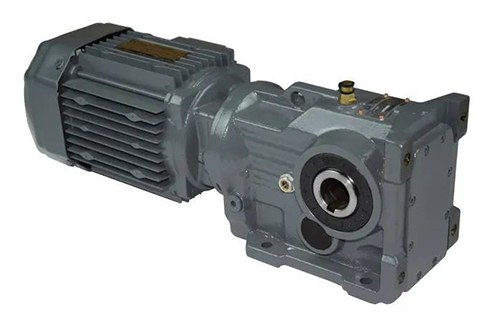
1. DC motor
Advantages of DC motors
It is convenient to adjust the speed by changing the voltage and can provide a larger torque. Suitable for loads that require frequent speed adjustment, such as rolling mills in steel mills and elevators in mines. But now with the development of frequency conversion technology, AC motors can also adjust their speed by changing the frequency. However, although the price of variable frequency motors is not much more expensive than ordinary motors, the price of variable frequency motors accounts for the main part of the entire equipment, so DC motors also have the advantage of being cheap.
Disadvantages of DC motors
Complex structure, any device with a complex structure will inevitably lead to an increase in failure rate. Compared to AC motors, DC motors not only have complex windings (excitation winding, commutation pole winding, compensation winding, armature winding), but also add slip rings, brushes, and commutators.
Not only does it require high craftsmanship from manufacturers, but the maintenance cost in the later stage is also relatively high. Therefore, the use of DC motors in industrial applications is in an awkward situation where they are gradually declining but still have room for use in the transitional stage. If the user has sufficient funds, it is recommended to choose the solution of using an AC motor with a frequency converter, as using a frequency converter also brings many benefits, which will not be discussed in detail.
2. Asynchronous motor
Advantages of asynchronous motors
Simple structure, stable performance, easy maintenance, and affordable price. And the manufacturing process is also the simplest. I once heard from an old technician in the workshop that the labor required to assemble a DC motor can complete two synchronous motors or four asynchronous motors of similar power, which shows this. Therefore, asynchronous motors have been widely used in industry.
Asynchronous motors are divided into squirrel cage motors and wound motors, with the difference being the rotor. The rotor of a squirrel cage motor is made of metal strips, copper or aluminum. The price of aluminum is relatively low, and China is a major aluminum mining country, which is widely used in situations with low requirements. But copper has better mechanical and electrical properties than aluminum, and the vast majority of rotors I have come into contact with are made of copper. After solving the problem of disconnection in the manufacturing process, the reliability of squirrel cage motors far exceeds that of wound rotor motors.
Disadvantages of asynchronous motors
The torque obtained by cutting magnetic induction lines in the rotating stator magnetic field of a metal rotor is relatively small, and the starting current is large, which makes it difficult to handle loads that require high starting torque. Although increasing the length of the motor iron core can obtain more torque, the force is very limited.
When starting a wound motor, the rotor winding is energized through a slip ring, forming a rotor magnetic field that moves relative to the rotating stator magnetic field, thus obtaining greater torque. And during the start-up process, a water resistor is connected in series to reduce the start-up current, and the water resistor is controlled by a mature electronic control device to change its resistance value with the start-up process.
Suitable for loads such as rolling mills and elevators. Due to the addition of slip rings, water and electricity resistors to wound type asynchronous motors compared to squirrel cage motors, there has been a certain increase in overall equipment prices. Compared with DC motors, it has a narrower speed range and relatively smaller torque, resulting in lower value.
However, asynchronous motors, due to the establishment of a rotating magnetic field by energizing the stator winding, which is an inductive component that does not do any work, have to absorb reactive power from the power grid, which has a significant impact on the power grid. Intuitive experience: When high-power inductive appliances are connected to the power grid, the voltage of the grid drops and the brightness of the lights decreases all at once.
Therefore, the power supply bureau may impose restrictions on the use of asynchronous motors, which is also a factor that many factories must consider. Some major electricity consumers, such as steel mills and aluminum plants, choose to establish their own power plants to form their own independent power grid, in order to reduce restrictions on the use of asynchronous motors. So if asynchronous motors want to meet high-power loads, they need to be equipped with reactive power compensation devices, while synchronous motors can provide reactive power to the grid through excitation devices. The greater the power, the more obvious the advantages of synchronous motors, thus creating the stage of synchronous motors.
3. Synchronous motor
The advantages of synchronous motors, in addition to compensating for reactive power in over excited states, also include:
1) The speed of synchronous motor strictly follows n=60f/p, which can accurately control the speed;
2) High operational stability, when the grid voltage suddenly drops, the excitation system will generally force excitation to ensure stable motor operation, while the torque of asynchronous motors (proportional to the square of the voltage) will significantly decrease;
3) The overload capacity is greater than that of the corresponding asynchronous motor;
4) High operational efficiency, especially for low-speed synchronous motors.
gear motor,Reducer,electrical machinery
Address: No.66 bis, Hetong Road, Dongfeng Town, Zhongshan City, Guangdong Province
Tel:0760-22189558
Mobile:13923325827

©2023 GUANGDONG YONGKUN MOTOR CO.,LTD All rights reserved


