Analysis of Common Malfunctions and Solutions of Gearboxes
Release Time :
2024-09-20
Source :
network
Author:
YONGKUN MOTOR
A reducer is a power transmission mechanism that uses a gear speed converter to reduce the rotational speed of a motor to the desired rotational speed, in order to lower the rotational speed and correspondingly increase the torque.
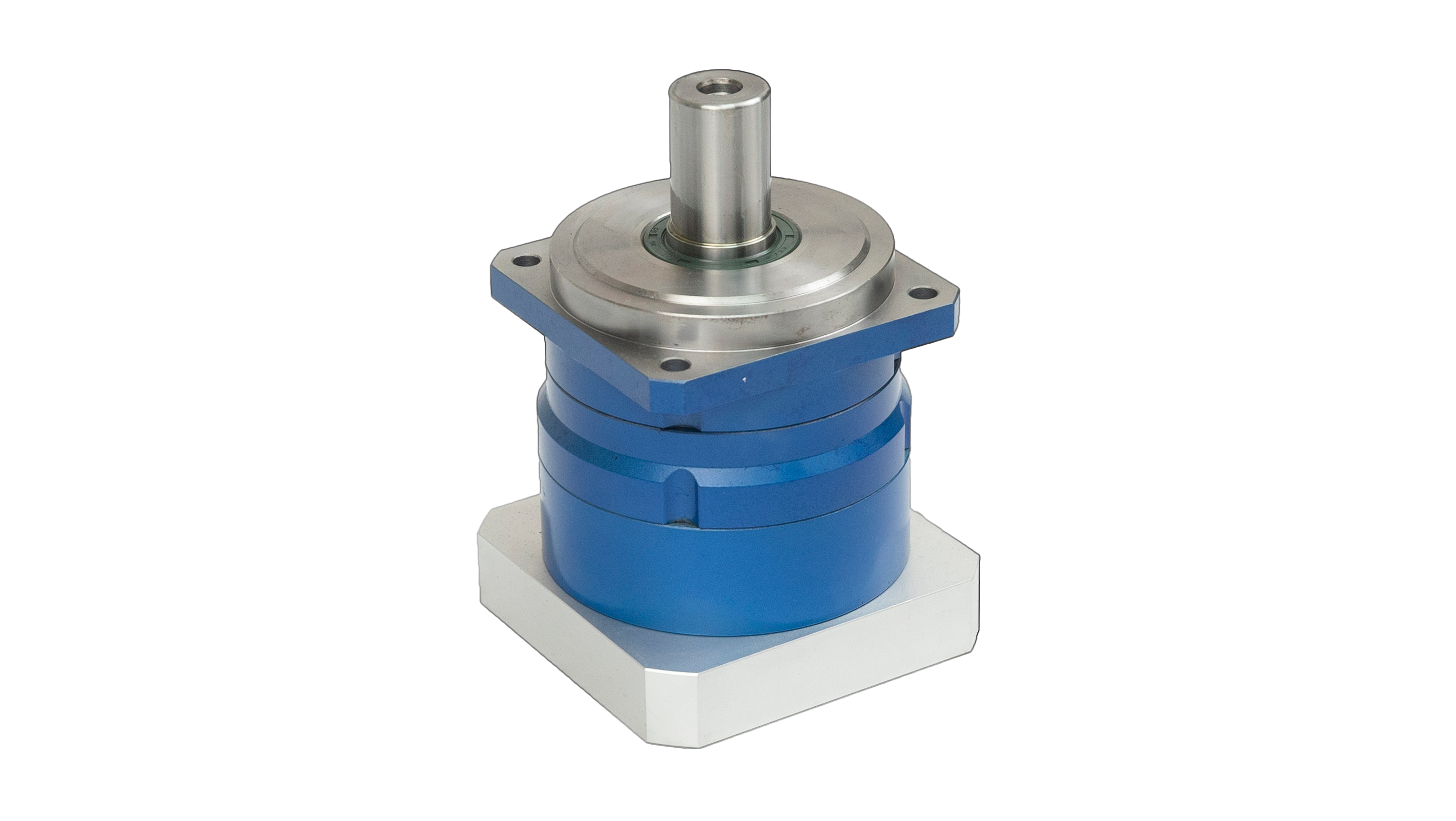
Since the first industrial revolution, gearboxes have rapidly developed and grown as independent products, and their applications in industrial equipment have penetrated into various fields of the national economy such as metallurgy, logistics, petrochemicals, chemical engineering, environmental protection, and national defense. As a key production equipment in production, reducers have been widely used in mechanisms that transmit power and motion, ranging from automated production equipment in the mechanical industry, heavy machinery used in automobiles, locomotives, and construction, to common household appliances, clocks, etc. in daily life. Therefore, conducting research on common faults and handling methods of reducers has become particularly important for ensuring the reliable operation of deceleration machinery.
2、 The working principle and classification of reducers. In modern industrial production, the vast majority of production machinery uses electric motors to drive them. The basic structure of the mechanical transmission system is shown in Figure 1, which consists of three parts: the prime mover, the transmission mechanism, and the production machinery. Reducer is generally used for low-speed and high torque transmission equipment, and is an independent closed transmission device between the prime mover and the working machine. The reducer is installed between the prime mover and the working machine to reduce the speed and correspondingly change its torque. Gearboxes are usually divided into two types: single-stage transmission and multi-stage transmission. Regardless of the transmission method, the internal structure of the gearbox is composed of components such as shafts, bearings, gears, couplings, and casings.
3、 As a key production equipment in production, it is very important to ensure the safe operation of reducers by analyzing the common causes and solutions of faults in reducers. When there is an abnormal situation in the gearbox, it is generally caused by the failure of components such as shafts, bearings, gears, couplings, and casings. Therefore, the search for the cause of gearbox failure is aimed at diagnosing the faults of these components. If accurate judgments can be made on the faults of these components that cause gearbox failures, problems that occur during the operation of the gearbox can be promptly judged and handled to ensure the safety of the unit operation. At present, there are four common types of faults in gearboxes: 1. Shaft imbalance; 2. Axis misalignment; 3. Rolling bearing failure; 4. Gear malfunction. Unbalance is the most common fault of gearboxes. The reasons for rotor imbalance include: unreasonable structural design, manufacturing and installation errors, uneven materials, corrosion, wear, scaling of the rotor during operation, loosening and detachment of components, etc. Axis misalignment usually refers to the degree of inclination or offset between the axis lines of adjacent rotors and the bearing centerline. Axis misalignment can be divided into coupling misalignment and bearing misalignment. Coupling misalignment can also be divided into three situations: parallel misalignment, angular misalignment, and parallel angular misalignment. Damage or destruction of rolling bearings can lead to gearbox failure. The main forms of rolling bearing failure include fatigue peeling, wear, plastic deformation, fracture, and damage to the retaining frame. Due to differences in gear manufacturing, operation, maintenance, as well as factors such as gear materials, heat treatment, and operating conditions, the forms of gear abnormalities vary. Common gear abnormalities include tooth surface wear, surface adhesion and abrasion, surface contact fatigue, bending fatigue, and tooth breakage. Due to the harsh operating environment of the gearbox, wear, leakage and other faults often occur. The gearbox is prone to faults during operation, and the main manifestations of faults are as follows:
1. Wear of the gearbox bearing chamber, including the wear of the housing bearing box, the inner hole bearing chamber of the housing, and the gearbox bearing chamber;
2. The gear shaft diameter of the reducer is worn, mainly on the shaft head, keyway, etc;
3. The bearing position of the gearbox transmission shaft is worn;
4. Leakage at the joint surface of the reducer.
The traditional solution to the wear problem of reducers is to repair them by welding or brushing and plating, but both have certain drawbacks: the thermal stress generated by high temperature welding cannot be completely eliminated, which can easily cause material damage and lead to component bending or fracture; However, electric brush plating is limited by the thickness of the coating and is prone to peeling off. Both methods use metal to repair the metal and cannot change the "hard to hard" fit relationship.
In addition to wear and permeation faults, the running reducer also has various forms of faults such as oil leakage, high temperature rise, abnormal operating sound, and non circulation of oil flow. The causes and solutions for these faults include oil leakage. When installing the reducer shaft with the driven device shaft, the low alignment accuracy accelerates the wear of the oil seal and bearings, resulting in oil leakage. Re alignment and adjustment of the coupling are necessary to ensure alignment accuracy; Replace the sealing gasket or O-ring on the joint surface of the new skeleton rubber oil seal as required. If the oil seal on the output shaft end is damaged or the outer surface of the fastening ring is worn, replace it with a new oil seal, or remove the original fastening ring. Loosen the bolts on the joint surface and tighten them with spring washers. If there are too many impurities and impurities in the lubricating oil, it will accelerate the wear of the oil seal and drain the old oil. After flushing the machine, replace it with new oil and replace the oil seal. If there is too much lubricating oil on the oil seal during operation, it will form or generate excessive stirring heat, causing oil leakage from the oil seal. Add oil to the specified oil level according to the oil label. Do not add too much lubricating oil or grease with poor performance due to excessive temperature rise. Follow the recommended lubricating oil or grease grade in the manual and add enough lubricating oil. Do not lower the grade. If the arm bearing is poorly lubricated, add enough lubricating oil to the specified oil level; Ensure the normal operation of the lubricating oil pump and smooth oil flow. Replace the damaged arm bearings and replace them. If there is abnormal noise during the operation of the arm bearings, the installation error may be large, resulting in low alignment accuracy between the reducer shaft and the driven device shaft. This may cause abnormal meshing of the gear teeth and abnormal noise during the operation of the bearings. Adjust the coupling accordingly
When using chain drive, if the chain is too tight, adjust the tightness of the chain. If the parts are damaged (such as needle teeth sleeve, needle teeth pin, column pin sleeve, etc.), dismantle the machine for inspection, repair or replace them. If the oil flow is not circulating and the oil circuit is blocked, clear the oil circuit, drain the old oil in the machine, flush the oil dirt and debris inside, and then add new oil to lubricate the oil pump. If the parts (such as pump body, cam, spring, etc.) are found to be damaged, they should be repaired or replaced. 4. Analysis of preventive measures to reduce gearbox failures
For mechanical transmission system production equipment, once the reducer malfunctions, it will cause equipment shutdown and bring huge losses to the enterprise. Therefore, taking preventive measures for the gearbox is of great significance in preventing and reducing the occurrence of faults. Common preventive measures for gearbox failures include lubrication and maintenance. Gearboxes are usually equipped with oil injection holes and drain plugs. Therefore, before putting the gearbox into operation, personnel should fill it with recommended types and values of lubricating grease. Secondly, when the gearbox operates under unconventional working conditions, the manufacturer's opinion should be consulted. Under normal operating conditions, the working oil temperature of the gearbox should not exceed 80 ℃. If the transmission power exceeds the thermal capacity of the gearbox, an external cooling device must be provided.
Conclusion
Production practice has proven that taking corresponding preventive measures for common faults in the operation of reducers, arranging timely shutdown and maintenance for problems discovered, achieving predictive maintenance, and avoiding further expansion of the fault state. The implementation of these measures can adapt to the production of enterprises and will bring considerable economic benefits to them.
electric machinery,Planetary reducer,Gear motor
Address: No.66 bis, Hetong Road, Dongfeng Town, Zhongshan City, Guangdong Province
Tel:0760-22189558
Mobile:13923325827

©2023 GUANGDONG YONGKUN MOTOR CO.,LTD All rights reserved


