
How to adjust the brake of the deceleration motor and brake motor
Release Time :
2025-04-06
Source :
network
Author:
Yongkun Motor
How to adjust the brake of the deceleration motor and brake motor
The adjustment method for the brake disc of the brake motor is as follows:
Check the wear level of the brake pads. If they are excessively worn, they need to be replaced. At the same time, check whether the installation of the brake pads is stable and whether there are any looseness or other issues.
Adjust the gap between the brake pads and brake discs. The specific operation method is to first loosen the compression bolt of the brake motor to separate it from the brake disc, and then tighten the compression bolt of the brake motor to adjust the gap between the brake pads and brake discs. Make the entire brake pad parallel to the brake disc.
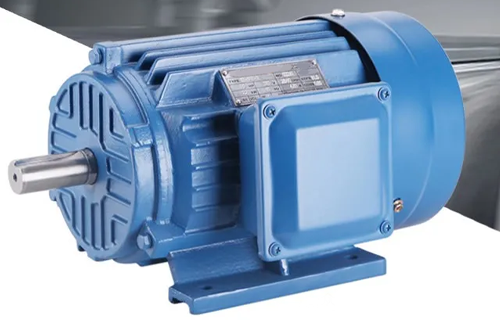
1、 Preparation work
Power off and release the load
Ensure that the motor is completely powered off, remove or release the load on the motor shaft, and avoid accidental rotation during adjustment.
Tool preparation
Prepare tools such as wrenches, feeler gauges (for measuring brake clearance), screwdrivers, etc. Some motors may require specialized tools.
2、 Adjustment steps (taking electromagnetic brake motor as an example)
1. Check the brake clearance
The brake clearance (distance between brake pads and brake discs/wheels) is usually 0.2-0.5mm (refer to the motor manual for details).
Measure the gap with a feeler gauge: manually rotate the motor shaft to find the fitting position between the brake pads and brake discs, insert the feeler gauge to check if the gap is uniform.
2. Adjust the gap
Loosen the adjustment nut: Find the adjustment nut on the brake (usually located at the rear or side of the motor), and loosen the locking nut counterclockwise.
Rotating adjusting bolt: Rotate the adjusting bolt clockwise to bring the brake pads closer to the brake disc and reduce the gap; Rotate counterclockwise to increase the gap.
Measure while adjusting: Check the gap with a feeler gauge after each adjustment to ensure uniformity around (with an error not exceeding 0.1mm).
3. Test the braking effect
Manual test: When the power is off, rotate the motor shaft and release the hand to immediately stop without slipping or jamming.
Power on test: After power on, the motor runs normally. When power off, the brake should respond quickly (response time is usually less than 0.2 seconds) without obvious sliding.
If the brake is too tight (abnormal noise or heat during operation), slightly increase the clearance; If the brake is too loose (brake not in time), reduce the clearance.
4. Lock the nut and recheck it
After adjusting in place, tighten the locking nut and check the clearance and braking effect again to ensure that the nut is not loose.
Be sure to refer to the original manufacturer's manual for the motor. Different brands (such as Siemens, ABB, domestic Zhongchen, etc.) may have different brake structures, and some motors support tool free adjustment or are equipped with electronic monitoring functions.
If it is a servo brake motor, it may need to be adjusted with the assistance of driver parameters (such as brake release delay time), please refer to the servo system manual for details.
It is recommended to record the gap data and braking effect after adjustment, and conduct regular maintenance (every 3-6 months) to ensure the reliable operation of the braking system. If there are any uncertain or complex issues, contact professional technicians to handle them and avoid disassembling and causing damage.
Brake motor,electrical machinery,Reducer
Address: No.66 bis, Hetong Road, Dongfeng Town, Zhongshan City, Guangdong Province
Tel:0760-22189558
Mobile:13923325827

©2023 GUANGDONG YONGKUN MOTOR CO.,LTD All rights reserved


