The selection guide for reducers provides you with protection.
Release Time :
2025-04-09
Source :
network
Author:
Yongkun Motor
The selection guide for reducers provides you with protection.
[Key selection points]
Determine the type of reducer: Select the appropriate reducer type based on the actual application scenario, such as worm gear reducer, gear reducer, etc.
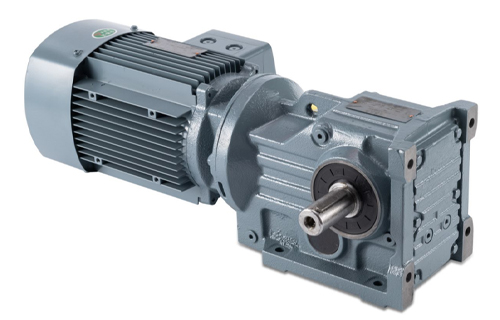
Calculate load: Understand the load situation during equipment operation to ensure that the bearing capacity of the reducer meets the requirements.
Pay attention to performance parameters: Compare the performance parameters of different brands of reducers, such as efficiency, noise, service life, etc.
Here is a guide for selecting a gearbox, hoping to provide you with assistance during the gearbox selection process:
1. Clarify job requirements
Determine transmission ratio: Calculate the accurate transmission ratio based on the input speed and the required output speed. For example, if the motor speed is 1440r/min and the output speed is 72r/min, the transmission ratio is 1440 ÷ 72=20.
Calculate load torque: Analyze the load situation of the equipment driven by the reducer, including static load, dynamic load, inertial force, etc., and accurately calculate the required torque to be transmitted. If the working resistance, rotation radius, and other parameters of the device are known, they can be calculated using the formula T=F × r (T is torque, F is force, and r is rotation radius).
Understand the work environment: Consider environmental factors such as temperature, humidity, dust, and corrosive gases in the workplace. For example, in high-temperature environments, it is necessary to choose a gearbox with good heat dissipation performance; In environments with corrosive gases, reducers with anti-corrosion coatings or stainless steel materials should be selected.
2. Choose the type of gearbox
Cylindrical gear reducer: It has the advantages of high efficiency, wide transmission ratio range, and reliable operation, and is commonly used in general industrial applications such as metallurgy, mining, chemical industry, etc.
Cone gear reducer: It can achieve transmission between intersecting axes and is suitable for situations where the transmission direction needs to be changed, such as cranes, forklifts, etc.
Worm gear reducer: With a large transmission ratio, compact structure, smooth operation, and low noise, but relatively low efficiency, it is commonly used in equipment with limited space and high transmission ratio requirements, such as elevators, winches, etc.
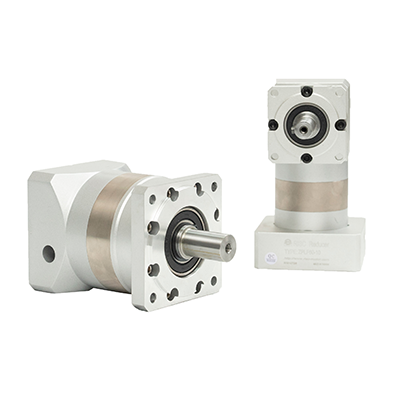
Planetary gear reducer: It has the characteristics of small size, light weight, high transmission efficiency, and large load-bearing capacity, and is widely used in fields such as robotics, CNC machine tools, aerospace, etc.
3. Determine the specifications of the gearbox
According to torque selection: Refer to the torque parameter table provided by the gearbox manufacturer and select the appropriate specifications that can withstand the calculated load torque. At the same time, to ensure a certain safety margin for the gearbox during long-term operation, it is usually necessary to multiply the calculated torque by a safety factor, which is generally between 1.2-1.5 and can be determined according to the severity of the working conditions.
Consider speed limit: Different specifications of reducers have certain limitations on input speed, and it is necessary to ensure that the selected reducer can adapt to the motor speed. If the motor speed is too high, it may be necessary to reduce the speed by adding transmission devices such as pulleys and sprockets, or choose multi-stage reducers to meet the speed requirements.
4. Choose the appropriate installation method
Horizontal installation: It is the most common installation method, where the output shaft of the reducer is parallel to the ground, suitable for the installation requirements of most equipment, such as general industrial production lines, fans, water pumps, etc.
Vertical installation: The output shaft is vertically downward, which can save installation space. It is commonly used in some special occasions, such as mixing equipment and some machinery that requires vertical transmission.
Flange installation: The reducer is connected to the equipment through a flange, which has the advantages of high installation accuracy and firm connection. It is suitable for equipment that requires high installation accuracy, such as precision machine tools, automated production lines, etc.
5. Consider other factors
Maintenance and upkeep: Choosing a gearbox that is easy to maintain and has easily replaceable vulnerable parts can reduce equipment maintenance costs and downtime. For example, some gearboxes adopt modular design, which is easy to disassemble and assemble, and it is more convenient to replace parts.
Brand and Quality: Well known brand gearboxes usually have better guarantees in terms of quality, performance, and after-sales service. You can refer to other users' usage evaluations, industry reputation, and manufacturers' production qualifications, certifications, and other information to choose a brand.
Price and Cost: Taking into account factors such as the purchase price, operating costs (such as energy consumption), and maintenance costs of the gearbox while meeting job requirements, choose products with high cost-effectiveness.
gear motor,Reducer,electrical machinery
Address: No.66 bis, Hetong Road, Dongfeng Town, Zhongshan City, Guangdong Province
Tel:0760-22189558
Mobile:13923325827

©2023 GUANGDONG YONGKUN MOTOR CO.,LTD All rights reserved


