
The difference between adjustable speed motors and non adjustable speed motors
Release Time :
2025-04-11
Source :
network
Author:
Yongkun Motor
The difference between adjustable speed motors and non adjustable speed motors
The main difference between adjustable speed motors and non adjustable speed motors lies in their ability to control the output speed of the motor. The main differences between these two types of motors are as follows:
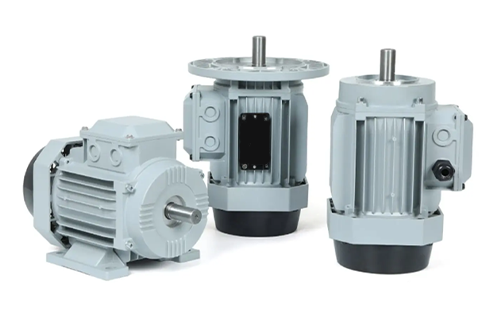
Adjustable speed motor (variable speed motor):
-Adjustable speed: Adjustable speed motors allow the output speed of the motor to be adjusted by controlling the input current, voltage, or other parameters of the motor. This enables them to adapt to different application requirements and run over a wide range of speeds.
-Accuracy: Adjustable speed motors typically provide more precise speed control as they can adjust speed in real-time as needed. This is very useful in applications that require high-precision control, such as CNC machine tools and precision positioning systems.
-Application scope: Adjustable speed motors are suitable for applications that require flexibility and versatility, such as electric vehicles, wind turbines, air conditioning systems, and conveyor belts.
Non adjustable speed motor:
-Fixed speed: The speed of a non adjustable motor is usually fixed and cannot be changed through external control means. Their speed is determined by the design and operating frequency of the motor, and usually cannot be adjusted within a certain range.
-Simplicity: Non adjustable speed motors are usually simpler than adjustable speed motors because they do not have complex control systems. This makes them easier to maintain and operate.
-Application scope: Non adjustable speed motors are typically used for applications that do not require frequent speed adjustment, such as household appliances, fans, pumps, and general industrial applications.
It should be noted that adjustable speed motors are usually more expensive than non adjustable speed motors because they require additional control equipment and electronic components. Therefore, when choosing the type of motor, decisions need to be made based on specific application requirements and cost considerations. If the application requires flexibility and precise speed control, then a variable speed motor may be a more suitable choice. If the application only requires simple, fixed speed operations, then a non adjustable speed motor may be sufficient.
Speed control aspect
Adjustable speed motor: The speed of the motor can be changed through various speed control methods according to actual needs, such as changing the power supply frequency, voltage, magnetic pole pairs, etc., to achieve different speed outputs and adapt to different working scenarios and process requirements. For example, in industrial production, conveyor belts can flexibly adjust the motor speed to control the running speed of the conveyor belt according to the different conveyed items and changes in production rhythm.
Non adjustable speed motor: Under rated voltage and frequency conditions, it can only operate at a fixed speed, usually the rated speed of the motor. If it is necessary to change its speed, it is generally necessary to replace the motor with a different speed or indirectly achieve it through some mechanical transmission devices, but this method is relatively cumbersome and cannot achieve continuous and accurate speed adjustment. For example, some household fan motors are usually non adjustable and have a fixed speed.
In terms of application scenarios
Adjustable speed motor: widely used in applications that require high speed control. In the industrial field, such as machine tools, textile machinery, printing equipment, etc., it is necessary to accurately adjust the motor speed according to different processing techniques and material requirements; In the field of transportation, such as electric vehicles, electric trains, etc., it is necessary to use speed regulating motors to achieve vehicle acceleration, deceleration, and cruise control; Adjustable speed motors are also used in household appliances such as air conditioners and refrigerators to achieve energy efficiency and precise temperature control.
Non adjustable speed motor: suitable for situations where the speed requirement is not high and only the motor needs to run at a fixed speed. Some simple electric tools, such as drills, chainsaws, etc., usually only require a fixed speed to complete the work; Some small household appliances, such as regular washing machines, juicers, etc., have relatively fixed motor speeds and do not require frequent adjustments.
In terms of structure and control methods
Adjustable speed motor: The structure is relatively complex and usually requires specialized speed control devices or controllers. For example, a variable frequency drive motor needs to be paired with a frequency converter to change the power supply frequency in order to achieve speed regulation; DC speed regulating motors need to be regulated by changing the armature voltage or excitation current, which requires corresponding DC power supply and control circuits. Its control method is relatively flexible, and it can receive external instructions through analog signals, digital signals, or network communication to achieve precise speed control.
Non adjustable speed motor: The structure is relatively simple, generally composed of basic components such as stator, rotor, winding, etc., and the control method is also relatively simple. Usually, only a switch is needed to control the start and stop of the motor, without the need for complex speed control circuits. It has high operational stability and relatively low maintenance costs.
In terms of cost
Adjustable speed motor: Due to its complex structure, it requires specialized speed control devices and controllers, resulting in relatively high costs. For example, the price of a regular adjustable speed AC motor with a frequency converter will be much higher than that of a non adjustable speed motor of the same power. Moreover, the maintenance costs of speed control devices and motors are relatively high, requiring professional technicians to install, debug, and repair them.
Non adjustable speed motor: simple structure, single control method, low manufacturing cost, relatively cheap price. Meanwhile, due to its stable operation and low maintenance workload, the overall usage cost is relatively low. This gives non adjustable speed motors a significant advantage in some cost sensitive applications.
Constant speed motor,speed motor,gear motor
Address: No.66 bis, Hetong Road, Dongfeng Town, Zhongshan City, Guangdong Province
Tel:0760-22189558
Mobile:13923325827

©2023 GUANGDONG YONGKUN MOTOR CO.,LTD All rights reserved


