
Analysis of meshing characteristics of hyperbolic gears
Release Time :
2025-04-15
Source :
network
Author:
Yongkun Motor
Analysis of meshing characteristics of hyperbolic gears
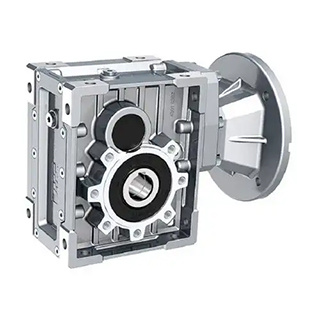
Hyperbolic gears are widely used in drive axle main reducers, with advantages such as high coincidence, smooth transmission, and strong load-bearing capacity. The meshing excitation of hypoid gears is the main source of drive axle vibration noise, and it is necessary to study the meshing characteristics of hypoid gears.
Tooth contact spot
Gear transmission relies on the local contact area on the tooth surface to transmit loads, and the trajectory of the contact area on the tooth surface is called the real contact spot. It is actually difficult to measure real contact spots through experiments because the contact area of the tooth surface is always dynamically changing during gear transmission. Usually apply red lead powder on the tooth surface to approximately measure the actual contact spot.
Positive meshing
When the gears are in forward meshing, the contact areas of the tooth surfaces at different times are summarized together to obtain the simulation results of the tooth surface contact spots. It can be seen that during forward meshing, the concave surface of the small gear comes into contact with the convex surface of the large gear, and at a certain moment, the contact area of the tooth surface is approximately elliptical; During the gear meshing process, the contact area of the elliptical shape gradually increases and decreases after reaching its maximum value; Both large and small gears mesh in from the big end and out from the small end. It can be seen that the finite element simulation results of the tooth contact spot are consistent with the experimental results, indicating that the modeling of the hypoid gear is accurate.
Based on the finite element model of the extended epitrochoid hypoid gear, a comprehensive study was conducted on the meshing characteristics of the gear, including contact spots, root bending stress, coincidence degree, and transmission error. The main conclusions are as follows:
1) When gears mesh, at a certain moment, the contact area of the tooth surface is approximately elliptical. During the meshing process, the contact area of the elliptical shape first increases and then decreases; When gears mesh in the forward direction, both the large and small gears mesh in from the large end and out from the small end, and the opposite occurs when meshing in the reverse direction.
2) The dangerous points at the root of both large and small gears mainly bear tensile stress, while the dangerous points of small gears bear tensile stress first and then compressive stress, while the dangerous points of large gears bear the opposite.
3) When the load is small, the gear coincidence degree is 1. As the load increases, the coincidence degree gradually increases, but the growth rate gradually decreases.
4) The gear transmission error is not affected by temperature, but is greatly affected by load. At low loads, the amplitude of transmission error is the largest; As the load increases, the amplitude of transmission error gradually decreases to the minimum point; Then gradually increase to the maximum point; Finally, it slowly decreases and tends to stabilize.
Reducer,Hyperbolic reducer,gear motor
Address: No.66 bis, Hetong Road, Dongfeng Town, Zhongshan City, Guangdong Province
Tel:0760-22189558
Mobile:13923325827

©2023 GUANGDONG YONGKUN MOTOR CO.,LTD All rights reserved


