The current situation and trend of precision reducer industry, the core component of robots
Release Time :
2025-04-16
Source :
network
Author:
Yongkun Motor
The current situation and trend of precision reducer industry, the core component of robots
The automation level of industrial robots nowadays is astonishing, with so many joints that can achieve precise transmission of motion and commands. The various parts work closely together to complete complex tasks, which makes people curious about their transmission system and the structure of the joints?
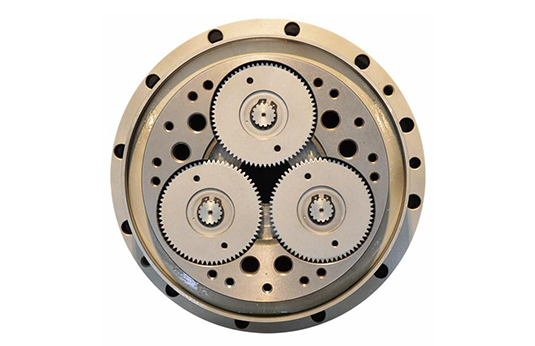
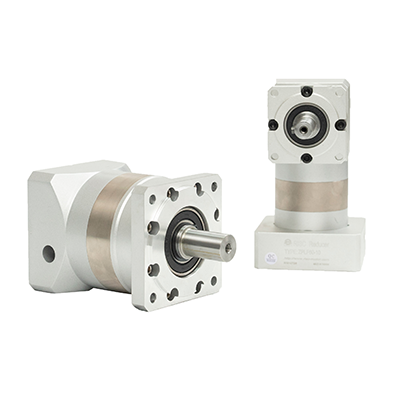
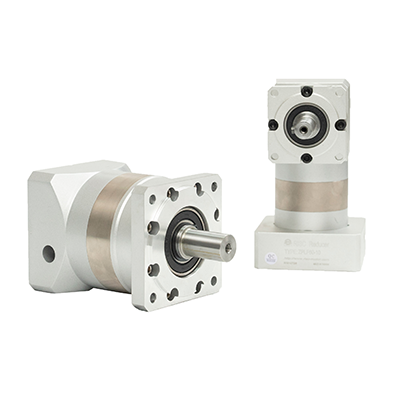
Joints are one of the most important basic components of industrial robots and also the core components of motion: precision reducers. This is a precision power transmission mechanism that uses a gear speed converter to reduce the number of rotations of the motor to the desired number and obtain a device with a larger torque, thereby reducing the speed and increasing the torque.
The deceleration transmission at the joints of robots requires a short transmission chain, small size, high power, light weight, and easy control. At the same time, for industrial robots with medium to high loads, sufficient stiffness, rotation accuracy, and motion accuracy stability are also required.
The working principle and main classification of reducers
In the field of mechanical transmission, a reducer is an intermediate device that connects the power source and the actuator. Its main working principle is to reduce the speed and increase the torque of the prime mover through the mechanical transmission device. That is, by meshing the large gear on the output shaft with the gear on the input shaft with fewer teeth, the high-speed power of the prime mover is reduced in speed and the output torque is increased.
Therefore, reducers are widely used in low-speed and high torque transmission equipment, and are also the core factor affecting robot performance. There are various types and models of reducers to meet the different power transmission needs of different industries. Decelerators can be classified in various ways. According to control accuracy, reducers can be divided into general transmission reducers and precision reducers.
The control accuracy of general transmission reducers is low, which can meet the basic power transmission requirements of general mechanical equipment; Precision reducers have high precision, long service life, small return clearance, and high reliability, making them suitable for high-end manufacturing fields such as industrial robots, service robots, collaborative robots, and industrial automation with high precision control requirements.
The RV reducer is composed of a planetary reducer front stage and a cycloidal pinwheel reducer rear stage, with a large transmission ratio and self-locking function under certain conditions. The RV reducer is developed on the basis of traditional needle pendulum planetary transmission, and its reduction structure consists of the front stage of the planetary reducer and the rear stage of the cycloidal pinwheel reducer. At least two eccentric shafts are used to connect the secondary reduction mechanism; The shell and cycloidal pinwheel are driven by solid castings and steel components, forming a closed differential gear system. The RV reducer not only overcomes the disadvantages of general cycloidal pinwheel transmission, but also has a series of advantages such as high precision (backlash less than 1 degree), high rigidity, high durability, high output density (high torque and compact), large reduction ratio range, and low vibration.
Harmonic Drive,Joint reducer,gear motor
Address: No.66 bis, Hetong Road, Dongfeng Town, Zhongshan City, Guangdong Province
Tel:0760-22189558
Mobile:13923325827

©2023 GUANGDONG YONGKUN MOTOR CO.,LTD All rights reserved


