Concept and selection calculation of deceleration motor! Required knowledge
Release Time :
2025-04-23
Source :
network
Author:
Yongkun Motor
Concept and selection calculation of deceleration motor! Required knowledge
1、 What is a gearbox?
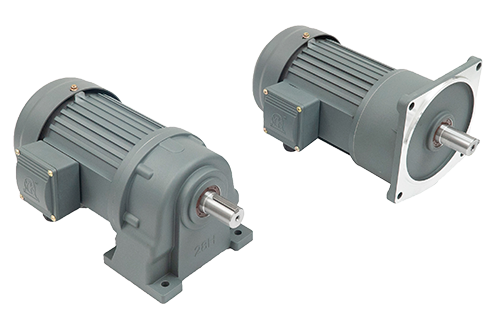
In plain language, a gearbox can be called a "speed reducer and power amplifier". Imagine the scenario of a car shifting gears and climbing hills. The working principle of a gearbox is similar, as it can cleverly convert the high-speed rotation of the motor into low-speed, high torque output. For example, a motor can rotate 1500 revolutions per minute, but after being "processed" by a reducer, the output end may only rotate 30 revolutions per minute. Don't underestimate this "slow and leisurely" output, but the force it generates is enough to lift hundreds of pounds of weight. Isn't it amazing!
2、 Composition of gearbox
After understanding the concept of a gearbox, let's take a look at its internal structure. The reducer is mainly composed of three core parts:
1. Gear set: Just like the gearbox of a bicycle, it changes the speed by interlocking gears of different sizes, and plays a crucial role in the gearbox.
2. Bearing: As a precision component, its function is to make the rotation of the reducer smoother, reduce friction losses, and ensure stable operation of the equipment.
3. Box: It is usually made of metal material, like a loyal guardian, tightly protecting the internal components from external interference.
3、 Four common types of reducers
1. Gear reducer
Advantages: Durable and sturdy leather, affordable price, and high cost-effectiveness.
Disadvantages: The noise during operation is relatively high.
◦ Application scenario: Widely used in industrial scenarios such as conveyor belts and mixers that do not require high noise levels.
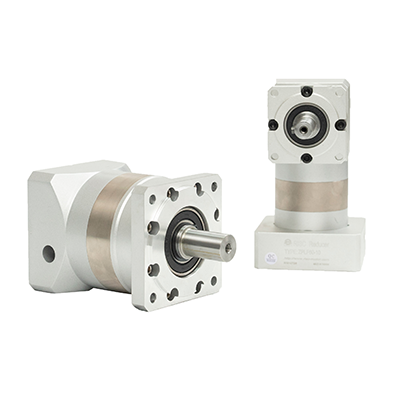
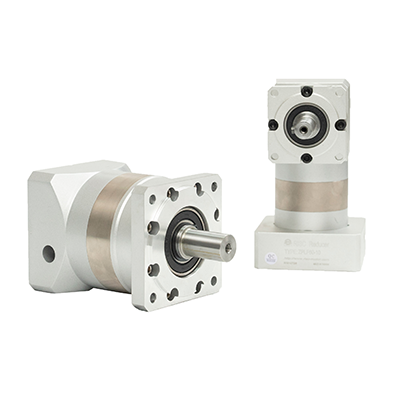
2. Planetary gearbox
Advantages: High precision, compact structure, and the ability to achieve efficient transmission in limited space.
Disadvantages: The internal structure is complex, and manufacturing and maintenance are difficult.
◦ Usage scenario: Commonly used in equipment with strict precision requirements such as robotic arms and machine tools.
3. Worm gear reducer
Advantages: It has self-locking function, strong safety, and a large transmission ratio.
Disadvantages: Low energy conversion efficiency and relatively high energy consumption during operation.
◦ Usage scenario: Mostly used for equipment with high safety performance requirements such as cranes and elevators.
4. Harmonic reducer
Advantages: Zero backlash, precise positioning, long service life.
Disadvantages: Once a malfunction occurs, it is difficult to repair.
◦ Usage scenario: Commonly used in special working conditions such as mining machinery that require high equipment stability and accuracy.
4、 Five step selection method for gearbox
1. Check the usage of the load
Stable load: Typical examples include conveyor belts, fans, etc., where the load is relatively stable during operation.
Impact load: Equipment such as stamping machines and crushers generate significant impact loads during operation.
2. Calculate the load torque
The formula is: required torque T=9550 × motor power (kW) ÷ output speed (r/min). For example, a 0.75kW motor needs to output a speed of 30r/min, and its torque T=9550 × 0.75 ÷ 30 ≈ 239N · m.
3. Determine the reduction ratio
Speed ratio i=motor speed (input speed) ÷ required output speed (output speed). The common speed ratio range is between 5-100, and special models can even reach 10000:1
4. Verify the power meter
Refer to the parameter table provided by the manufacturer and select a gearbox model with a load-bearing capacity greater than or equal to the calculated value, while reserving a safety margin of 1.2-1.5 times, that is, torque multiplied by 1.2-1.5 times
5. Measure installation dimensions
Carefully confirm the flange form (such as flange type, shaft mounted type), installation size, and shaft diameter to ensure a perfect match with the equipment.
gear motor,Reducer,Precision
Address: No.66 bis, Hetong Road, Dongfeng Town, Zhongshan City, Guangdong Province
Tel:0760-22189558
Mobile:13923325827

©2023 GUANGDONG YONGKUN MOTOR CO.,LTD All rights reserved


