
The difference between variable frequency motor and power frequency motor
Release Time :
2025-04-27
Source :
network
Author:
Yongkun Motor
The difference between variable frequency motor and power frequency motor
Electric motors have a wide range of applications, and before the advent of frequency converters, the most commonly used ones were power frequency motors.
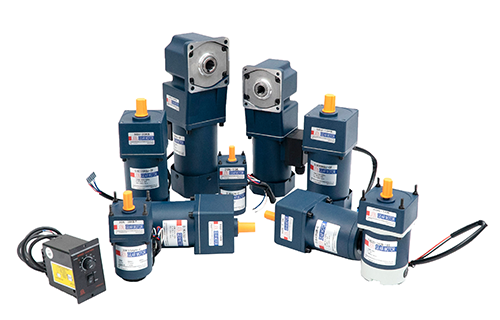
1、 Ordinary asynchronous motors are designed for constant frequency and constant voltage, and cannot fully meet the requirements of variable frequency speed regulation. The following are the effects of frequency converters on motors:
1. The efficiency and temperature rise of electric motors, regardless of the form of frequency converter, generate varying degrees of harmonic voltage and current during operation, causing the motor to operate under non sinusoidal voltage and current.
Taking the commonly used sine wave PWM frequency converter as an example, its low order harmonics are basically zero, and the remaining high-order harmonic components that are about twice the carrier frequency are 2u+1 (u is the modulation ratio). Higher order harmonics can cause an increase in stator copper loss, rotor copper (aluminum) loss, iron loss, and additional losses in electric motors, with the most significant being rotor copper (aluminum) loss. Because asynchronous motors rotate at a synchronous speed close to the fundamental frequency, high harmonic voltages cutting the rotor bars with large slip will result in significant rotor losses. In addition, the additional copper consumption caused by skin effect also needs to be considered. These losses will cause the motor to generate additional heat, reduce efficiency, and decrease output power. If a regular three-phase asynchronous motor is operated under non sinusoidal power supply conditions output by a frequency converter, its temperature rise will generally increase by 10% -20%.
2. At present, many small and medium-sized frequency converters adopt PWM control method to address the issue of insulation strength of electric motors. His carrier frequency is about several thousand to tens of kilohertz, which means that the stator winding of the motor has to withstand a high voltage rise rate, equivalent to applying a steep impulse voltage to the motor, making the inter turn insulation of the motor more severely tested. In addition, the rectangular chopper impulse voltage generated by the PWM inverter is superimposed on the operating voltage of the motor, which poses a threat to the ground insulation of the motor. The ground insulation will accelerate aging under repeated high-voltage impacts.
3. Harmonic electromagnetic noise and vibration: When a common asynchronous motor is powered by a frequency converter, the vibration and noise caused by electromagnetic, mechanical, ventilation, and other factors become more complex. The various time harmonics contained in the variable frequency power supply interfere with the inherent spatial harmonics of the electromagnetic part of the motor, forming various electromagnetic excitation forces. When the frequency of electromagnetic waves is consistent or close to the natural vibration frequency of the motor body, resonance phenomenon will occur, thereby increasing noise. Due to the wide operating frequency range and large speed variation range of electric motors, it is difficult for the frequencies of various electromagnetic waves to avoid the natural vibration frequencies of the various components of the electric motor.
4. The adaptability of electric motors to frequent starting and braking is improved by the use of frequency converters for power supply. Electric motors can be started at very low frequencies and voltages without impulse current, and various braking methods provided by frequency converters can be used for rapid braking, creating conditions for frequent starting and braking. Therefore, the mechanical and electromagnetic systems of electric motors are subjected to cyclic alternating forces, which bring fatigue and accelerated aging problems to the mechanical and insulation structures.
5. The cooling problem at low speeds is firstly due to the imperfect impedance of asynchronous motors. When the power frequency is low, the losses caused by high-order harmonics in the power supply are significant. Secondly, when the speed of a regular asynchronous motor decreases, the cooling air volume decreases proportionally to the third power of the speed, resulting in a deterioration of the low-speed cooling condition of the motor, a sharp increase in temperature rise, and difficulty in achieving constant torque output.
speed motor,electrical machinery,gear motor
Address: No.66 bis, Hetong Road, Dongfeng Town, Zhongshan City, Guangdong Province
Tel:0760-22189558
Mobile:13923325827

©2023 GUANGDONG YONGKUN MOTOR CO.,LTD All rights reserved


