
Electrical performance testing and data analysis of three-phase asynchronous motors with different electrical systems
Release Time :
2025-04-28
Source :
network
Author:
Yongkun Motor
Electrical performance testing and data analysis of three-phase asynchronous motors with different electrical systems
The electrical system of the motor varies depending on the voltage and frequency provided by the distribution equipment, mainly divided into two types: 380V, 50HZ and 440V, 60Hz. Motors with other voltages and frequencies are called differential motors.
Motors of the same model but different electrical systems usually have the same rated power, but there are certain differences in their electrical performance. During inspection and use, there are significant differences in DC resistance, three-phase current, and losses.
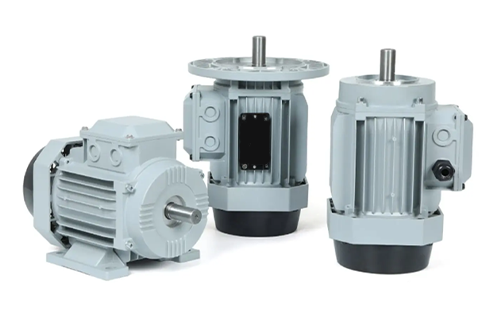
Heterogeneous electric motors are products specially customized by users based on the voltage and frequency of the power supply used, and the batch size is generally not large. When designing, the slot shape of the stator and rotor is usually the same as that of a normal electric motor. For a cast aluminum rotor, the rotor is exactly the same, and some modifications are made to the wire diameter and number of turns of the stator coil, so as to create differences in the electrical characteristics of different electric motors and make the product performance meet the user's power requirements, in order to meet the customer's needs.
There are two main frequencies for electric motors: 50HZ and 60HZ. The voltage corresponding to 50HZ for different electric motors includes 220V, 230V, 320V, 400V, 410V, 415V, 420V, 440V, 510V, 575V, 660V, and 690V; The voltage corresponding to a 60Hz electric motor is 110V, 220V, 240V, 380V, 415V, 460V, 480V, 600V, 660V, and 690V. Among them, 400V/50HZ is equivalent to 460V/60HZ; 415V/50HZ is equivalent to 480V/60HZ.
Under normal circumstances, the allowable range of power supply voltage for normal operation of the motor is ± 5% of the rated voltage, and the applicable range of frequency is ± 1% of the rated frequency. Different electric motors can generally be used interchangeably within a voltage difference of 3% at the same frequency. Therefore, 450V/60HZ motors are the same as 440V/60HZ motors; 410V, 415V, 420V, 50HZ motor coil data is the same.
When the voltage difference is within 3-6%, the availability should be considered based on the difference in the variation of the power supply voltage provided by the user's distribution equipment. Therefore, 400V/50HZ and 415V/50HZ motors each have a set of coil data, which can be used interchangeably with user approval. When the voltage difference is between 6-10%, it is generally not allowed to be used interchangeably. Therefore, 380/50HZ motors and 415V/50HZ motors are generally not allowed to be used interchangeably.
If the voltage difference is above 10%, it is prohibited to use each other. At this time, the motor can easily exceed the rated current when running under load, and the motor may burn out due to overload. In any case, the load current of the motor during operation should not exceed the rated current indicated on the nameplate, otherwise it will cause the motor to overheat and, in severe cases, cause coil overload and burnout.
Under normal conditions of the same model, power, and frequency, the higher the rated voltage and current of the motor, the larger the corresponding DC resistance and the smaller the no-load current; The lower the rated voltage, the larger the rated current, the smaller the corresponding DC resistance, and the larger the no-load current. The no-load current of a continuously running motor is generally 30% to 50% of the rated current. The lower the speed, the greater the proportion of no-load current to the rated current; The proportion of no-load current in the rated current of a crane motor operating for a short period of time is higher. For 12 pole and 16 pole crane motors, the no-load current generally reaches 70% to 90% of the rated current.
The locked rotor current is mainly used to test the rotor characteristics of the motor. Generally, 25% of the rated voltage of the motor is used to test the locked rotor current during testing. For a continuously running motor, the measured locked rotor current is generally 0.9 to 1.2 times the rated current. The higher the speed, the greater the proportion of locked rotor current to the rated current, and the lower the speed, the smaller the proportion of locked rotor current to the rated current.
Reducer,gear motor,electrical machinery
Address: No.66 bis, Hetong Road, Dongfeng Town, Zhongshan City, Guangdong Province
Tel:0760-22189558
Mobile:13923325827

©2023 GUANGDONG YONGKUN MOTOR CO.,LTD All rights reserved


