What types of motors are there? I understand now
Release Time :
2025-05-10
Source :
network
Author:
Yongkun Motor
What types of motors are there? I understand now
Electric motors are a type of driving component commonly used in consumer electronics, household appliances, automation equipment, and other fields, characterized by small size, moderate power, and low noise. According to their different working principles, structures, and application scenarios, motors can be divided into several common types: DC brushed motors, brushless DC motors (BLDC), stepper motors, AC motors, vibration motors, and servo motors. Each type of motor has its unique working principle, structural composition, advantages and disadvantages, and applicable scenarios.
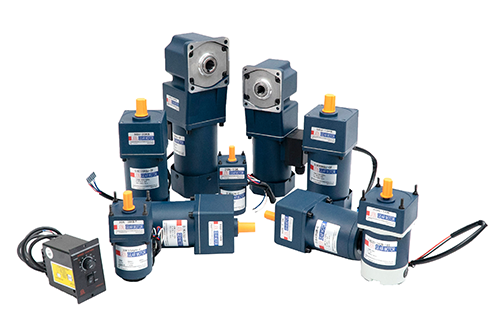
DC brushed motor
Working principle
A DC motor generates a magnetic field and rotates the motor by continuously changing the direction of current through the coordination of brushes and commutators. The magnitude of the applied voltage determines the rotational speed, while direction control is achieved by changing the direction of the current.
Structural composition
Stator: Contains electromagnets or permanent magnets that provide a static magnetic field.
Rotor (armature): The rotating part of a motor, usually composed of coils.
Electric brush and commutator: The electric brush contacts the commutator to switch the current and ensure the continuous rotation of the motor.
application
Electric tool
Small fan
Robot driven
toy
advantages and disadvantages
Advantages: Simple structure, easy control, good speed regulation performance, and low cost.
Disadvantages: Regular replacement of brushes is required, resulting in high operating noise and low efficiency.
model selection
Suitable for products that require control of speed, minimal load changes, and low cost.
Brushless DC motor (BLDC)
Working principle
Brushless DC motors replace traditional brushes and commutators with electronic commutation. There is an electronic driver inside the motor that adjusts the direction of current through feedback current and control circuit, driving the rotor to rotate.
Structural composition
Stator: an electromagnet containing windings.
Rotor: usually a permanent magnet.
Electronic commutator: replaces traditional brushes and commutators with sensors and control circuits.
application
Electric tool
electric vehicle
Fans, electric toys
UAV
advantages and disadvantages
Advantages: High efficiency, brushless design, long service life, low noise, high control accuracy.
Disadvantages: High price and complex driving circuit.
model selection
Suitable for occasions that require high efficiency, low noise, long lifespan, and high performance, such as electric vehicles, power tools, etc.
Reducer,gear motor,electrical machinery
Address: No.66 bis, Hetong Road, Dongfeng Town, Zhongshan City, Guangdong Province
Tel:0760-22189558
Mobile:13923325827

©2023 GUANGDONG YONGKUN MOTOR CO.,LTD All rights reserved


