
Common faults and solutions of servo motors
Release Time :
2025-05-21
Source :
network
Author:
Yongkun Motor
Common faults and solutions of servo motors
Servo motors often experience motor failures due to long-term continuous use or improper user operation, and maintenance is relatively complex. Today, we have collected 13 common repair methods for servo motor faults for everyone to learn and reference.
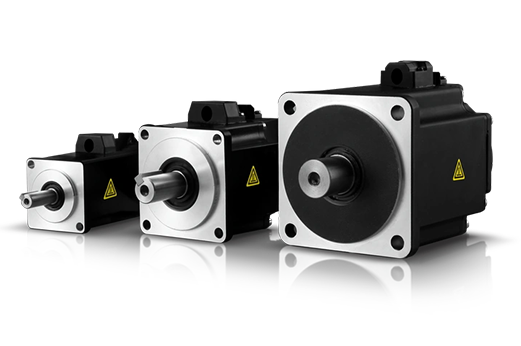
What are the tasks that need to be done before starting the servo motor?
1) Measure insulation resistance (not less than 0.5M for low voltage motors).
2) Measure the power supply voltage, check if the motor wiring is correct, and if the power supply voltage meets the requirements.
3) Check if the starting equipment is in good condition.
4) Check if the fuse is suitable.
5) Check if the motor is properly grounded and zeroed.
6) Check if there are any defects in the transmission device.
7) Check if the motor environment is suitable and remove flammable materials and other debris.
What are the reasons for overheating of servo motor bearings?
Motor itself:
1) The fit between the inner and outer rings of the bearing is too tight.
2) There are issues with the shape and position tolerances of components, such as poor coaxiality of machine bases, end caps, shafts, and other parts.
3) Improper selection of bearings.
4) Poor lubrication of bearings or incomplete cleaning of bearings, with impurities in the lubricating grease.
5) Axis current.
In terms of usage:
1) Improper installation of the unit, such as the coaxiality of the motor shaft and the dragged device shaft meeting the requirements.
2) The pulley is pulled too tightly.
3) Poor maintenance of bearings, insufficient or expired lubricating grease, and deterioration due to dryness.
What is the reason for the imbalance of three-phase current in servo motors?
1) Three phase voltage imbalance.
2) Poor welding or poor contact of a certain phase branch inside the motor.
3) Motor winding inter turn short circuit or ground phase short circuit.
4) Wiring error.
How to control the speed of servo motor?
A servo motor is a typical closed-loop feedback system, in which the reduction gear set is driven by the motor, and its terminal (output end) drives a linear proportional potentiometer for position detection. The potentiometer converts the angular coordinates into a proportional voltage and feeds it back to the control circuit board. The control circuit board compares it with the input control pulse signal, generates a correction pulse, and drives the motor to rotate in the forward or reverse direction, so that the output position of the gear set matches the expected value, and the correction pulse tends to 0, thereby achieving the goal of precise positioning and constant speed of the servo motor.
gear motor,electrical machinery,servo motor
Address: No.66 bis, Hetong Road, Dongfeng Town, Zhongshan City, Guangdong Province
Tel:0760-22189558
Mobile:13923325827

©2023 GUANGDONG YONGKUN MOTOR CO.,LTD All rights reserved


