
Stepper Motor vs Servo Motor: Detailed Principles and Core Features
Release Time :
2025-05-24
Source :
network
Author:
Yongkun Motor
Stepper Motor vs Servo Motor: Detailed Principles and Core Features
In the fields of industrial automation, robotics, 3D printing, etc., stepper motors and servo motors are the two most common driving devices. Many engineers and technology enthusiasts often struggle with the differences between the two when selecting a project. Today, PHM will take you through the differences between principles, performance, and application scenarios to fully understand them!
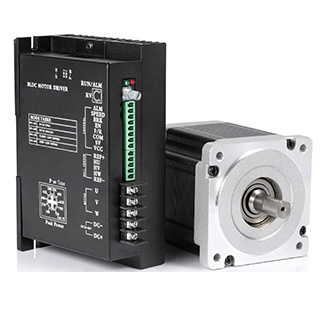
1、 Core principle: The essential difference between open-loop and closed-loop systems
1. Stepper motor: pulse driven "stepper"
▶️ Principle: The stepper motor is controlled by receiving signals
The pulse signal sent by the device works. each
The pulse will cause the motor rotor to rotate a solid
A fixed angle (known as the 'step angle', such as
1.8 °/step).
➡️ Control method: open-loop control, no need to reverse
Feed device. Drive the electrical pulse in sequence
The sequence is allocated to the windings of each phase of the motor, forming
Generate a rotating magnetic field to drive the rotor to rotate.
✅ Key feature: Positioning accuracy is determined by step angle
Decision: The torque is high at low speeds, but at high speeds
Easy to lose steps (pulse loss leads to position deviation)
Poor).
2. Servo motor: the "precise executor" of closed-loop control
➡️ Principle: The servo motor is composed of the motor body and the encoder
Composed of encoder and driver. Encoder real-time
Feedback rotor position, driver comparison target
Position and actual position, dynamically adjust current
And the rotational speed.
➡️ Control method: closed-loop control. Through PID
Algorithms eliminate errors and achieve high-precision motion.
✅ Key features: fast response, strong overload capacity,
Excellent high-speed performance, but high system complexity.
Application scenario: Choosing the right motor can achieve twice the result with half the effort
1. Ideal scenario for stepper motors
·Low cost requirement: Small equipment with limited budget
Backup (such as 3D printers, desktop CNC).
·Medium low speed positioning: Low speed requirement but necessary
Scenarios that maintain position (such as conveyor belt sorting
Lens focusing).
·Simple open-loop control: No need for complex dynamic tuning
The entire system.
2. Advantages of servo motors in various fields
·High precision, high dynamic response: industrial machines
Human joints, CNC machine tool spindles.
·Large load variation: Real time torque adjustment is required
Scenes such as drone gimbal and robotic arm
Capture).
·High speed motion: packaging machinery, high-speed flowing water
Lines, etc.
electrical machinery,gear motor,stepping motor
Address: No.66 bis, Hetong Road, Dongfeng Town, Zhongshan City, Guangdong Province
Tel:0760-22189558
Mobile:13923325827

©2023 GUANGDONG YONGKUN MOTOR CO.,LTD All rights reserved


