Basic knowledge of stepper motors: types, uses, and working principles
Release Time :
2025-05-24
Source :
network
Author:
Yongkun Motor
Basic knowledge of stepper motors: types, uses, and working principles
Basic knowledge of stepper motor
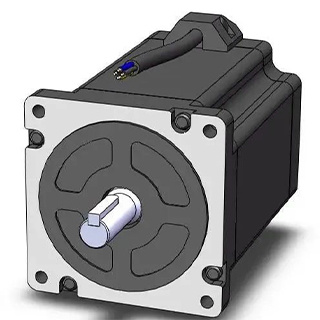
A stepper motor is a type of motor that rotates a shaft by stepping (i.e. moving at a fixed angle). Its internal structure eliminates the need for sensors, and the exact angular position of the axis can be determined through simple step calculations. This characteristic makes it suitable for various applications.
Working principle of stepper motor
Like all motors, stepper motors also include a fixed part (stator) and a movable part (rotor). The stator has gear like protrusions wrapped with coils, while the rotor is a permanent magnet or variable reluctance iron core. Later, we will provide a more in-depth introduction to different rotor structures. Its rotor is a variable reluctance iron core.
The basic working principle of a stepper motor is to energize one or more stator phases, and the current passing through the coils will generate a magnetic field, which will align the rotor with; By sequentially applying voltage to different phases, the rotor will rotate a specific angle and eventually reach the desired position.
Firstly, coil A is energized and generates a magnetic field, and the rotor aligns with the magnetic field; After coil B is energized, the rotor rotates clockwise by 60 ° to align with the new magnetic field; The same situation will also occur when coil C is powered on. The color of the stator teeth in the figure indicates the direction of the magnetic field generated by the stator winding.
Types and structures of stepper motors
The performance of a stepper motor (whether it is resolution/pitch, speed, or torque) is influenced by the details of its construction, and these details may also affect the control method of the motor. In fact, not all stepper motors have the same internal structure (or construction), as the rotor and stator configurations of different motors are different.
rotor
There are basically three types of rotors for stepper motors:
Permanent magnet rotor: The rotor is a permanent magnet that aligns with the magnetic field generated by the stator circuit. This type of rotor can ensure good torque and has braking torque. This means that regardless of whether the coil is powered or not, the motor can resist (even if not very strongly) changes in position. But compared to other types of rotors, its disadvantage is lower speed and resolution.
The stator is a part of the motor responsible for generating a magnetic field that aligns the rotor with it. The main characteristics of a stator circuit are related to its number of phases, pole pairs, and wire configuration. The number of phases is the number of independent coils, while the number of pole pairs represents the main tooth pairs occupied by each phase. Two phase stepper motors are most commonly used, while three-phase and five phase motors are less commonly used
Stepper motor driver type
There are various stepper motor drivers on the market that have different functions for specific applications. But one of its most important features is related to the input interface, and the most common input interfaces include:
Step/Direction - Send a pulse on the Step pin, and the driver changes its output to make the motor perform one step. The direction of rotation is determined by the level on the Direction pin.
Phase/Enable - For each phase of the stator winding, Enable determines whether the phase is energized, and Phase determines the direction of the current in that phase,.
PWM - Directly controls the gate signal of the upper and lower MOSFETs.
Another important feature of a stepper motor driver is whether it can control the current flowing through the winding in addition to controlling the voltage across the winding
With voltage control function, the driver can adjust the voltage on the winding, and the torque and step speed generated depend only on the motor and load characteristics.
Current control drivers are more advanced because they can regulate the current flowing through active coils, better control the generated torque, and thus better control the dynamic behavior of the entire system.
electrical machinery,gear motor,stepping motor
Address: No.66 bis, Hetong Road, Dongfeng Town, Zhongshan City, Guangdong Province
Tel:0760-22189558
Mobile:13923325827

©2023 GUANGDONG YONGKUN MOTOR CO.,LTD All rights reserved


