
Electric motor - the core component of robots!
Release Time :
2025-05-28
Source :
network
Author:
YONGKUN MOTOR
Electric motor - the core component of robots!
An electric motor is a device that converts electrical energy into mechanical energy, used to generate rotational or linear motion. Classified by work purpose, motors are divided into drive motors and control motors. Among them, hollow cup motors and frameless torque motors are both classified as control motors. The government has actively issued a series of policies to promote the development of the motor related industry. As a core component of robots, motors are one of the key breakthrough technologies. At the same time, the large-scale production of humanoid robots in the future will further drive the demand for motors.
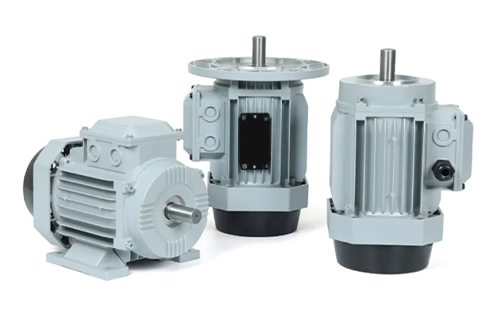
The source of rotary transmission and linear transmission, policies promote industry development
1.1 Classification and differences of motors
An electric motor is a device that converts electrical energy into mechanical energy, used to generate rotational or linear motion. Its working principle is based on electromagnetic principles, which achieve motion through the action of current in a magnetic field. Electric motors are a core component of modern engineering and technology, playing an important role in various application fields, from driving mechanical equipment to providing power and control systems. With the continuous development of technology, the performance and efficiency of motors are constantly improving to meet the needs of different fields.
The types of motors are diverse and can be classified into different types according to different classification standards. According to the working power supply, motors are classified into DC motors and AC motors. A DC motor refers to a motor powered by a DC power source, while an AC motor refers to a motor powered by an AC power source.
(1) DC motor: A DC motor refers to a motor that converts DC electrical energy into mechanical energy. DC motors have the advantages of stable speed, high starting torque, and high efficiency, but their disadvantages are complex structure, difficult maintenance, and high cost. They are mainly used in fields such as machine tools, robots, electric vehicles, and ships. DC motors can be classified into brushed DC motors and brushless DC motors according to their structure.
Brushed DC motor: Brushed DC motors use mechanical commutation, with magnetic poles stationary and coils rotating. When the motor is working, the coil and commutator rotate, while the magnet and carbon brush do not rotate. The alternating change in the direction of the coil current is completed by the inverter and brush that rotate with the motor. Brushed DC motors have a simple structure and have been widely used in superposition. Their technology has matured and production and processing are relatively easy. At the same time, brushed DC motors have high starting torque, fast response speed, and high control accuracy (control accuracy can reach 0.01 millimeters).
Brushless DC motor: The brushless DC motor adopts electronic commutation, with the coil stationary and the magnetic poles rotating. Brushless DC motors sense the position of permanent magnet poles through Hall elements and switch the direction of current in the coil in a timely manner to generate the correct direction of magnetic force to drive the motor. Due to the removal of electric brushes, the bearing wear of brushless DC motors is reduced, resulting in longer service life and lower maintenance costs; At the same time, the friction is reduced during operation, making the brushless DC motor run more smoothly and reducing noise.
(2) AC motor: An AC motor refers to a motor that converts alternating current energy into mechanical energy. AC motors have the characteristics of durability, low manufacturing cost, reasonable price, and easy operation, and are widely used in consumer goods and industrial equipment. According to the classification of power sources, it can be divided into single-phase motors and three-phase motors.
Single phase motor: A single-phase motor uses the magnetic field generated by single-phase AC power to generate torque, with only one coil connected to a single-phase AC power source. The rotor of a single-phase motor is composed of an iron core and a conductor. The iron core on the rotor is subjected to the magnetic field generated by the coil, which generates a rotational torque and drives the rotor to rotate. Due to the fact that there is only one AC direction for a single-phase power supply, the torque generated is discontinuous and requires auxiliary devices such as starting capacitors to achieve startup. Single phase motors have a simple structure, easy installation, and low cost, making them suitable for both household and commercial applications such as fans, air purifiers, vacuum cleaners, etc.
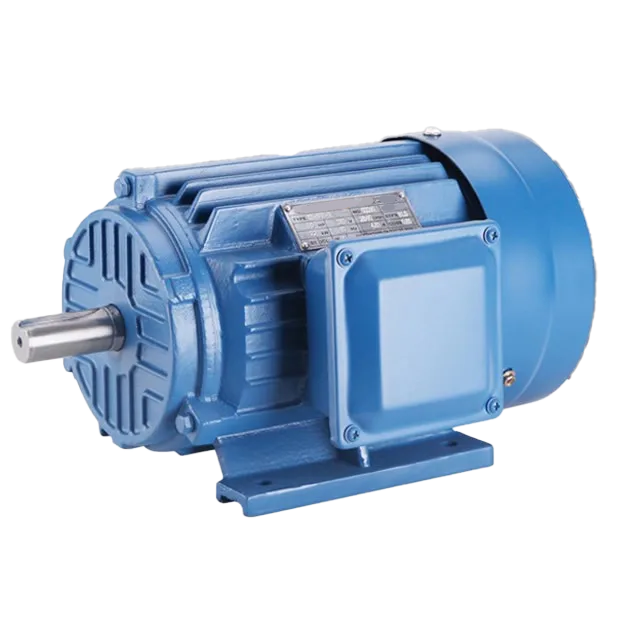
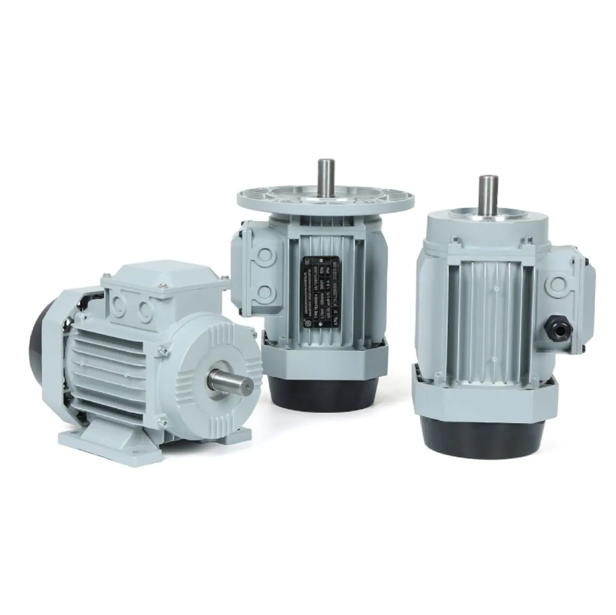
➢ Three phase motor: A three-phase motor uses the rotating magnetic field generated by three-phase AC power to generate torque. It consists of three independent coils, each separated by 120 degrees and connected to a three-phase AC power source. The rotor of a three-phase motor is made of magnetic material. When powered on, a magnetic field is generated inside the rotor, which interacts with the external magnetic field to generate rotational torque and drive the rotor to rotate. Three phase motors have high efficiency, stable operation, and long service life, mainly used in industrial fields such as water pumps, fans, compressors, etc.
electrical machinery,three phase asynchronous Motor,Reducer
Address: No.66 bis, Hetong Road, Dongfeng Town, Zhongshan City, Guangdong Province
Tel:0760-22189558
Mobile:13923325827

©2023 GUANGDONG YONGKUN MOTOR CO.,LTD All rights reserved


