Learning Summary of Servo Motor Control Speed and Interference Measures
Release Time :
2025-06-11
Source :
network
Author:
Yongkun Motor
Learning Summary of Servo Motor Control Speed and Interference Measures
Servo motors can control speed and position accuracy very accurately, and can convert voltage signals into torque and speed to drive control objects. The rotor speed of the servo motor is controlled by the input signal and can respond quickly.
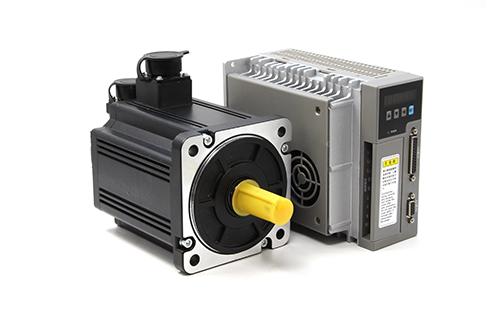
In automatic control systems, it is used as an executing element and has characteristics such as small electromechanical time constant, high linearity, and starting voltage. It can convert the received electrical signal into angular displacement or angular velocity output on the motor shaft. It is divided into two categories: DC and AC servo motors. Its main feature is that when the signal voltage is zero, there is no self rotation phenomenon, and the speed decreases uniformly with the increase of torque.
As the power muscle of an automated factory, servo motors are unavoidable in industrial control design and maintenance. Today, we will summarize and learn about servo speed control and anti-interference measures.
There are many types of servo motors that we commonly use, and selecting them is not a simple task. Each type of servo is proficient, which puts a lot of pressure on our learning. The only measure we can take is to choose the model that we can encounter the most in our daily work to learn, and at the same time, understand the several models and brands that are commonly used in the market. The speed of the servo motor varies from one thousand, one thousand five, and three thousand, and we represent it as the most commonly used 3000RPM AC servo.
In practical use, we have selected or are currently using a servo with a speed of 3000RPM, and we need a speed range of 0-3000. So, what methods can we use to change the current servo speed.
The adjustment of servo speed depends on the method we use to control it and the choice of control method. We use pulse control to control the speed, analog control to control the speed, or direct control to adjust the speed through internal settings of the driver. Our corresponding methods are also different. We will summarize the speed change based on three different control methods.
1. Torque control, speed is free (varies with load)
Torque control is a commonly used control method in our daily lives. We set the output torque size through external analog signals or direct address assignment. However, the corresponding speed may not be fixed because changes in equipment aging, friction coefficient, and load can affect the speed output. In this case, we basically do not need to adjust the speed because it is automatic adjustment. What we need is the stability of the system and long-term torque stability.
The torque magnitude can be changed by instantly adjusting the analog settings, or by changing the corresponding address value through communication. The application is mainly in winding and unwinding devices with strict requirements for material stress, such as winding devices or fiber optic equipment. The purpose of using servo is to prevent changes in the winding material from altering the stress.
2. Position control, precise positioning, strict control of both speed and torque
The position control mode generally determines the speed of rotation by the frequency of external input pulses, and determines the angle of rotation by the number of pulses. Some servos can also directly assign values to speed and displacement through communication.
Reducer,electrical machinery,servo motor
Address: No.66 bis, Hetong Road, Dongfeng Town, Zhongshan City, Guangdong Province
Tel:0760-22189558
Mobile:13923325827
©2023 GUANGDONG YONGKUN MOTOR CO.,LTD All rights reserved


