
Classification of motors
Release Time :
2025-06-13
Source :
network
Author:
Yongkun Motor
Classification of motors
The motor is transliterated from 'motor', which means electric motor or engine. It rotates the starter rotor through the force exerted on the coil in the magnetic field, and the small gear on the rotor drives the engine flywheel to rotate.
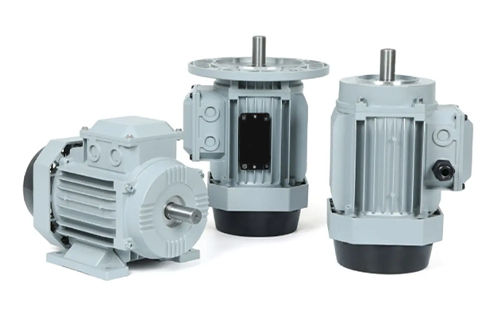
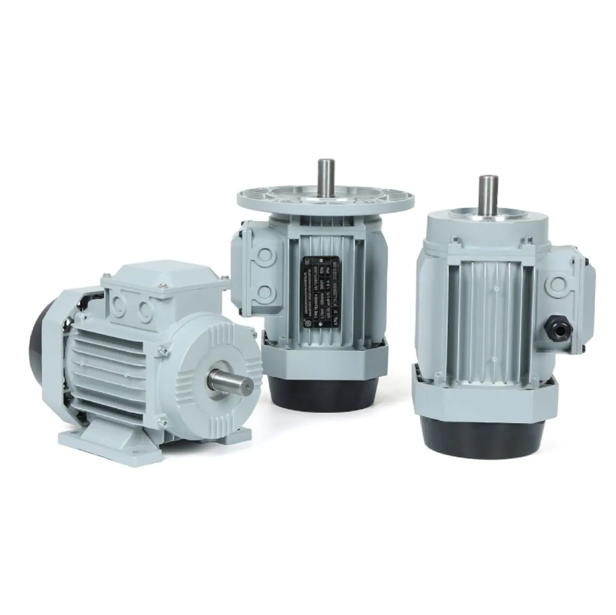
An electric motor (see Figure 1), also known as an electric motor, is an electrical device that converts electrical energy into mechanical energy and can use it to generate kinetic energy to drive other devices.
Electric motors are mainly composed of a stator and a rotor. The stator remains stationary in space, while the rotor can rotate around an axis and is supported by bearings.
According to the power supply used, it can be divided into:
DC Motor: Using permanent magnets or electromagnets, electric brushes, rectifiers and other components, the electric brushes and rectifiers continuously supply external DC power to the coils of the rotor and change the direction of the current in a timely manner, so that the rotor can rotate continuously in the same direction.
AC Motor: By passing alternating current through the stator coils of the motor, the rotor is designed to be continuously operated by the surrounding magnetic field at different times and positions.
Pulse motor: The power supply is processed by a digital IC chip and converted into pulse current to control the motor. Stepper motor is a type of pulse motor.
According to the structure, it can be divided into:
Synchronous Motor, Induction Motor, Induction Motor, Reversible Motor, Stepping Motor, Servo Motor, Linear Motor, Rotary Converter, Rotating Amplifier, etc.
Electric motors belong to the category of electric motors and comply with the provisions of heading 85.01 in the Tariff. According to the General Rules for Classification 1 and 6 of the Tariff, electric motors should be classified as "electric motors" under heading 85.01.
Start The Motor refers to a motor installed on an engine that is driven by electricity and used to start diesel and gasoline engines. It is commonly used for starting car engines, generators, and large construction machinery.
The starter motor is composed of three parts: a DC electric motor, a transmission mechanism, and an electromagnetic switch. It converts the electrical energy of the battery into mechanical energy, drives the flywheel on the engine to rotate, and starts the engine.
The starter motor belongs to the starter motor of internal combustion engines. According to the "Tariff Annotations", item 85.01 is described as "except for starter motors for internal combustion engines (item 85.11)", and item 85.11 is described as "including: VI. Starter motor, which is a small electric motor, generally a DC series wound electric motor.
The starter motor is equipped with a small gear that can move back and forth on the threaded shaft; Or equipped with some other mechanical device to temporarily couple with the internal combustion engine, thereby starting the internal combustion engine. ”According to General Rules 1 and 6 of the Tariff, starting motors should be classified under tax number 8511.40 as "starting motors and dual-purpose starting generators".
Three phase motor,gear motor,electrical machinery
Address: No.66 bis, Hetong Road, Dongfeng Town, Zhongshan City, Guangdong Province
Tel:0760-22189558
Mobile:13923325827

©2023 GUANGDONG YONGKUN MOTOR CO.,LTD All rights reserved


