Structure of reducer and key points for daily inspection and maintenance
Release Time :
2025-06-19
Source :
network
Author:
Yongkun Motor
Structure of reducer and key points for daily inspection and maintenance
As a key component in mechanical equipment that transmits power, reduces speed, and increases torque, the structural design and daily maintenance of the gearbox are crucial. Below is a detailed introduction to the structure and daily inspection and maintenance points of the gearbox:
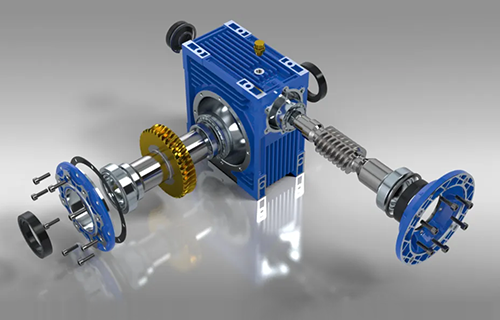
1、 Basic structure of gearbox
The structure of the reducer varies depending on the type (such as gear reducer, worm gear reducer, planetary reducer, cycloidal pinwheel reducer, etc.), but the core components are roughly the same:
1. Housing/Case:
Function: Support and accommodate all internal components, provide a sealed environment, protect internal components from contamination and damage, and serve as a container for lubricating oil.
Material: Usually cast iron (HT250, HT300, etc.) or cast steel is used, and welded steel structures may be used for large or special requirements. Require sufficient strength, rigidity, and good heat dissipation.
Structure: Generally divided into upper box cover and lower box seat, connected by bolts. There are observation windows/oil gauges (to check the oil level), respirators/breathable plugs (to balance the internal and external air pressure), oil drain holes (to replace lubricating oil), lifting holes/lifting ring screws (for easy handling and installation), etc.
2. Gears/Worm&Wheel Set: Core Transmission Components
Function: Transmit motion and power through tooth surface meshing, achieving deceleration and torque increase.
Type:
Gear reducer: cylindrical gears (spur, helical, herringbone), bevel gears (spur, bevel). Diagonal/curved teeth run more smoothly, with lower noise and higher load-bearing capacity.
Worm gear reducer: The worm gear (active component, usually made of steel) drives the worm gear (passive component, usually made of copper alloy). It has a single-stage high speed ratio and self-locking (under specific conditions), but its efficiency is relatively low.
Planetary reducer: composed of sun gear, planetary gear, inner ring gear, and planetary carrier. Compact structure, high load-bearing capacity, large transmission ratio, and high precision.
Cycloid pinwheel reducer: utilizing the principle of cycloidal pinwheel meshing. High speed ratio, compact structure, strong load-bearing capacity, and high efficiency.
Material: Commonly used alloy carburizing steel for gears (20CrMnTi, 20CrMnMo, etc.), which undergoes carburizing and quenching treatment to obtain high hardness and wear resistance. Worm gears are commonly made of tin bronze (such as ZCuSn10P1).
3. Shafts:
Function: To support rotating parts such as gears/worm gears and transmit torque.
Types: Input shaft (high-speed shaft), intermediate shaft (multi-stage reduction), output shaft (low-speed shaft).
Material: Usually medium carbon steel or alloy steel (such as 45, 40Cr, 42CrMo), requiring quenching and tempering treatment to obtain good comprehensive mechanical properties. High frequency quenching may be required at the journal to improve wear resistance.
4. Bearings:
Function: Support the rotating shaft, withstand radial and axial forces, ensure smooth rotation and accurate positioning of the shaft.
Type: Select deep groove ball bearings, cylindrical roller bearings, tapered roller bearings, angular contact ball bearings, thrust bearings, etc. according to the force situation.
Location: Installed in the bearing seat hole of the housing, supporting both ends of the input shaft, intermediate shaft, and output shaft.
5. Seals:
Function: To prevent the leakage of lubricating oil inside the box, while also preventing external pollutants such as dust and moisture from entering the inside of the box.
Type:
Shaft seal: The most commonly used is the lip seal ring (skeleton oil seal), which is used for the extended end of the input/output shaft. There are also labyrinth seals and mechanical seals (used for high-speed or special media).
Static sealing: The joint surface between the box cover and the box seat, the joint surface between the bearing end cover and the box body, etc., usually uses sealant or O-ring.
6. Lubrication System:
Function: Form an oil film on the meshing surface of the gear and the rolling element surface of the bearing, reduce friction and wear, take away heat, and prevent rust.
Method:
Splash lubrication: the most commonly used. By relying on the rotation of gears or oil slingers, lubricating oil splashes up and lubricates meshing tooth surfaces, bearings, etc. Suitable for medium and low speeds.
Forced lubrication (lubrication station): Lubricating oil is delivered to each lubrication point through an oil pump. Suitable for high-speed, heavy-duty, large gearboxes, or situations that require precise lubrication control.
Lubricating grease: mainly used for certain bearings or extremely low-speed situations, or as a supplement to splash lubrication. Lubricating grease (butter) is usually used.
Lubricating oil: Industrial closed gear oil (such as ISO VG 150, 220, 320, etc.), the appropriate grade and type (mineral oil, synthetic oil) should be selected according to the type, working condition, and ambient temperature of the reducer.
7. Accessories:
Oil level gauge/oil level mirror/dipstick: Observe the lubricating oil level.
Respirator/Breather Plug: Balance the air pressure inside and outside the reducer to prevent oil leakage or negative pressure caused by increased pressure, which can lead to inhalation of pollutants.
Oil drain plug: Drain waste oil.
Heater: (optional in cold environments) Preheat lubricating oil before starting.
Cooling device: (optional for high-power or high-temperature conditions) such as fans, cooling water coils, oil coolers, used to assist in heat dissipation.
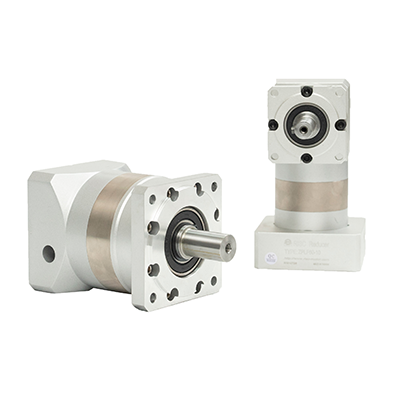
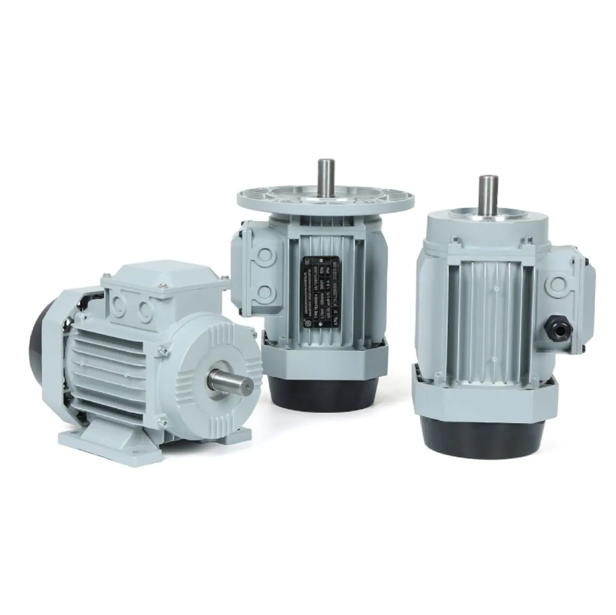
Reducer,gear reducer,gear motor
Address: No.66 bis, Hetong Road, Dongfeng Town, Zhongshan City, Guangdong Province
Tel:0760-22189558
Mobile:13923325827

©2023 GUANGDONG YONGKUN MOTOR CO.,LTD All rights reserved


