
Lightweight design of precision planetary reducer in collaborative robot joints
Release Time :
2025-06-24
Source :
network
Author:
Yongkun Motor
Lightweight design of precision planetary reducer in collaborative robot joints
With the advent of the Industry 4.0 era, collaborative robots are playing an increasingly important role in the field of intelligent manufacturing due to their high flexibility, safety, and human-machine collaboration capabilities. In the core components of collaborative robots, the design of joints directly affects the robot's motion accuracy, speed, and load-bearing capacity. As a key component for driving precise joint movements, the lightweight design of precision planetary reducers has become the key to improving the overall performance of collaborative robots.
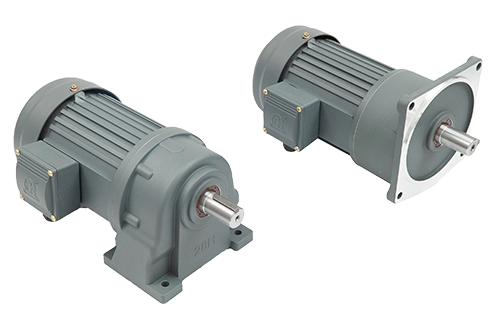
1、 The role of precision planetary gearbox in the joints of collaborative robots
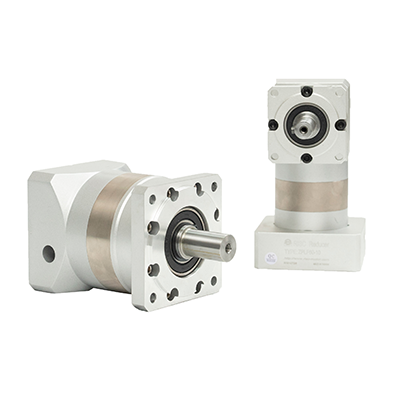
The precision planetary reducer achieves torque amplification and speed control through multi-stage gear meshing, and is the "power heart" in the joints of collaborative robots. It can convert the high-speed rotation of the motor into the high torque low-speed motion required by the joint, while ensuring high-precision position control and dynamic response. In key joints such as the waist, shoulders, and elbows of collaborative robots, the performance of precision planetary reducers directly determines the robot's load capacity, motion smoothness, and positioning accuracy.
2、 The necessity of lightweight design
One major feature of collaborative robots is their lightweight design, which helps improve the dynamic performance of robots, reduce energy consumption, and expand application scenarios. Lightweight design not only requires reducing the weight of the robot body, but also includes lightweight modifications to key components such as precision planetary reducers. Through lightweight design, the overall weight of the robot can be reduced, motion efficiency and energy utilization can be improved, while enhancing the flexibility and adaptability of the robot.
3、 Lightweight design strategy for precision planetary reducers
1. Material optimization: Use high-strength, low-density lightweight materials such as aluminum alloys, titanium alloys, etc. to replace traditional steel materials. These lightweight materials can significantly reduce the weight of the reducer while maintaining sufficient strength.
2. Structural optimization: Optimize the internal structure of planetary reducers through modern design methods such as topology optimization and shape optimization. Reduce unnecessary material usage, improve space utilization, and thus reduce weight. At the same time, optimizing the tooth profile and meshing parameters of gears, reducing friction and wear between gears, and improving transmission efficiency.
3. Integrated design: Highly integrate the planetary reducer with components such as motors and sensors to form an integrated joint module. This integrated design not only simplifies the structure of the robot, but also reduces the use of connectors and cables, further reducing weight.
4. Lubrication system improvement: Adopting more efficient lubrication methods and lubricants to reduce friction losses and heat generation. At the same time, optimize the layout and pipeline design of the lubrication system to ensure that the lubricant can be evenly and fully distributed to the contact surfaces of the gears and bearings, thereby extending the service life of the components.
4、 Challenges and Solutions of Lightweight Design
Although lightweight design brings many advantages, it also faces some challenges in practical implementation. For example, lightweight materials may lead to a decrease in strength and stiffness, requiring a balance between weight and performance through optimized design and material selection. In addition, integrated design may increase the complexity and cost of manufacturing, requiring the adoption of advanced manufacturing processes and automation technologies to improve production efficiency and reduce costs.
To address these challenges, the following measures can be taken: strengthening materials science research and developing more high-performance lightweight materials; Using advanced simulation and analysis tools to accurately evaluate and optimize lightweight design; Collaborate with suppliers to jointly develop components and manufacturing processes suitable for lightweight design.
The lightweight design of precision planetary reducers is the key to improving the overall performance of collaborative robots. Through strategies such as material optimization, structural optimization, integrated design, and lubrication system improvement, the weight of the reducer can be significantly reduced, and the dynamic performance and adaptability of the robot can be improved. In the future, the lightweight design of precision planetary reducers will place greater emphasis on innovation and practicality, providing more reliable technical support for the widespread application of collaborative robots.
speed motor,Precision reducer,planetary reducer
Address: No.66 bis, Hetong Road, Dongfeng Town, Zhongshan City, Guangdong Province
Tel:0760-22189558
Mobile:13923325827

©2023 GUANGDONG YONGKUN MOTOR CO.,LTD All rights reserved


