Application scenarios of planetary gearbox in laser cutting equipment
Release Time :
2025-07-01
Source :
network
Author:
Yongkun Motor
Application scenarios of planetary gearbox in laser cutting equipment
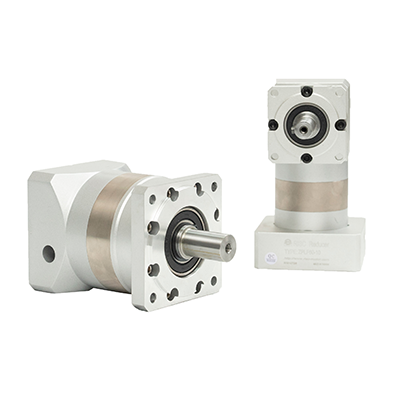
There are various types of laser cutting equipment with a wide range of application scenarios, and planetary reducers play an important role in different scenarios. In metal sheet cutting, a strong torque is required to drive the laser head to move accurately on thick sheets. The high torque/volume ratio of planetary reducers can meet this requirement and achieve efficient cutting.
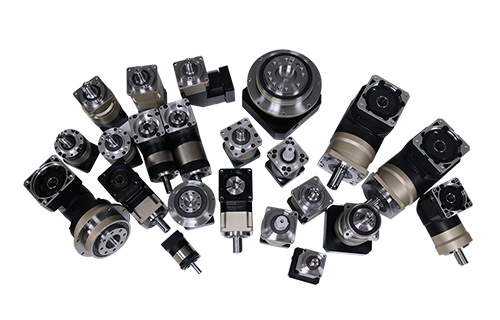
For precise cutting of electronic components, high precision is required. The high-precision characteristics of planetary reducers can ensure accurate positioning of the laser head on small components, avoiding cutting errors.
In the cutting scene of large format advertising signs, the equipment needs to operate quickly and stably. The high rigidity and stable transmission performance of the planetary reducer ensure the stability of the equipment during high-speed movement, improving production efficiency. Regardless of the application scenario, planetary reducers can provide reliable power support for laser cutting equipment with their own advantages.
Planetary reducers play a crucial role in laser cutting equipment, mainly applied to key parts that require high precision, high rigidity, high dynamic response, and reliable transmission. The following are its core application scenarios:
X/Y-axis motion system (gantry or cantilever):
Application position: Behind the servo motor that drives the cutting head to move along the X-axis (horizontal) and Y-axis (vertical).
effect:
Torque amplification and speed matching: Servo motors typically have the characteristics of high speed and low torque. The planetary gearbox reduces the high speed of the motor to the required working speed of the cutting head, while amplifying the output torque several times, meeting the needs of driving heavy-duty beams or cantilevers, overcoming the inertia and frictional resistance of the motion system.
Improving accuracy and rigidity: The multi row star wheel structure inside the planetary reducer gives it extremely low backlash (usually between 1-10 arc minutes, and high-precision models can reach less than 1 arc minute) and high torsional rigidity. This is crucial for laser cutting:
Eliminating tracking errors: Low backlash ensures that the rotation angle of the motor command can be accurately and without delay converted into the displacement of the linear platform, avoiding the "lag" phenomenon caused by transmission clearance and improving contour tracking accuracy.
Resistance to cutting force disturbance: High torsional rigidity enables the system to effectively resist deformation when encountering material resistance or acceleration changes during the cutting process, ensuring the stability and trajectory accuracy of the cutting head position, especially in high-speed corner or small arc cutting, with significant effects.
Enhance dynamic response: High rigidity systems can respond faster to motor acceleration and deceleration commands, improve the overall acceleration and deceleration capabilities of the machine, shorten idle time, and enhance overall production efficiency.
Protecting the motor: The reducer shares most of the load torque, reducing the load on the motor itself and extending its lifespan.
Z-axis lifting system:
Application position: Behind the servo motor that drives the cutting head (or focusing tube) to perform vertical lifting (Z-axis) movement.
effect:
Precise control of focal position: Laser cutting requires precise adjustment of focal length according to material thickness. The planetary gearbox provides high-precision rotation to linear conversion (usually achieved through ball screws or synchronous pulleys), ensuring Z-axis positioning accuracy and ensuring that the laser focus is always at the optimal position on the material surface to achieve optimal cutting quality and cross-sectional effect.
Height following and dynamic focusing: When cutting curved or uneven boards, the Z-axis needs to quickly follow the height changes of the board for dynamic focusing. The high precision, high rigidity, and fast response capability of the reducer are the key to ensuring focusing accuracy and speed.
Bearing axial force: The Z-axis system needs to withstand the weight of the cutting head and possible collision forces. The planetary gearbox provides powerful output torque to drive the lifting mechanism and transmit these forces.
Rotation axis:
Application position: Drive the cutting head to rotate around its own axis (usually referred to as the C-axis) or drive the servo motor behind a specific rotating worktable.
effect:
High precision angle positioning: used for oblique cutting, marking specific angle patterns, or pipe cutting with a rotating worktable, the planetary reducer provides precise angle control.
Continuous rotary cutting: When cutting circles, spirals, or performing specific processes such as drilling, the cutting head or workpiece needs to rotate smoothly and accurately continuously. The planetary gearbox ensures the smoothness and positional accuracy of rotational motion.
Belt drive system (some designs):
Application position: In X/Y axis systems using synchronous belt transmission, sometimes a planetary gearbox is added between the servo motor and the drive synchronous belt pulley to obtain greater driving torque.
Function: The main function is to amplify torque, allowing the synchronous belt to drive moving parts with greater inertia.
Summary of the core advantages of planetary reducers in laser cutting equipment:
High precision (low backlash): Ensuring absolute accuracy in motion trajectory and positioning is the foundation for obtaining high-quality cutting sections.
High rigidity: Resist cutting force disturbances and acceleration/deceleration impacts, ensuring system stability, especially avoiding vibration and deformation during high-speed and high acceleration operation.
High torque density: Provides high output torque in a compact space to drive heavy loads.
High transmission efficiency: usually up to 95% or more, reducing energy loss and heat generation.
High reliability: The structure is sturdy and durable, capable of withstanding long-term, high-speed, and frequent start stop working conditions.
Smooth operation: Multi tooth meshing, smooth transmission, low noise.
Selection considerations:
When selecting planetary reducers for laser cutting equipment, it is important to pay special attention to:
Accuracy level (backlash): Usually requires ≤ 5 arc minutes, and high-precision applications (such as precision cutting and high dynamic) require ≤ 3 arc minutes or even ≤ 1 arc minute.
Torsion rigidity: The higher the value, the better, and it is a key indicator of dynamic performance.
Rated output torque: It needs to match the maximum load torque of the motion system (including acceleration torque, friction torque, cutting force, etc.).
Rated input speed: It should be higher than the maximum working speed of the servo motor.
Size and installation method: It needs to be compatible with the motor and mechanical structure (flange interface, shaft type).
Thermal power: It is necessary to meet the heat dissipation requirements of the equipment during continuous operation and avoid overheating.
Lifespan and reliability: The lifespan of bearings and gears must meet the design service life requirements of the equipment.
Conclusion:
Planetary reducer is the core transmission component of the motion control system for laser cutting equipment, especially for medium to high power, high-precision, and high-speed models. It directly determines the positioning accuracy, contour accuracy, dynamic response speed, cutting stability, and final product quality of the equipment by providing high-precision, high rigidity, and high torque transmission. Without high-performance planetary gearboxes, modern laser cutting equipment finds it difficult to achieve its nominal high-speed and high-precision machining capabilities.
Precision reducer,gear reducer,planetary reducer
Address: No.66 bis, Hetong Road, Dongfeng Town, Zhongshan City, Guangdong Province
Tel:0760-22189558
Mobile:13923325827

©2023 GUANGDONG YONGKUN MOTOR CO.,LTD All rights reserved


