
Steps for correctly installing and maintaining planetary gear reduction motors
Release Time :
2025-07-02
Source :
network
Author:
Yongkun Motor
Steps for correctly installing and maintaining planetary gear reduction motors
The installation and maintenance of planetary gear reduction motors are key steps to ensure their normal operation and extend their service life. The following are detailed steps and key points:
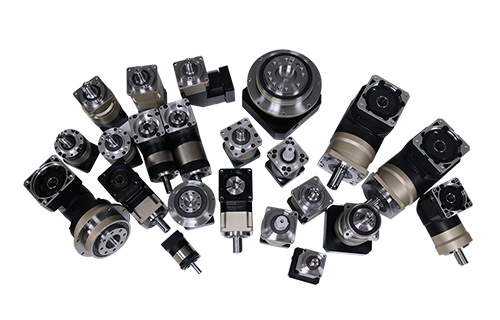
1、 Preparation work before installation
Equipment inspection
Check whether the appearance of the reduction motor is damaged, whether all components (such as gears, bearings, and housing) are complete, and whether the nameplate parameters (power, speed ratio, voltage, etc.) are consistent with the usage requirements.
Rotate the input shaft by hand to confirm that the gear rotates smoothly without any jamming or abnormal noise.
Installation environment confirmation
Ensure that the installation location is dry, well ventilated, and avoid humid, dusty, or corrosive gas environments.
Reserve sufficient maintenance space for subsequent maintenance operations.
Preparation of connectors
Prepare suitable couplings and fasteners (bolts, nuts), and check their specifications to match the motor interface.
2、 Correct installation steps
(1) Installation foundation fixation
Base leveling
Use a spirit level to adjust the levelness of the installation base, with an error not exceeding 0.1mm/m, to avoid vibration during motor operation.
fixed base
Fix the base on the frame with high-strength bolts, and the tightening torque should comply with the manufacturer's instructions (usually tightened evenly in 2-3 times).
(2) Connection between motor and load
Coupling installation
Ensure the coaxiality between the motor output shaft and the load shaft (radial deviation ≤ 0.05mm, axial deviation ≤ 0.02mm), which can be calibrated using a dial gauge.
When installing the coupling, avoid hitting the motor shaft. It is recommended to use press fit tools to prevent damage to the bearings or gears.
Belt pulley/sprocket connection (if any)
Adjust the tension of the belt or chain, and press the middle of the belt with your fingers to sink 10-15mm to avoid overloading the bearings due to excessive tension.
(3) Electrical connection
Wiring inspection
Connect the power cord according to the nameplate identification (pay attention to the phase sequence of the three-phase motor), ensuring that the wiring is firm and the insulation layer is not damaged.
Install overload protection devices (such as thermal relays) and set the current to 1.1-1.2 times the rated current of the motor.
ground protection
The motor casing must be reliably grounded with a grounding resistance of ≤ 4 Ω to prevent electrical leakage safety hazards.
(4) Lubrication system treatment (some models)
For reduction motors with lubricating oil circuits, check whether the lubricating oil model meets the requirements (such as ISO VG 220 or higher viscosity gear oil), and the oil level should be above the centerline of the oil gauge.
3、 Trial operation and debugging
No load trial operation
Connect the power supply and run the motor without load for 30 minutes. Observe the temperature rise (≤ 40 ℃), noise (≤ 75dB), and vibration of the motor. If there are any abnormalities, stop the machine immediately for inspection.
Load Testing
Gradually increase the load to the rated value, run for 2-4 hours, check the gearbox oil temperature (≤ 80 ℃), and confirm that there is no oil leakage, abnormal heating, or abnormal noise.
By standardizing installation and regular maintenance, the reliability of planetary gear reduction motors can be effectively improved and the risk of failure can be reduced. If there is a specific model or operating condition requirement, it is recommended to refer to the manufacturer's technical manual for operation.
planetary reducer,Precision reducer,gear reducer
Address: No.66 bis, Hetong Road, Dongfeng Town, Zhongshan City, Guangdong Province
Tel:0760-22189558
Mobile:13923325827

©2023 GUANGDONG YONGKUN MOTOR CO.,LTD All rights reserved


