Complete analysis of reducer: from gear meshing to humanoid robot joints
Release Time :
2025-07-03
Source :
network
Author:
Yongkun Motor
Complete analysis of reducer: from gear meshing to humanoid robot joints
Fundamentals of Reducer: The "Transmission" of the Transmission World
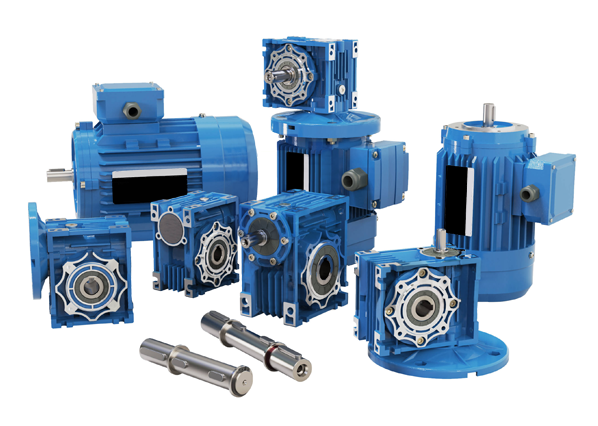
1、 Fundamentals of Reducer: The "Transmission" of the Transmission World
Core function: Match speed+increase torque, solve the contradiction between "high speed and low torque of motor" and "low speed and high load of equipment".
Classification logic:
·By purpose: universal type (such as gearbox) vs specialized type (such as robot joint reducer);
·By transmission type: gear, worm, planetary, harmonic, RV reducer;
·According to layout: expansion type (simple but requires high axial stiffness), diversion type (symmetrical force), coaxial type (input/output coaxial line).
2、 Detailed explanation of mainstream reducers - structure, performance, and application scenarios
Worm reducer: a low-key powerhouse with high speed ratio
·Principle: The worm gear and worm wheel are interlocked at a 90 ° angle, with a single-stage transmission ratio of 10-80 and reverse self-locking (anti reverse).
·Advantages: Compact structure, low cost;
·Disadvantages: Low efficiency (only 60-70%), high heat generation.
·Scenario: Intermittent working equipment such as cranes and revolving doors.
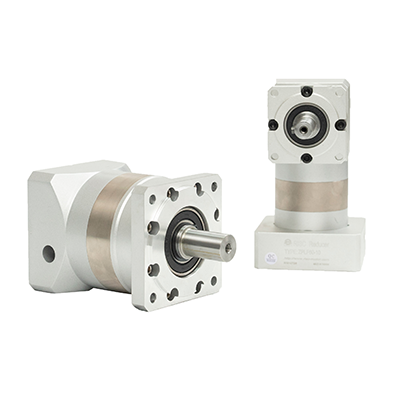
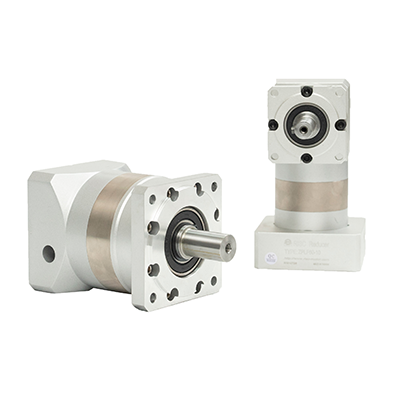
3. Planetary reducer: high-precision "all-around player"
·Structure: Sun gear+planetary gear+internal ring gear, multi gear load distribution, rigidity increased by more than 30%.
·Performance:
Transmission efficiency 97-98% (single-stage);
Accuracy ≤ 1 arcminute (advanced products);
Lifetime maintenance free.
·Scenario: Matching servo motors and driving wheels for mobile robots.
4. Harmonic reducer: the "nimble hand" of robot joints
·Black technology: The wave generator causes the flexible wheel to elastically deform and mesh with the rigid wheel, with a volume 50% smaller than traditional reducers.
·Performance:
Transmission ratio 50-160;
Zero backlash (accuracy of 1.5-2 arcminutes);
Disadvantages: Flexible wheels are prone to fatigue and have weak impact resistance.
·Scenario: Industrial robot forearm/wrist, humanoid robot rotating joints (such as Tesla Optimus with 14 joints per unit!)! ).
With the mass production of humanoid robots and the deepening of Industry 4.0, reducers are evolving towards mechatronics integration (motor+reducer+drive integration) and low-carbon (low-noise, long-life design). Can domestic enterprises make a comeback on the precision track? The answer is already on the way!
electrical machinery,Reducer,gear motor
Address: No.66 bis, Hetong Road, Dongfeng Town, Zhongshan City, Guangdong Province
Tel:0760-22189558
Mobile:13923325827

©2023 GUANGDONG YONGKUN MOTOR CO.,LTD All rights reserved


