
What are the advantages of harmonic reducers compared to traditional reducers?
Release Time :
2025-07-09
Source :
network
Author:
Yongkun Motor
What are the advantages of harmonic reducers compared to traditional reducers?
Harmonic reducers have the characteristics of compact structure, small volume, and light weight, and can achieve high transmission ratios in limited space; High transmission accuracy and small backlash can meet the requirements of high-precision transmission; Smooth movement and low noise; Simultaneously possessing high load-bearing capacity and high reliability, it can adapt to various complex working conditions.
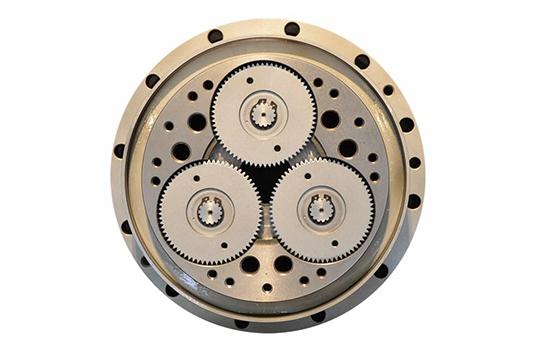
Compared with traditional reducers such as planetary gear reducers, RV reducers, worm gear reducers, etc., harmonic reducers have multiple significant advantages, making them preferred in specific application fields, especially in high-precision, small volume, and lightweight scenarios. The following are the main advantages:
Extremely high transmission accuracy and repeatability positioning accuracy:
Almost zero backlash: This is the core advantage of harmonic reducers. Its unique elastic deformation transmission principle (the flexible wheel undergoes elastic deformation under the action of the wave generator and meshes with the rigid wheel) enables it to achieve very small backlash, even close to zero backlash. This is crucial for applications that require extremely high positioning accuracy and repeatability, such as industrial robot joints, precision machine tools, optical equipment, semiconductor manufacturing equipment, etc.
High motion fidelity: Low backlash means that even small rotations of the input shaft can be accurately transmitted to the output shaft, reducing position errors.
High reduction ratio (single-stage implementation):
Harmonic reducers can achieve very high reduction ratios within a single-stage structure (typically between 30:1 and 320:1, with special designs allowing for even higher ratios). In contrast, traditional gear reducers (such as planetary gears) typically require multi-stage series connection to achieve the same reduction ratio, which increases complexity, volume, and cost.
Single stage high reduction ratio simplifies the design and improves system rigidity.
High torque density:
Under the same volume and weight, harmonic reducers can usually transmit larger output torque than traditional reducers. Its structure is compact, the power transmission path is direct, and the material utilization rate is high.
This makes it highly advantageous in applications where space is limited and high torque output is required, such as robot joints and aerospace equipment.
Compact structure and light weight:
Harmonic reducer usually consists of three basic components: wave generator, flexible wheel, and rigid wheel. Simple structure and few parts.
Its shape is usually pancake shaped (hollow or solid), which greatly saves axial space. Hollow design also facilitates the passage of cables and pipelines.
The overall weight is much smaller than that of traditional gearbox combinations that achieve the same functionality and performance.
High transmission efficiency:
Under appropriate pre tightening and lubrication conditions, the transmission efficiency of harmonic reducers can reach 70% -90% (depending on the reduction ratio, load, and design). Although slightly lower than some precision planetary gears (which may reach 95%+), it is much higher than worm gears (usually below 50%), and its high efficiency is achieved at high reduction ratios.
Smooth movement and low noise:
At the same time, there are many teeth involved in meshing (up to 30% of the total number of teeth), and the meshing of teeth is surface contact (different from point/line contact of involute gears).
This multi tooth meshing and flexible transmission make motion transmission very smooth, with low vibration and significantly lower operating noise than many traditional gear reducers.
Good coaxiality:
The input shaft (wave generator) and output shaft (flexible or rigid wheel) are usually designed coaxially, simplifying mechanical integration and layout.
Can transmit motion to a sealed space:
Flexible wheels can be designed as part of a sealed structure, utilizing their elastic deformation to transmit motion to the interior of the sealed chamber (such as in a vacuum environment or high-pressure container), which is difficult to achieve with rigid gears.
Harmonic Drive,gear motor,RV gearbox
Address: No.66 bis, Hetong Road, Dongfeng Town, Zhongshan City, Guangdong Province
Tel:0760-22189558
Mobile:13923325827

©2023 GUANGDONG YONGKUN MOTOR CO.,LTD All rights reserved


