
The key to the performance of planetary gearboxes
Release Time :
2025-07-09
Source :
network
Author:
Yongkun Motor
The key to the performance of planetary gearboxes
In depth analysis of speed ratio reveals that it is a key regulating factor for the performance of planetary gearboxes. During the operation of planetary gear systems, the speed ratio precisely regulates performance indicators such as output speed, torque, and efficiency by changing the transmission relationship between gears.
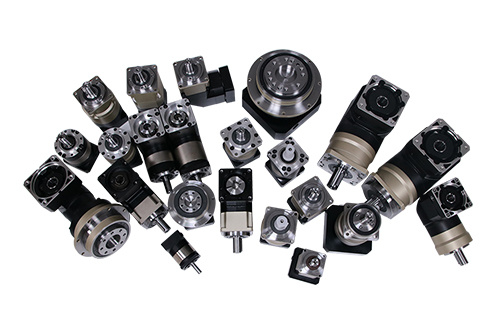
In industrial production, engineers calculate and select appropriate speed ratios based on different load requirements and operating speeds to ensure the stability and reliability of planetary gearboxes while saving energy and efficiency. In the aerospace field, the speed ratio control of harmonic reducers is more precise. In order to meet the operational needs of spacecraft in extreme space environments, its speed ratio design integrates multidisciplinary technologies such as materials science and precision manufacturing, achieving ultimate optimization of transmission performance and becoming a core technological highlight of aerospace equipment.
The performance of planetary gearboxes depends on multiple interrelated key factors, and their core advantages lie in high rigidity, high load-bearing capacity, high efficiency, and long service life. They are particularly suitable for applications that require high torque, high reliability, and stable operation (such as construction machinery, heavy-duty industrial automation, wind power, mining equipment, etc.). The following are the key factors that determine the performance of planetary gearboxes:
1. Gear design and manufacturing accuracy
Tooth shape optimization:
Adopting shaping techniques such as tooth top trimming and tooth drum shaping to compensate for deformation and installation errors, reduce meshing impact and noise, and improve load-bearing uniformity.
High precision involute profile design ensures smooth transmission.
Accuracy level:
The precision level of gear machining (such as ISO 1328 standard) directly affects transmission accuracy, backlash, and noise. High precision gears (such as 5-6 levels) can achieve smaller backlash, higher positioning accuracy, and smoother operation.
Materials and Heat Treatment:
High strength alloy steel (such as 20CrMnTi, 42CrMo) is the mainstream choice.
Surface hardening treatments such as carburizing quenching/nitriding are crucial: providing high tooth surface hardness (HRC 58-62) to resist wear and pitting, while maintaining core toughness to withstand impact loads.
Precision grinding after heat treatment is the core process to ensure high precision and low noise.
2. Structural stiffness
Box rigidity:
A thick and well-designed casing/planetary carrier is the foundation. The high rigidity box body resists deformation, ensures the parallelism and center distance stability of the gear axis, reduces misalignment under load, and protects the gears and bearings.
Planetary carrier design:
Integral planetary carriers, especially in high-power applications, typically have higher rigidity and precision than integral carriers.
The machining accuracy and support method of planetary pin/bearing holes directly affect the load balancing effect.
Bearing configuration:
Choose bearings with high precision and high load-bearing capacity (such as cylindrical roller bearings and tapered roller bearings).
Reasonable bearing arrangement and pre tensioning design are crucial for supporting gear shafts, resisting radial/axial forces, and ensuring system rigidity.
3. Load sharing performance
Core advantages and challenges: The "power splitting" of planetary transmission is the foundation of its high torque density, but the uniform distribution of load among multiple planetary gears is the key to achieving this advantage.
Factors affecting average load:
Manufacturing accuracy: The indexing error, tooth thickness deviation, and planetary carrier pin hole position accuracy of each planetary gear, sun gear, and inner gear ring must be strictly controlled.
Installation accuracy: assembly clearance and coaxiality of planetary gear components.
Floating design:
Sun gear floating: the most common, allowing the sun gear to move radially in small amounts and automatically adjust its position.
Planetary carrier floating/inner ring gear floating: adopted in specific designs to further improve load sharing.
Structural symmetry: The design should strive to ensure mechanical and geometric symmetry as much as possible.
planetary reducer,Precision reducer,gear motor
Address: No.66 bis, Hetong Road, Dongfeng Town, Zhongshan City, Guangdong Province
Tel:0760-22189558
Mobile:13923325827

©2023 GUANGDONG YONGKUN MOTOR CO.,LTD All rights reserved


