
Common types and selection guidelines of reducers in mechanical design
Release Time :
2025-07-17
Source :
network
Author:
Yongkun Motor
Common types and selection guidelines of reducers in mechanical design
1、 Common types of reducers
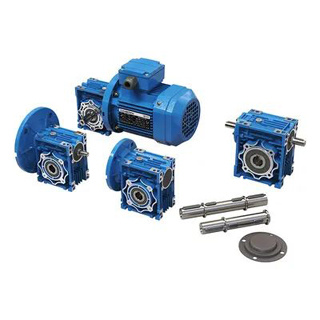
worm gear reducer
Principle: Using a worm to drive a worm gear to achieve deceleration transmission, usually a vertical staggered shaft transmission structure.
advantage:
• Compact structure and high transmission ratio
Good self-locking performance (able to maintain position even without brakes)
Low cost, commonly used in low-speed situations
Disadvantages:
Low efficiency, high friction loss, and severe heat generation
Not suitable for high-frequency forward and reverse rotation
Applicable occasions: self-locking requirements for lifting platforms, gates, regulating mechanisms, etc
Hardened reducer
Principle: Deceleration is achieved through the meshing of one or more parallel axis cylindrical gears.
advantage:
• High efficiency (up to 98% per stage)
Strong load-bearing capacity, suitable for high torque transmission
• Simple structure and easy maintenance
Disadvantages:
• Not self-locking
• High gear meshing noise (at high speeds)
Applicable occasions: Conventional mechanical equipment, winches, conveyors, etc
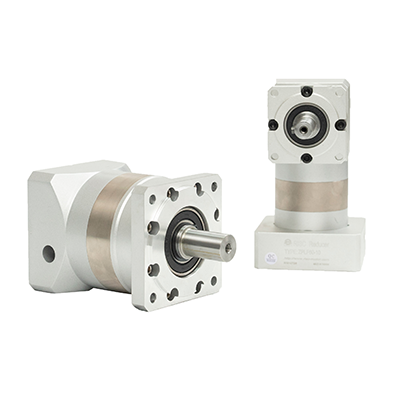
planetary reducer
Principle: Composed of a central sun gear, planetary gears, and an internal gear ring, multiple planetary gears mesh simultaneously to improve transmission efficiency and torque density.
advantage:
Small size, high transmission efficiency (up to 95% or more)
• Strong load-bearing capacity
Coaxial output, compact structure
Disadvantages:
• High cost
The internal structure is complex and difficult to maintain
Applicable occasions: servo systems, robots, packaging equipment, high-precision transmission systems
Precision reducer,electrical machinery,gear motor
Address: No.66 bis, Hetong Road, Dongfeng Town, Zhongshan City, Guangdong Province
Tel:0760-22189558
Mobile:13923325827

©2023 GUANGDONG YONGKUN MOTOR CO.,LTD All rights reserved


