
Hard tooth surface reducer models and common faults
Release Time :
2025-07-23
Source :
network
Author:
YONGKUN
Hard tooth surface reducer models and common faults
Common fault analysis of Yongkun reducer
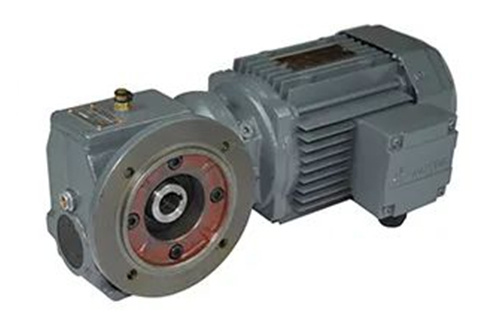
1 Basic
A reducer is a power transmission mechanism that uses a gear speed converter to reduce the number of rotations of a motor to the desired number and obtain a larger torque.
There are many types of reducers, which can be divided into gear reducers, worm reducers, planetary reducers, and their combined reducers according to the transmission type; According to the number of transmission stages, it can be divided into single-stage and multi-stage reducers; According to the shape of the gears, they can be divided into cylindrical gear reducers, bevel gear reducers, and cone cylindrical gear reducers; According to the arrangement of the transmission, it can be divided into expansion type, diversion type, and coaxial type reducers.
3. Gears adopt two forms of lubrication: oil pool lubrication and circulating lubrication.
4. Lubricating oil should be checked and replaced regularly. When a newly installed gearbox is used for the first time, it must be replaced with new oil after 10-15 days of operation. In the future, the quality of the oil should be checked regularly (2-3 months). If it does not meet the requirements, it should be replaced immediately, usually at least once every six months.
2 Simple Analysis
2.1. What are the reasons for pitting and peeling of gearbox gears?
Answer: a. Material, hardness, and defects. The material of the gear does not meet the requirements; The main factor affecting the contact fatigue strength of gears is the low hardness after heat treatment, which cannot guarantee the expected contact fatigue strength of gears. In addition, defects on the surface or inside of the teeth are also one of the reasons for insufficient contact fatigue strength.
b. The gear accuracy is poor. The precision of gear processing and assembly does not meet the requirements, such as poor meshing accuracy and motion accuracy. The center distance error of the shell of the circular arc gear is too large.
c. The lubricating oil does not meet the requirements. The brand of lubricating oil used is incorrect, the viscosity of the oil is low, and the lubrication performance is poor.
d. The oil level is too high. If the oil level is too high, the temperature of the oil will increase, reducing the viscosity of the lubricating oil, damaging the lubrication performance, and reducing the working thickness of the oil film.
2.2. Please briefly analyze the reasons for the gearbox shaft connection?
Answer: a. It is due to tooth breakage that causes the input shaft to lose axial constraint and result in shaft misalignment.
b. It is caused by the loose fastening between the driven gear on the intermediate shaft and the shaft. In actual transmission, due to insufficient interference between the driven gear and the intermediate shaft, the driven gear undergoes axial displacement relative to the intermediate shaft, which in turn causes axial displacement of the input shaft. Therefore, insufficient interference fit is the main reason for the gearbox shaft misalignment.
c. The steering of the gearbox also has a certain impact on the serial axis.
2.3. Please briefly analyze the reasons for the high temperature of the reducer oil?
Answer: a. The lubricating oil is unqualified or has been used for too long.
b. Excessive lubricating oil is not conducive to the heat dissipation of the mechanism inside the gearbox.
c. Mechanical damage. Mechanical damage includes severe gear pitting, tooth breakage, damage to bearing cages, inner and outer rings, ball bearings, as well as severe bearing locking or shaft deformation;
d. The exterior of the box is covered with debris or dust. When there are things piled up around the reducer or the surface of the machine body is not cleaned for a long time, it is possible that incomplete heat dissipation of the reducer may occur due to the coverage of debris or dust, resulting in an increase in oil temperature;
e. The cooling device is blocked or malfunctioning. The cooling device, like the gearbox, is placed in a dusty factory building. If the internal pipelines are not cleaned for a long time and the cooling device is blocked or broken, it will cause the gearbox oil temperature to rise;
2.4 Regular maintenance and troubleshooting:
The usual maintenance and upkeep mainly include:
1. Adjustment and testing during installation; 2. Regular inspections, high-temperature spot checks, and oil quality testing; 3. Regularly replenish and change oil.
The common faults mainly include:
1. The gearbox vibrates greatly; 2. There is noise; 3. High oil temperature; 4. Oil leakage; 5 damaged gears; 6 series shafts; 7 bearings shattered.
3. Maintenance and upkeep of the gearbox
3.1 Installation and Adjustment
a. To ensure the assembly accuracy of the gearbox, it is not necessary to turn on the machine during installation, and the sealing and filling glue should not be damaged. The inspection can be done by opening the sight glass cover or by using kerosene (diesel) to wash the anti rust grease on the surface of the gear.
b. Elastic couplings or gear couplings or other non rigid couplings can be used between the reducer and the motor or host.
c. The reducer should be installed smoothly and firmly, and the base adjustment gasket must be firmly cut (using steel pads). The coaxiality deviation of the connecting components shall not exceed the allowable value of the coupling used.
d. Check if the bolts on the sealing surfaces of the box are loose, and if so, tighten them again.
gear motor,Reducer,Hardened reducer
Address: No.66 bis, Hetong Road, Dongfeng Town, Zhongshan City, Guangdong Province
Tel:0760-22189558
Mobile:13923325827

©2023 GUANGDONG YONGKUN MOTOR CO.,LTD All rights reserved


