Analysis of mainstream types of robot reducers
Release Time :
2025-07-23
Source :
network
Author:
YONGKUN
Analysis of mainstream types of robot reducers
In robot motion control systems, reducers are known as the "bones and tendons of joints". They not only undertake the key tasks of torque transmission and motion amplification, but also profoundly affect the control accuracy, stability, and energy efficiency performance of the entire machine. As a core component of the joint module, the performance of the reducer often determines whether the robot can perform tasks in specific scenarios.
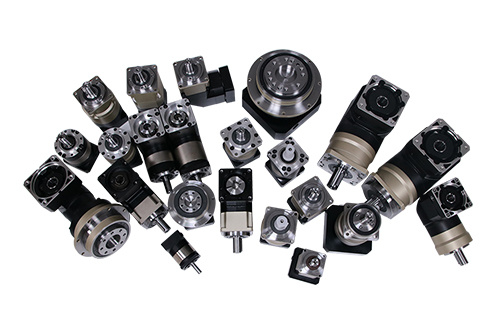
This article will focus on the basic principles, mainstream types, advantages and disadvantages, and application scenarios of reducers, attempting to construct a "robot reducer map".
Structural principle of reducer
In robot systems, motors typically output high-speed, low torque power, which cannot directly meet the precise control and load support required for joint motion. Therefore, it is necessary to use the key transmission structure of the reducer to convert high-speed into low-speed high torque, while improving system rigidity and control accuracy.
The working principle of a reducer is to use mechanical meshing or flexible deformation to achieve proportional changes between input and output speeds. The main functions of a reducer include: firstly, achieving greater torque with a smaller motor output; The second is to reduce the speed and improve the accuracy of position control; The third is to buffer the impact load and protect the drive system; The fourth is to enhance the overall rigidity of the system and reduce backlash and vibration.
Common deceleration mechanisms include gear meshing (such as planetary, worm gear, RV), flexible deformation (harmonic), or direct control of output angle (torque motor direct drive). Different structures of reducers adapt to different types of loads, speeds, and precision requirements, forming an important part of the robot's "joint module".
In complex systems such as industrial robots, collaborative robots, and humanoid robots, reducers, motors, and sensors together form joint modules, which are the core pivot points for controlling robot behavior.
2、 Analysis of mainstream reducer types
1. RV reducer (cycloidal pinwheel)
RV reducer is a high rigidity and high-precision reducer that adopts a two-stage reduction structure. It consists of a cycloid wheel, a needle gear housing, an eccentric shaft, etc. The transmission is based on the eccentric wheel driving the cycloid wheel to rotate around a fixed point. This structure can achieve low backlash and high torque output, especially suitable for heavy loads and high-frequency action scenarios.
This reducer has extremely strong load-bearing capacity and excellent impact resistance, making it the preferred choice for "large joints" such as shoulders and elbows in industrial robots. Its disadvantages are complex structure, large volume, high cost, and extremely high requirements for machining accuracy and assembly technology.
At present, RV reducers dominate the field of six axis industrial robots, and the market landscape has long been dominated by Nabtesco and Sumitomo from Japan. In recent years, with the acceleration of domestic substitution process, enterprises such as Shuanghuan Transmission and Zhongdalide are rapidly promoting mass production substitution, and the market potential is huge. It is expected that by 2026, the market size of China's RV reducer will exceed 8 billion yuan.
Precision reducer,Reducer,electrical machinery
Address: No.66 bis, Hetong Road, Dongfeng Town, Zhongshan City, Guangdong Province
Tel:0760-22189558
Mobile:13923325827

©2023 GUANGDONG YONGKUN MOTOR CO.,LTD All rights reserved


