
Quick knowledge - Explosion proof permanent magnet synchronous motor
Release Time :
2025-07-24
Source :
network
Author:
YONGKUN
Quick knowledge - Explosion proof permanent magnet synchronous motor
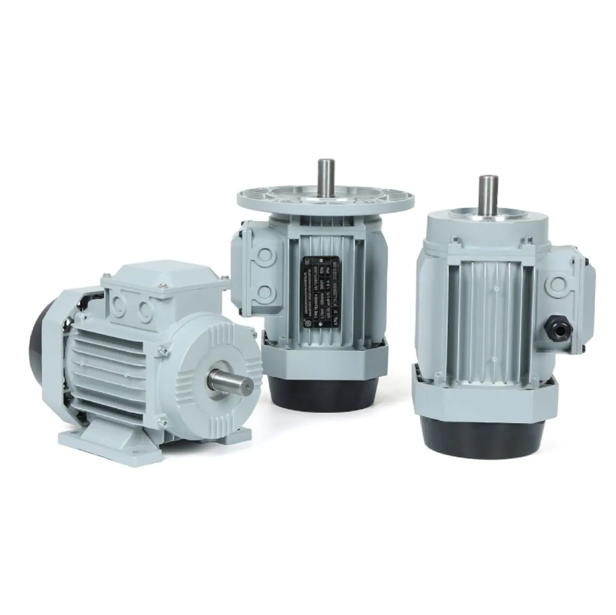
Explosion proof permanent magnet synchronous motor is a type of motor suitable for hazardous environments such as coal mines and chemical workshops with explosive gases and dust. It uses permanent magnet excitation and can achieve "synchronous operation". It not only has an explosion-proof shell (to prevent internal sparks from igniting external hazardous environments), but also replaces the excitation winding of traditional motors with permanent magnets, achieving efficient and stable synchronous rotation. It is the core power source of high-precision and high reliability equipment in industrial hazardous environments.
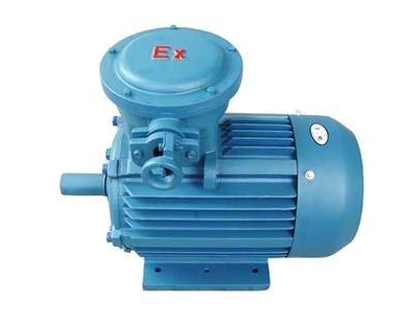
1、 Basic structure of explosion-proof permanent magnet synchronous motor
Compared with ordinary motors, its structure has three core features: explosion-proof shell+permanent magnet rotor+high-precision stator, as follows:
Explosion proof enclosure
Made of cast steel or thick steel plates welded together, the shell joint surface (such as end cap and machine base, junction box cover) has a strict "explosion-proof gap" (usually ≤ 0.2mm), can withstand internal explosion pressure (≥ 0.3MPa), and prevent explosion flames from penetrating and igniting external hazardous gases.
The explosion-proof shell requirements for explosion-proof asynchronous motors are consistent and must comply with GB 3836.1-2010 "Explosive Atmosphere Part 1: General Requirements for Equipment".
stator
Similar to ordinary motors, it consists of a stator core (made of stacked silicon steel sheets) and three-phase windings. When three-phase AC power is applied, a rotating magnetic field is generated (the speed is determined by the power frequency and the number of magnetic poles, formula: n0=60f/p).
The structure is basically the same, but the winding design is more refined, and it is matched with the control system to achieve precise speed regulation.
rotor
The core difference! The rotor is embedded with permanent magnets (such as neodymium iron boron, samarium cobalt and other strong magnetic materials), which do not require windings and brushes, and generate a constant magnetic field on their own (similar to the magnetic field of a "permanent magnet").
The rotor of explosion-proof asynchronous motor is a "cage winding" (generating magnetic field by induced current), while the rotor of permanent magnet synchronous motor generates magnetic field by permanent magnet, without induced current, and has higher efficiency.
control system
Equipped with a dedicated frequency converter (such as a vector control system), adjust the frequency and phase of the stator current to ensure synchronization between the rotor and stator magnetic fields.
Explosion proof asynchronous motors can be directly connected to the power grid for operation, while permanent magnet synchronous motors must be matched with frequency converters, otherwise they cannot start and operate stably.
2、 Why can it run synchronously? ——The core lies in the principle of 'no deviation'
Synchronous operation "refers to the fact that the speed of the rotor is always equal to the speed of the stator rotating magnetic field (without" slip rate "), which is completely different from explosion-proof asynchronous motors (where the rotor speed is lower than the stator magnetic field speed and there is slip).
The reason is simple:
1. The rotor magnetic field of explosion-proof asynchronous motors is "induced": the stator rotating magnetic field cuts the rotor winding, generating induced current to form the rotor magnetic field (similar to "force is generated only after being driven"), so the rotor must be slightly slower than the stator magnetic field (with slip) to generate induced current, otherwise there will be no force.
2. The rotor magnetic field of explosion-proof permanent magnet synchronous motors is "innate": the permanent magnets on the rotor have a constant magnetic field (such as the magnetic field of neodymium iron boron magnets), like a "permanent magnet rotor". When three-phase electricity is applied to the stator to generate a rotating magnetic field, the rotating magnetic field will "firmly attract" the permanent magnet magnetic field of the rotor (similar to two magnets "opposite poles attracting each other"), and the rotor will be "dragged" by the rotating magnetic field of the stator at the same speed (without hysteresis, i.e. "synchronous").
3. For example, the rotor of an asynchronous motor is like being dragged by the front car (stator magnetic field), always slowing down by half a beat; The rotor of a permanent magnet synchronous motor is like a gear that meshes with the front car (stator magnetic field) and moves forward at the same speed.
electrical machinery,gear motor,Explosion-Proof Motor
Address: No.66 bis, Hetong Road, Dongfeng Town, Zhongshan City, Guangdong Province
Tel:0760-22189558
Mobile:13923325827

©2023 GUANGDONG YONGKUN MOTOR CO.,LTD All rights reserved


