
The core differences and application scenarios between explosion-proof motors and ordinary motors
Release Time :
2025-07-24
Source :
NETWORK
Author:
YONGKUN
The core differences and application scenarios between explosion-proof motors and ordinary motors
In the industrial field, as the core power equipment, the performance and safety of motors are directly related to production efficiency and the safety of personnel and property. However, not all motors are suitable for all environments - especially in flammable and explosive hazardous areas, the use of ordinary motors may cause serious accidents.
The birth of explosion-proof motors is precisely to solve this problem. This article will systematically explain the differences between explosion-proof motors and ordinary motors from the perspectives of core principles, design differences, application scenarios, and cost-effectiveness, helping readers understand the technical essence and applicable scenarios of both.
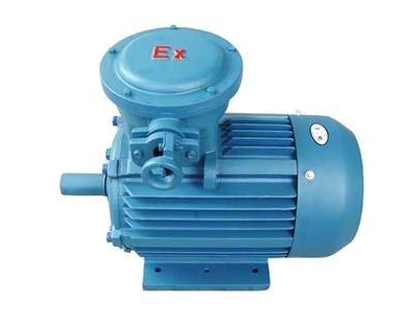
1、 Introduction to Explosion proof Motors and Ordinary Motors
1. Ordinary motor: universality and economy
Ordinary motors are fundamental power equipment in both industrial and civilian fields, widely used in household appliances such as air conditioners and washing machines, general machinery such as water pumps and fans, and production lines in non hazardous environments. Its characteristics include:
Simple structure: adopting lightweight design, the shell is mostly made of thin metal or plastic material.
Low cost: The manufacturing process is mature, and the price is only 75% -80% of that of explosion-proof motors.
Convenient maintenance: No special tools required, short troubleshooting cycle, suitable for long-term stable operation in conventional environments.
2. Explosion proof motor: a special equipment that prioritizes safety
Explosion proof motors are designed for high-risk environments with flammable and explosive gases, dust, or steam, with the core goal of eliminating ignition sources. Typical applications include:
Oil/Gas Industry: Pumps and compressors used in oil and gas extraction and refining facilities.
Chemical industry: power systems for synthesis reactors and conveying pipelines.
Coal/Mining: Mine ventilation and transportation equipment.
Pharmaceutical/food industry: Mixing and conveying equipment for flammable solvents and dust workshops.
2、 Core Differences: Deep Comparison of Nine Dimensions
1. Use environment and risk level
Explosion proof motor: It must comply with the classification standards for hazardous areas (such as IEC 60079, ATEX, NEC 500) and be suitable for high-risk areas such as Zone I (frequent occurrence of explosive gas environments) and Zone II (occasional occurrence).
Ordinary motor: only suitable for non hazardous areas (Zone III or risk-free areas), its casing cannot resist the invasion of flammable gases or dust, and sparks generated during operation may cause explosions.
2. Protection level (IP Rating)
The protection level reflects the motor's ability to protect against dust, water vapor, and solid particles, which directly affects the lifespan and safety of the equipment in complex environments
Explosion proof motor: The minimum protection level is IP54, and high-risk environments usually require IP55 or higher. For example, explosion-proof motors may reach IP66 (completely dust-proof, high-pressure water flushing).
Ordinary motors: There are various protection levels (such as IP23, IP44), but most of them do not meet explosion-proof requirements. For example, IP23 can only prevent the intrusion of solids with a diameter greater than 12.5mm and has no waterproof ability.
3. Explosion proof structural design
The core of explosion-proof motors lies in eliminating or controlling ignition sources, and their design must follow strict explosion-proof principles:
Explosion proof type (Ex d): The shell is made of high-strength steel plate or aluminum alloy, and when the internal explosion pressure is released, the flame will not ignite the external environment.
Increased safety type (Ex e): By optimizing the circuit, strengthening sealing and heat dissipation, the possibility of spark generation is reduced.
Spark free type (Ex n): The winding and terminal design ensures that no electrical sparks are generated during operation.
Ordinary motor: without explosion-proof structure, thin shell and poor sealing at joints, prone to sparks due to mechanical impact or aging.
4. Insulation and electrical performance
Explosion proof motor:
High insulation level: usually using F level (155 ℃) or higher, with stronger high-temperature resistance and reduced risk of short circuit or partial discharge.
Circuit redundancy design: The winding adopts multi-layer protection, and the terminal blocks and lead boxes are sealed to prevent arc leakage.
Ordinary motor:
Low insulation level: mostly B level (130 ℃), prone to aging in high temperature or humid environments.
Simple circuit: No special protection, there is a possibility of short circuit or spark caused by insulation failure.
5. Material selection and manufacturing process
Explosion proof motor:
Shell material: Made of cast aluminum alloy (such as ZL102) or stainless steel, balancing strength and corrosion resistance.
Surface treatment: After sandblasting, apply anti-corrosion paint or epoxy resin to ensure long-term corrosion resistance.
Certification requirements: Explosion proof certifications such as ATEX, UL, CCc are required, and the manufacturing process must comply with the ISO 9001 quality system.
Ordinary motor:
Lightweight materials: cast iron or thin steel plate, low cost but weak impact resistance.
Process simplification: No special anti-corrosion treatment is required, only the surface is treated with anti rust paint.
6. Operating characteristics and safety standards
Explosion proof motor:
Zero spark design: using brushless structure or special lubricating grease to reduce the risk of friction arc.
Overload protection: Built in temperature sensor and circuit breaker, automatically shuts down when overheating occurs.
Ordinary motor:
Electric sparks are inevitable: bearing friction and winding short circuits can both generate sparks, so it is necessary to stay away from flammable materials.
electrical machinery,gear motor,Explosion-Proof Motor
Address: No.66 bis, Hetong Road, Dongfeng Town, Zhongshan City, Guangdong Province
Tel:0760-22189558
Mobile:13923325827

©2023 GUANGDONG YONGKUN MOTOR CO.,LTD All rights reserved


