The main functions and characteristics of a reduction motor
Release Time :
2025-07-26
Source :
network
Author:
Yongkun
The main functions and characteristics of a reduction motor
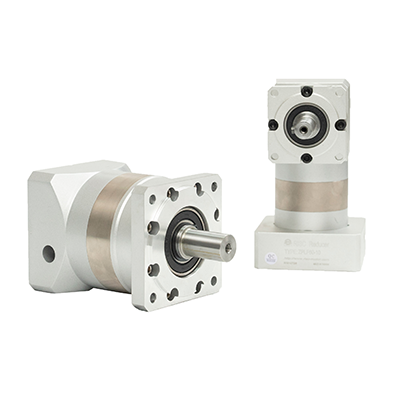
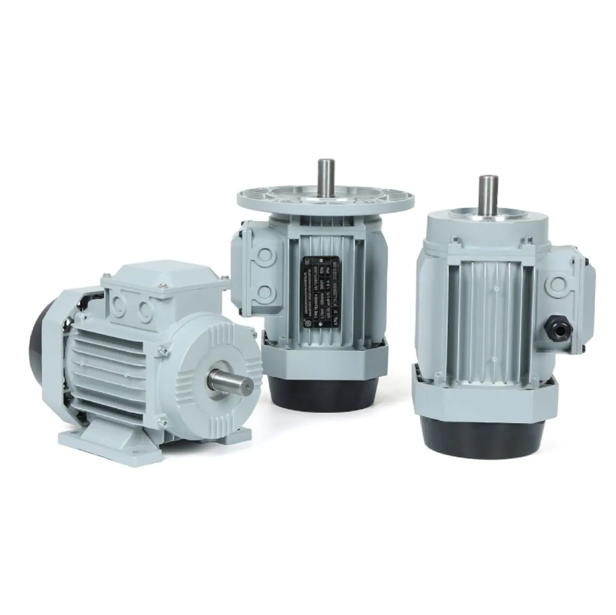
A reduction motor refers to an integrated body of a reducer and a motor, commonly known as a gear motor or gear motor. Usually, the head professional reducer production factory integrates and assembles it, and supplies it together with the motor.
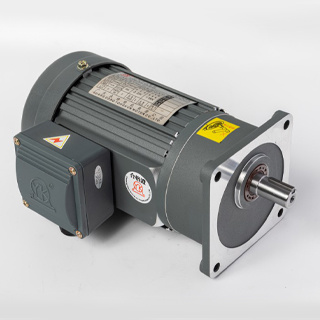
The main features of the deceleration motor are:
1. The coaxial helical gear reduction motor has a compact structure, small size, beautiful appearance, and strong overload capacity.
2. The transmission ratio is finely graded, with a wide selection range and a wide spectrum of speed types, ranging from i=2-28800.
3. Low energy consumption, superior performance, reducer efficiency of 96%, low vibration, and low noise.
4. Strong universality, easy to use and maintain, low maintenance cost, especially for production lines, only a few spare internal transmission parts are needed to ensure the normal production and maintenance of the entire line.
5. Adopting a new type of sealing device, it has good protective performance, strong adaptability to the environment, and can work continuously in harsh environments such as corrosion and humidity.
6. Can be matched with various motors such as ordinary Y series, Y2 series, lifting motors, riot control motors, brake motors, variable frequency motors, DC motors, outdoor special motors, etc.
Application scope of deceleration motor:
Deceleration motors are widely used in industries such as metallurgy, mining, light industry, chemical steel, cement, printing, sugar production, food, chrysanthemum glue, miso soup, construction, lifting and transportation, blowers, etc. Equipment can be introduced.
The main function of a deceleration motor is:
1. Reduce speed while increasing output torque. The torque output ratio is based on the motor output multiplied by the reduction ratio, but please be careful not to exceed the rated torque of the reducer. At the same time, the speed reduces the load inertia, which is reduced to the square of the reduction ratio. Let's take a look at the inertia values of ordinary motors. Acceleration and deceleration are commonly referred to as variable speed gearboxes.
2. Change the transmission direction. For example, we can use two sector gears to vertically transmit force to another rotating shaft.
3. Change the torque. Under the same power conditions, the faster the gear rotates, the less torque the shaft experiences, and conversely, the greater the torque.
4. Clutch function: We can separate the two gears that were originally engaged, achieving the purpose of separating the engine and load. For example, brake clutches, etc.
5. Working principle of gearbox: Gearboxes are used for variable speed, and most gearboxes and gearmotors are changed through gears. After the principle turns white, it can be seen from the introduction of large gears with gears or small gears with large gears that the gear ratio of the gearmotor cannot be changed after selection, and the gearbox can change the speed and transmission direction.
gear reducer,electrical machinery,gear motor
Address: No.66 bis, Hetong Road, Dongfeng Town, Zhongshan City, Guangdong Province
Tel:0760-22189558
Mobile:13923325827

©2023 GUANGDONG YONGKUN MOTOR CO.,LTD All rights reserved


