
Transmission efficiency of NMRV worm gear reducer
Release Time :
2025-07-28
Source :
network
Author:
YONGKUN
Transmission efficiency of NMRV worm gear reducer
The transmission efficiency of NMRV worm gear reducer (usually referring to aluminum shell worm gear reducer that meets European/international standards) is relatively low, which is an inherent characteristic of worm gear transmission.
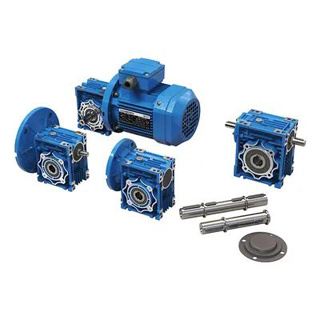
The efficiency range is roughly as follows:
Typical range:
50% -90% is the most common efficiency range.
The specific value highly depends on the reduction ratio and the number of worm heads.
Main influencing factors:
Deceleration ratio: This is the most critical factor. The efficiency significantly decreases with the increase of reduction ratio.
Small reduction ratio: for example, i=5, i=10, the efficiency may reach 70% -90% (especially when using multi head worm gear).
Medium reduction ratio: for example, i=20, i=30, efficiency is usually between 60% and 80%.
Large reduction ratio: For example, if i=50, i=60 and above, the efficiency will significantly decrease, possibly only 50% -70%, or even lower (close to 50% or below).
Number of worm heads:
Single head worm: capable of achieving a large reduction ratio, but with the lowest efficiency (often in the range of 50% -70%, even lower at high ratios). Sliding friction dominates.
Double headed worm gear: The efficiency is significantly improved compared to a single headed worm gear (usually in the range of 60% -80%).
Multi head worm: The highest efficiency (up to 70% -90%), but the achievable reduction ratio is relatively small.
Manufacturing accuracy and assembly quality: Precise machining, good meshing, correct clearance, and high-quality bearings can reduce friction losses and improve efficiency.
Lubrication state: It is crucial to use lubricating oil/grease with appropriate viscosity and excellent quality, and maintain sufficient oil volume to reduce friction and improve efficiency. Poor lubrication can significantly reduce efficiency and increase wear.
Material combination: Typically, the worm gear is made of hardened steel, while the worm gear is made of copper alloy (such as tin bronze). Good material pairing and heat treatment can improve friction performance.
Load size: The efficiency is usually highest when approaching the rated load. The efficiency may be slightly lower under light load (with a relatively higher proportion of friction loss).
Operating status (running in period): During the initial operation (running in period), the efficiency of the new gearbox may be slightly lower than that after stable operation.
Operating temperature: High temperature can cause a decrease in the viscosity of lubricating oil, which may affect the formation of oil film and slightly increase friction loss.
Performance of efficiency loss:
The lost energy is mainly converted into heat, leading to a temperature rise in the gearbox. That's why NMRV reducers need to pay attention to heat dissipation capacity and thermal power. One of the main limiting factors during long-term high load operation is excessive temperature rise.
Forward drive vs. reverse drive:
Positive transmission: Refers to the worm gear being active and the worm wheel being passive. This is the most commonly used working mode of NMRV, and efficiency is within the scope of the above discussion.
Reverse transmission: Refers to the worm wheel actively attempting to drive the worm gear. In the case of single head worm and large reduction ratio, due to the self-locking characteristics of worm gear transmission, the reverse transmission efficiency is extremely low (usually below 50%, even close to 0%, that is, unable to drive or self-locking). Even for non self locking designs such as multi head worm gears, the reverse efficiency is much lower than the forward efficiency.
Summary and selection suggestions:
Low efficiency is an inherent drawback of worm gear reducers. The advantages of NMRV lie in its compact structure, large transmission ratio, smooth operation with low noise, relatively low cost, and the ability to achieve self-locking (when single head high speed ratio is used), rather than efficiency.
Clearly define the deceleration ratio requirement. If a large reduction ratio is required (such as i>40), be prepared to accept lower efficiency (possibly below 60%) and higher temperature rise.
Consider the number of worm heads. If there are requirements for efficiency and temperature rise, and a smaller reduction ratio is allowed, double headed or multi headed worm gears are preferred.
Pay attention to heat dissipation and lubrication. Ensure good heat dissipation conditions (ventilation, avoiding high temperature environments, adding heat sinks or fans if necessary), use lubricating oil/grease of specified grade and qualified quality, and regularly maintain and replace it.
Pay attention to thermal power. For applications with continuous operation or high loads, thermal power (power determined by temperature rise limitations) is often a more critical limiting factor than mechanical strength (mechanical power). When selecting, it is necessary to verify whether the thermal power meets the requirements.
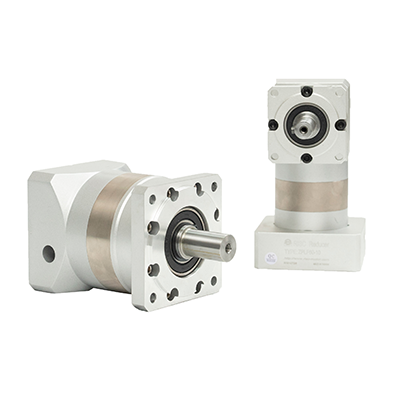
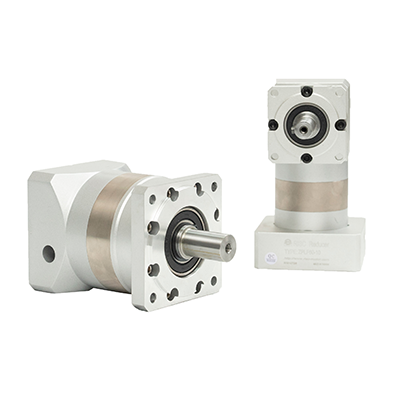
Comparison plan: If high efficiency is required (>90%), priority should be given to solutions such as helical gear reducers and planetary gear reducers, but their cost, noise, compactness, and other aspects may differ from NMRV.
Simply put, for common NMRV reducers, when selecting, if the speed ratio is around 20-30, it is reasonable to estimate an efficiency of 60% -75%; If the speed ratio reaches 50 or 60, the efficiency is likely to be lower than 60%. Be sure to consult the manufacturer's technical manual for specific models, which usually provides efficiency curves or specific values for different speed ratios and input speeds, as well as the most important thermal power values.
RV gearbox,worm gear reducer,Reducer
Address: No.66 bis, Hetong Road, Dongfeng Town, Zhongshan City, Guangdong Province
Tel:0760-22189558
Mobile:13923325827

©2023 GUANGDONG YONGKUN MOTOR CO.,LTD All rights reserved


