The competition in the gearbox industry should be centered around technology
Release Time :
2025-07-28
Source :
network
Author:
YONGKUN
The competition in the gearbox industry should be centered around technology
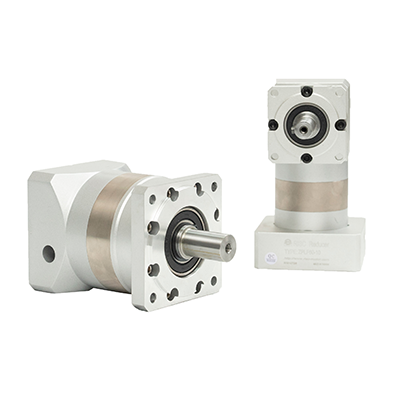
The rapid development of China's industry has promoted the continuous expansion of demand for reducers. However, the development of industry not only requires a greater quantity of reducers, but also sets new standards for the technology of reducers.
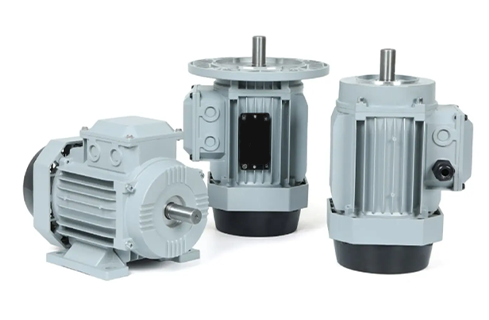
At present, the competition in the domestic gearbox industry is still fierce, which has prompted many gearbox manufacturers to increase their investment in gearbox technology, while also prompting them to improve production, sales, and after-sales management. However, there are also competitive phenomena that are primarily centered around price. If the competition in the gearbox industry leans more towards price competition, it not only hinders the development of the domestic gearbox industry, but also hinders the development of the entire national industry.
Price based competition is not the long-term path for enterprises. Only by increasing investment and attention to reducer technology can enterprises remain invincible in the increasingly fierce competition. Only by improving the technological content of domestic reducers can China's reducers have more and more advantages in international competition.
Product performance is the cornerstone of competitiveness:
Accuracy and rigidity: In the fields of high-precision machine tools, robots, semiconductor equipment, etc., the transmission accuracy, torsional stiffness, and backlash control of reducers directly determine the performance and stability of terminal equipment. The technical strength determines whether the accuracy of sub arc grading and extremely high rigidity requirements can be achieved.
Efficiency and energy consumption: High efficiency means lower energy loss and operating costs. Advanced tooth profile design, heat treatment processes, and tribological applications (such as low friction coatings and special oils) are key technologies for improving efficiency.
Load capacity and service life: In heavy loads, impact loads, or harsh environments such as mining, metallurgy, and wind power, the load capacity and service life of the gearbox are crucial. This relies on materials science (high-strength alloy steel, special materials), heat treatment technology (deep carburizing and quenching, nitriding), precision manufacturing (ensuring tooth contact rate), and advanced fatigue life prediction models.
Noise and vibration: Low noise and low vibration are inevitable requirements for high-end equipment (medical, precision instruments, office environments). This requires optimizing gear shaping technology, dynamic design of box structure, and application of vibration and noise reduction materials.
Technological innovation drives application expansion and efficiency improvement:
Adapting to emerging demands: robot joints (RV, harmonics), new energy (wind power main gearbox, electric vehicle electric drive reducer), high-end manufacturing (high-precision planetary, cycloidal) and other fields have put forward new and more stringent requirements for reducers. Only continuous technological innovation can meet these needs and open up new blue ocean markets.
Lightweight design: Through topology optimization, new materials (composite materials, high-strength lightweight alloys), and advanced manufacturing (the application of additive manufacturing in complex structures), weight and cost reduction can be achieved, which is of great significance for mobile devices and energy conservation.
Integration and modularization: Integrating motors, reducers, sensors, and controllers into one (mechatronics integration) to provide a "plug and play" drive solution, which requires strong system integration capabilities and key component design capabilities.
Intelligence and status monitoring: Integrating sensors (temperature, vibration, oil status) and predictive maintenance algorithms to achieve real-time monitoring and fault warning of the operation status of the gearbox, improving equipment reliability and operation efficiency. This involves technologies such as embedded systems, the Internet of Things, and big data analysis.
Technology is the key to reducing costs and increasing efficiency (not just low prices):
Design optimization reduces costs: Through advanced simulation software (finite element analysis, multibody dynamics, fatigue analysis) for virtual design and optimization, the number of physical prototypes is reduced, the development cycle is shortened, and costs are controlled from the design source (such as material usage optimization).
Advanced manufacturing processes improve efficiency and quality: high-precision CNC machine tools, automated production lines, online inspection technology, flexible manufacturing systems, etc. not only ensure product consistency and high quality, but also improve production efficiency and reduce unit costs. For example, the popularization of hard tooth grinding technology has greatly improved the quality and load-bearing capacity of gears.
Innovation in Materials and Heat Treatment: Developing cost-effective materials or heat treatment processes to reduce costs while ensuring performance.
Technological barriers that are difficult to imitate:
Know how accumulation: core knowledge and experience in gear meshing theory, shaping technology, heat treatment process window, assembly tips, lubrication system design, etc., require long-term R&D investment and practical accumulation, and are difficult to be quickly replicated by competitors.
Layout: Core technological innovation can form legal protection and build competitive barriers.
Talent barrier: High level design engineers, material experts, process experts, and testing and verification engineers are the foundation of technological innovation. Attracting and retaining these talents is also a competition based on technological strength.
Technology enhances brand value and customer stickiness:
Being able to continuously provide high-performance, high reliability, and solutions to customer pain points will naturally establish a technologically advanced brand image.
Deeply understanding customer application scenarios and providing customized solutions based on strong technical capabilities can significantly enhance customer stickiness. Customers are more willing to pay a premium for "technology partners" who can solve their core problems.
In the gearbox industry, technology is the core element that defines product performance boundaries, meets or even leads market demand, achieves true cost advantages, builds long-term competitive barriers, and shapes brand value. Talking about competition without technology is like water without a source or a tree without roots. The leaders of future industries will inevitably be those enterprises that continue to invest in and make breakthroughs in key technologies such as materials science, design simulation, precision manufacturing, heat treatment processes, mechatronics integration, and intelligence.
gear motor,electrical machinery,Reducer
Address: No.66 bis, Hetong Road, Dongfeng Town, Zhongshan City, Guangdong Province
Tel:0760-22189558
Mobile:13923325827

©2023 GUANGDONG YONGKUN MOTOR CO.,LTD All rights reserved


